Kitchen Backsplash Ideas for Small Kitchens: Budget-Friendly Designs That Pop
12 budget-friendly backsplash ideas for small kitchens, from 0 painted walls to 80 subway tile. Real costs, DIY timelines, and renter-friendly options with sourced data.
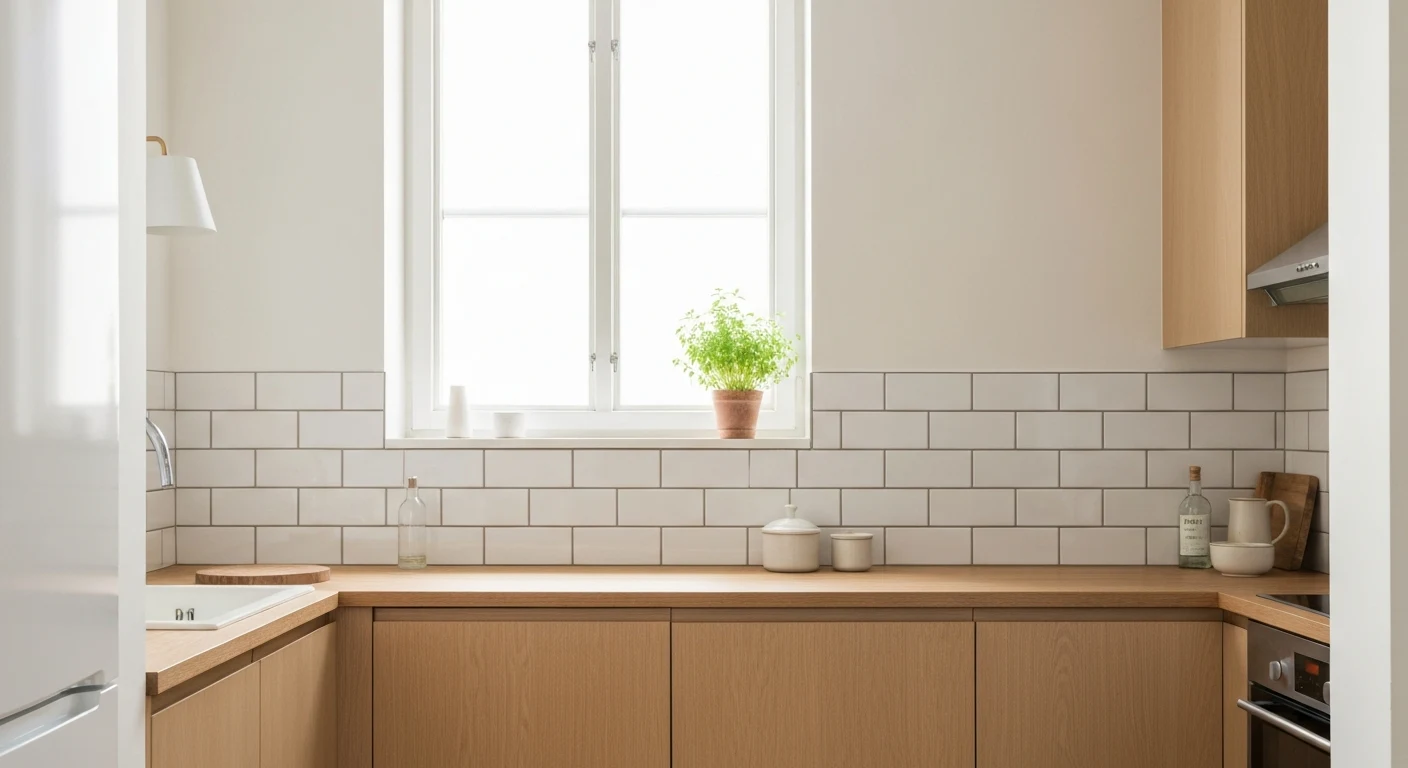
I've installed three different backsplashes in three different apartments over the past five years. The first was a $2,000 professional subway tile job. The second was a $45 peel-and-stick experiment that looked incredible for 18 months. The third, in my current 180-square-foot galley kitchen, cost $280 in materials and a Saturday afternoon. That last one gets compliments every single time someone walks in.
A backsplash is the single fastest way to change how a small kitchen feels. It's not just decorative. In a compact space where your eye has nowhere else to go, the 15 to 30 square feet between your countertop and cabinets becomes the main visual event. Get it right, and the whole room looks intentional. Get it wrong (or skip it entirely), and you're staring at builder-grade drywall every time you make coffee.
This guide covers 12 budget-friendly backsplash ideas that actually work in small kitchens, with real cost breakdowns, material comparisons, and renter-friendly options. Every suggestion here is something I've either installed myself or seen work in apartments under 100 square feet.
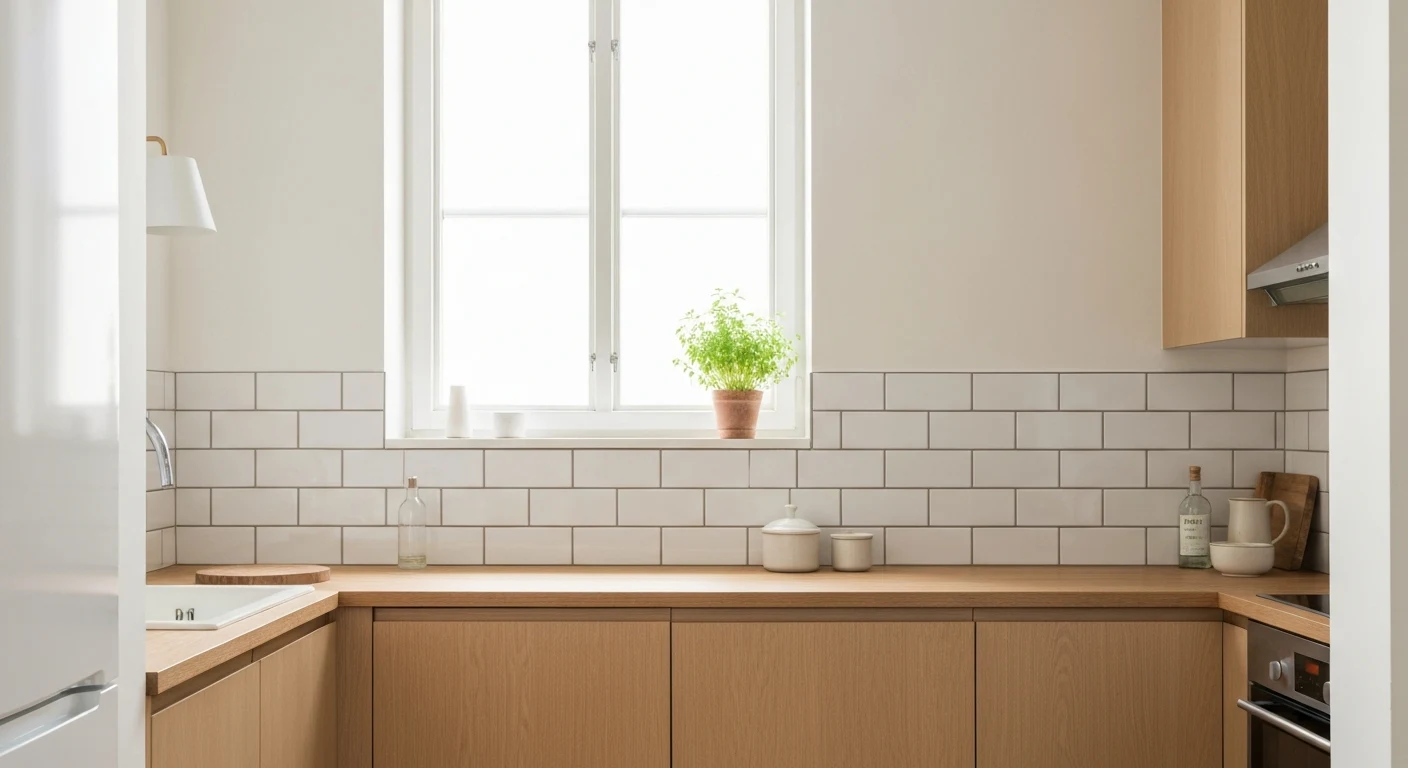
TL;DR: A small kitchen backsplash costs $150 to $800 DIY using peel-and-stick, ceramic, or painted options. Ceramic tile remains the most popular choice at 49% of installations (Houzz 2026 Kitchen Trends Study). The best bang for your buck: classic subway tile at $2 to $7 per square foot, installed yourself in one weekend.
Why Does a Backsplash Matter More in a Small Kitchen?
The average U.S. kitchen measures 150 to 250 square feet, but small kitchens in apartments and homes under 1,000 square feet shrink to just 70 to 100 square feet (Angi, 2025). That compact footprint means every surface carries more visual weight. A backsplash in a 200-square-foot kitchen covers maybe 5% of the wall area. In a 75-square-foot galley kitchen, it covers closer to 15%. Triple the visual impact per dollar spent.
Here's what I've noticed after renovating multiple small kitchens: the backsplash is the first thing visitors comment on. Not the cabinets, not the appliances. The backsplash. It sits right at eye level, directly behind the counter where you prep food, and it catches light in a way that flat-painted walls simply don't.
This isn't just anecdotal. Median U.S. home size fell to 2,150 square feet in 2024, the lowest in 15 years (NAHB, 2026). Kitchens are shrinking with them. A targeted backsplash upgrade makes more sense now than ever, especially when a minor kitchen remodel returns 112.9% of its cost at resale (Zonda 2025 Cost vs. Value Report).
How Much Does a Kitchen Backsplash Cost in 2026?
Average backsplash installation runs $900 to $3,500 for a typical 20 to 40 square foot area when you hire a professional (Angi, 2026). That includes materials and labor at $15 to $40 per square foot installed. But here's the thing: if you're working with a small kitchen (let's say 15 to 25 square feet of backsplash), DIY cuts that bill dramatically.
I spent $280 total on my last backsplash. That covered 18 square feet of porcelain subway tile ($4.50/sq ft), thinset mortar, grout, a $12 notched trowel, and tile spacers. If I'd hired someone, the quote was $1,100. For a weekend project that took about six hours, saving $820 felt worth it.
The cost depends almost entirely on the material you choose. Here's how they stack up:
The takeaway is clear. Peel-and-stick and ceramic tile give you the lowest entry point. For a small kitchen with 15 to 20 square feet of backsplash, you're looking at $60 to $140 in materials for ceramic, or $60 to $160 for peel-and-stick. That's less than a nice dinner out.
If you're weighing the financial side more carefully, I'd recommend reading our small kitchen design guide for the full picture on where to allocate your kitchen budget.
12 Budget-Friendly Kitchen Backsplash Ideas That Actually Work
I've organized these from cheapest to most expensive. Every option here works in kitchens under 100 square feet, and most are renter-friendly or easily reversible.
1. Classic White Subway Tile ($2 to $7 per square foot)
There's a reason subway tile has been the default for over a century. It's cheap, clean, and it makes small spaces feel bigger because the uniform, light-reflecting surface tricks your eye into seeing more depth. I've installed it in two kitchens and it took about four hours each time, including grouting.
The standard 3x6-inch format is the most affordable, usually $2 to $4 per square foot at Home Depot or Lowe's. A 20-square-foot backsplash costs $40 to $80 in tile alone. Add $30 for thinset and grout, and you're under $120 total.
Pro tip: use a dark grout (charcoal or medium gray) if you want subway tile to look less generic. It creates contrast that reads as intentional rather than builder-grade.
2. Peel-and-Stick Tile ($4 to $8 per square foot, zero tools needed)
This is the renter's best friend. A standard 30-square-foot peel-and-stick backsplash costs $150 to $240 total and can be completed in under two hours (Stickwoll, 2026). No thinset. No grout. No landlord drama. When you move out, a heat gun and 20 minutes of peeling leaves the wall clean.
Over 65% of renters actively seek reversible decor solutions (DataIntelo, 2024), and peel-and-stick backsplash is leading that trend. I tested a marble-look peel-and-stick in my second apartment and it genuinely fooled people. The key is choosing tiles with depth and texture, not flat vinyl stickers.
For more renter-safe wall transformations, check out our 30 renter-friendly wall decor ideas.

3. Herringbone Pattern (same material, designer look)
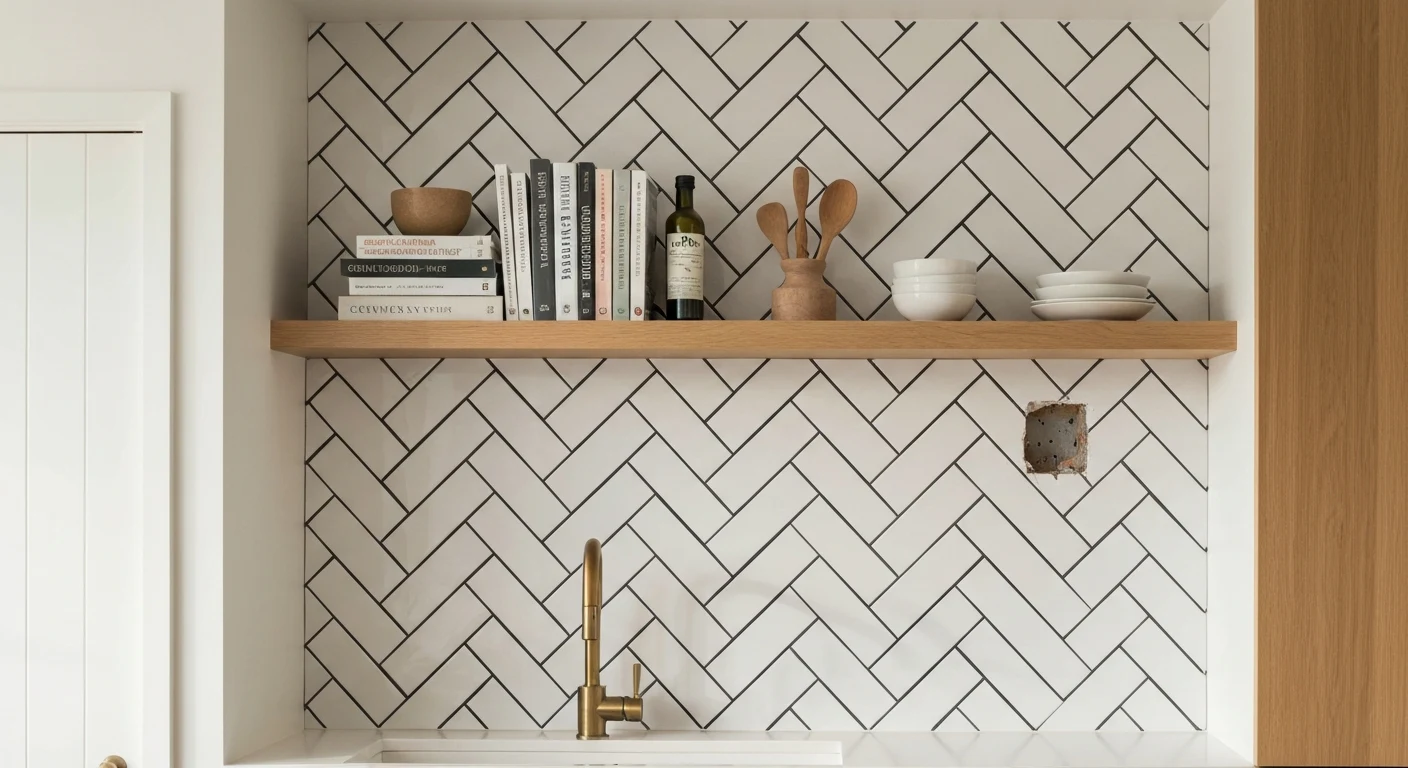
Herringbone uses the exact same tiles as a standard subway layout but arranges them in a V-pattern. The material cost is identical. The look is dramatically different. Herringbone accounts for 7% of backsplash installations according to the Houzz 2025 Kitchen Trends Study, and it's rising fast.
The only downside: more cuts. Herringbone requires angled cuts at every edge, which adds about an hour of extra work. If you don't own a tile saw, most big-box stores will cut tiles for free if you bring them in.
4. Painted Backsplash ($20 to $50 total)
This is the cheapest option that still looks intentional. Use a semi-gloss or high-gloss kitchen paint in a bold color on just the backsplash area. The sheen creates a wipeable surface that handles splashes, and the color contrast against your cabinets makes the space feel curated rather than unfinished.
I've seen this done beautifully in forest green, navy, and terracotta. Our guide to color drenching in small spaces covers how to pull off bold paint moves without overwhelming a tight room. And if you need to calculate how much paint that requires, the paint quantity guide has you covered.
5. Beadboard or Shiplap Panels ($3 to $6 per square foot)
Beadboard panels come in 4x8-foot sheets that you cut to fit and attach with construction adhesive. No grout, no specialized tools. For a 20-square-foot backsplash, you'll need one sheet ($25 to $40) plus adhesive ($8) and a quart of semi-gloss paint ($12). Total: under $65.
The cottage and farmhouse look works especially well in small kitchens because the vertical lines draw the eye upward, making the ceiling feel higher. I wouldn't recommend this directly behind a gas stovetop (fire risk), but it's perfect for the areas flanking the stove and behind the sink.
6. Mosaic Accent Strip ($5 to $15 per square foot)
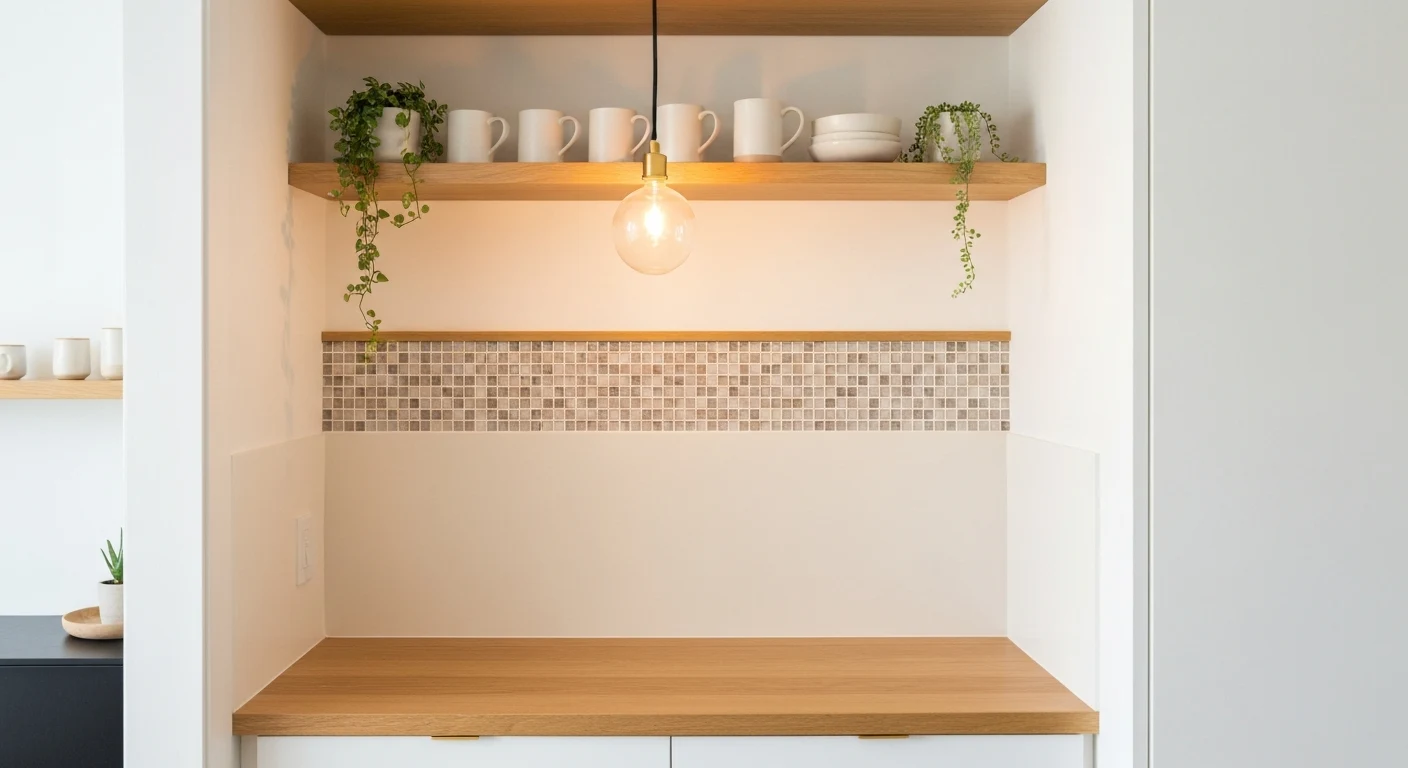
Instead of tiling the entire backsplash, install one horizontal strip of mosaic tile at mid-height and paint the rest. You get a designer focal point for a fraction of the full-tile cost. A 4-inch-tall mosaic strip across a 10-foot counter run uses about 3.5 square feet of tile. At $10 per square foot, that's $35 in materials.
Mosaic sheets come pre-mounted on mesh backing, so installation is fast. Peel the backing, press the sheet into thinset, and grout the next day. The whole job takes about 90 minutes.
7. Penny Tile or Hex Tile ($5 to $12 per square foot)
Round penny tiles and hexagonal tiles create visual texture that's hard to match with standard rectangles. They work particularly well in small kitchens because the busy pattern tricks the eye into seeing more surface area. Most come on mesh sheets for easy installation.
I'd recommend white or neutral penny tile for kitchens under 80 square feet. In my experience, dark penny tile in very small kitchens can feel overwhelming. Save the bold colors for the bathroom backsplash where the space is even more compact and can handle that intensity.
8. Stainless Steel Sheets ($8 to $15 per square foot)
Stainless steel backsplash panels give a professional, commercial kitchen vibe. They're fireproof (perfect behind the stove), easy to clean, and they reflect light in a way that makes small kitchens feel larger. A full stainless backsplash for a 15-square-foot area runs $120 to $225.
The catch: stainless shows fingerprints and water spots. If you're the kind of person who wipes down surfaces daily, it's great. If not, go with brushed stainless (not mirror finish) to hide smudges.
9. Vinyl Peel-and-Stick Wallpaper ($1 to $3 per square foot)
Not to be confused with peel-and-stick tile, this is essentially waterproof wallpaper with a tile or stone print. It's the absolute cheapest option after paint. A roll covers 25 to 30 square feet and costs $15 to $40. The patterns have gotten remarkably realistic in the last two years.
This won't last as long as real tile or even peel-and-stick tile (expect 1 to 2 years before edges start peeling near heat sources), but for renters or anyone testing a look before committing, it's a no-risk experiment.
10. Open Shelving as a Backsplash Alternative
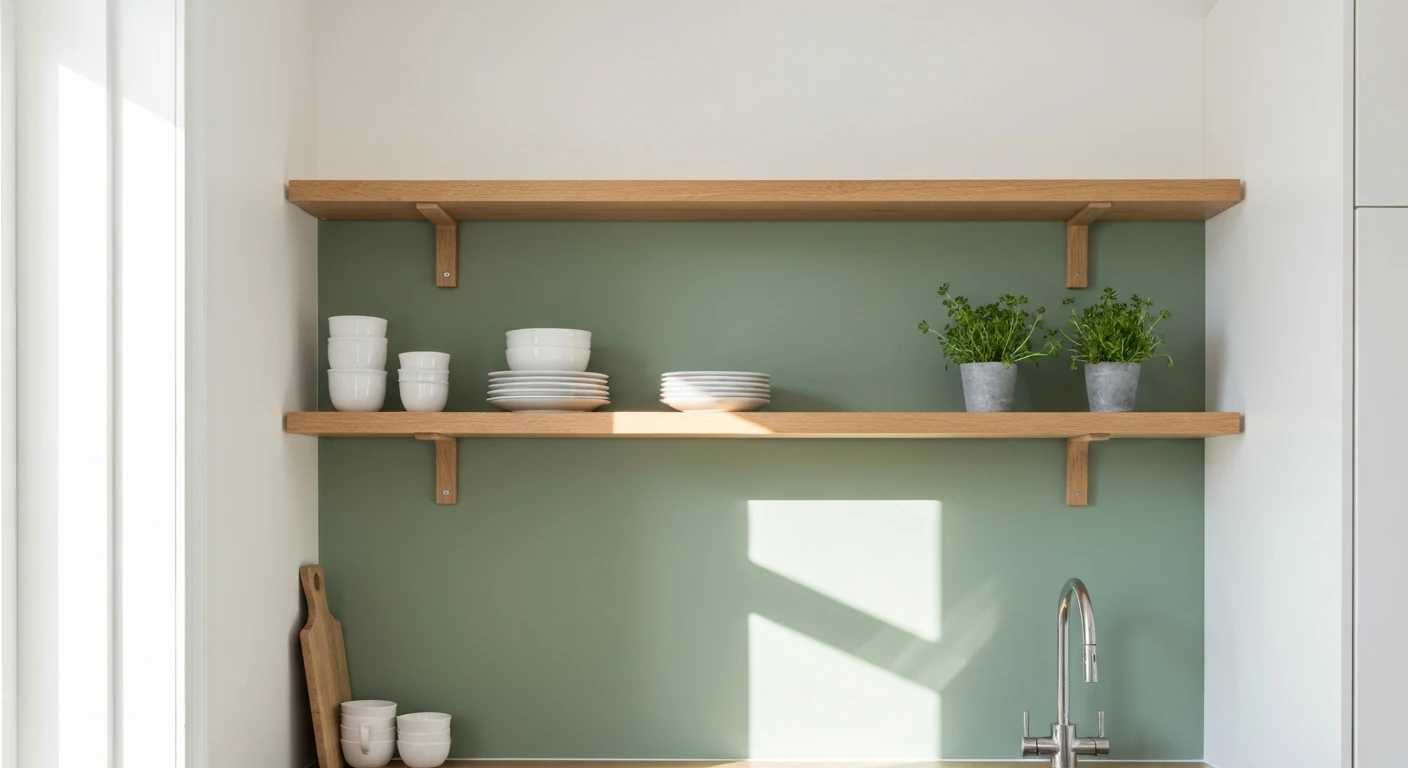
This isn't a traditional backsplash material, but hear me out. Mounting two or three floating shelves across your backsplash area serves double duty: you get visual interest and storage in a kitchen that probably doesn't have enough of either. Paint the wall behind the shelves in a contrasting color, and it reads as a deliberate design choice.
For more ideas on making a small kitchen look more stylish, open shelving consistently ranks as one of the highest-impact changes you can make.
11. Chalkboard or Magnetic Paint ($12 to $25 per quart)
One quart of chalkboard paint covers about 50 square feet, which is more than enough for most small kitchen backsplashes. The total cost is under $30, and you get a functional surface for grocery lists, recipes, or weekly menus. It's surprisingly wipeable and handles kitchen steam better than you'd expect.
Magnetic paint is another option if you want to hang recipe cards, photos, or small spice containers with magnetic backs. Apply two coats of magnetic primer ($20), then top with regular paint in your chosen color.
12. Reclaimed Wood Planks ($4 to $10 per square foot)
Reclaimed barn wood or pallet wood planks create warmth that no tile can match. For a small kitchen, the cost is minimal because you only need 15 to 25 square feet of material. Seal the wood with three coats of polyurethane to make it kitchen-safe and wipeable.
I wouldn't install this directly behind a stove (same fire concern as beadboard), but it's beautiful behind the sink and on side walls. Combined with the right functional kitchen layout, reclaimed wood adds character without clutter.
Which Backsplash Materials Are Most Popular Right Now?
Tile dominates. According to the Houzz 2026 U.S. Kitchen Trends Study, 72% of renovating homeowners choose tile for their backsplash, while 28% choose slab materials (up from 24% the prior year). Among tile choices, ceramic leads at 49%, followed by porcelain at 23% and glass at 7%.
The big shift in 2026 is the rise of slab backsplashes. About 75% of NKBA-surveyed designers report that solid-surface backsplashes are gaining popularity, with engineered quartz and quartzite leading the slab category (NKBA 2026 Kitchen Trends Report). Slab is seamless, groutless, and easy to clean, but it's also expensive ($50 to $200+ per square foot). For small kitchens on a budget, tile remains the smart play.
Pattern-wise, the horizontal brick layout still dominates at 40%, with herringbone at 7% and gaining ground. If you want a trendy look without the trendy price, herringbone with cheap subway tile gives you maximum style per dollar. Check out our tiny kitchen design guide for more layout inspiration.
What Backsplash Colors Make a Small Kitchen Look Bigger?
Light colors reflect more light, and in a small kitchen, reflected light is free square footage. White, cream, and light gray backsplashes make walls recede, creating the illusion of depth. But here's what most guides miss: the grout color matters as much as the tile color.
White tile with white grout creates a seamless, expansive look. White tile with dark grout creates a grid pattern that actually makes the wall feel busier and smaller. I learned this the hard way in my first kitchen. If your goal is to make the kitchen feel bigger, match your grout color closely to your tile color.
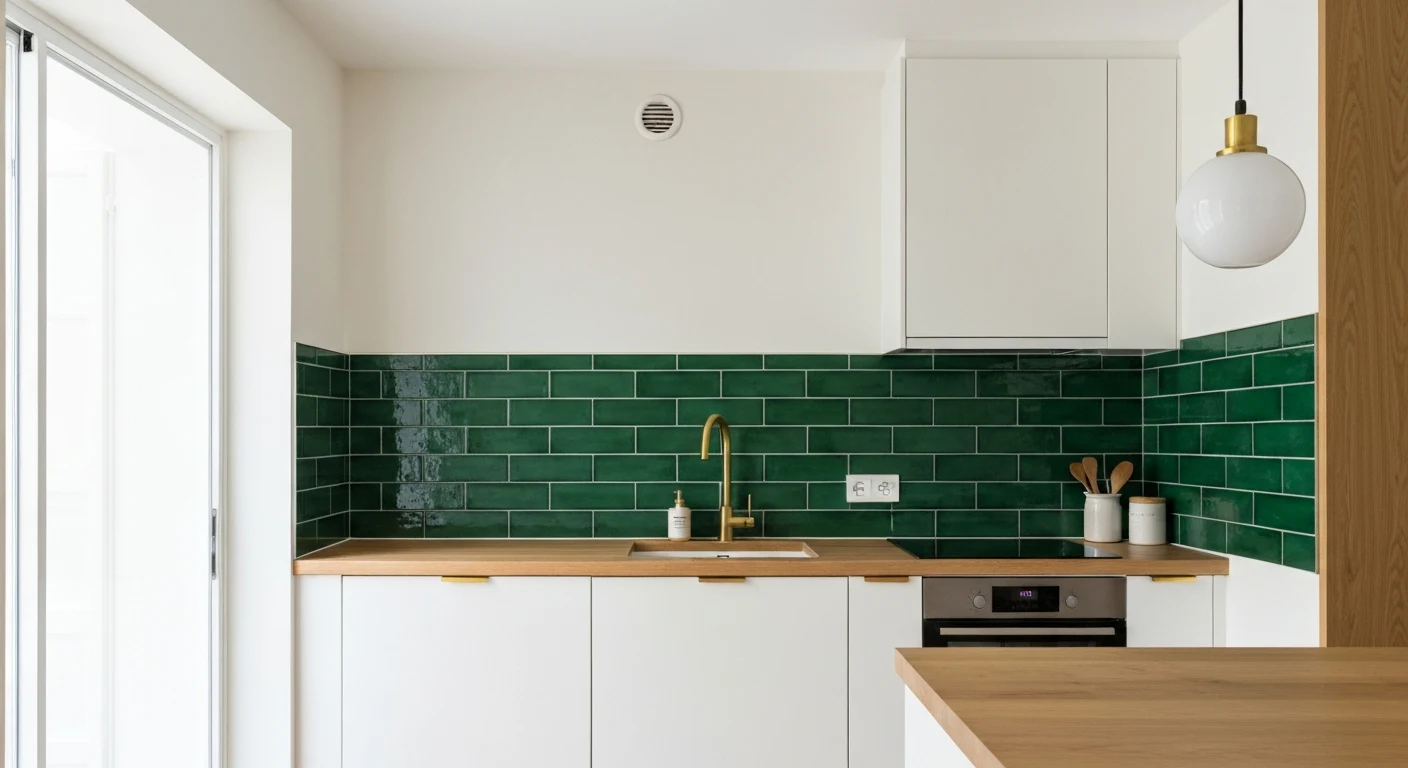
That said, 60% of NKBA designers report that homeowners are incorporating bold statement colors into backsplashes (NKBA, 2026). If you want color in a small kitchen, I'd suggest it on the backsplash only, not the cabinets or walls. One surface in emerald green or deep blue, with everything else neutral, creates focus without claustrophobia. Our guide to making small spaces look larger covers the full color and light strategy.
How Do You Install a Backsplash Without Damaging Rental Walls?
About 35% of U.S. households rent, totaling 44.9 million occupied units (U.S. Census Bureau / iPropertyManagement, 2025). If you're one of them, damaging walls means losing your deposit. Here are three methods I've tested that leave zero damage.
Peel-and-stick tile: The gold standard for renters. Modern peel-and-stick uses pressure-sensitive adhesive that bonds firmly but releases cleanly with heat. Apply the tiles directly to clean, dry walls. When you move, use a hair dryer on medium heat for 30 seconds per tile and peel slowly from one corner. Cost: $150 to $240 for 30 square feet.
Removable wallpaper panels: Vinyl backsplash wallpaper in tile or stone patterns costs $15 to $40 per roll and goes up in minutes. It won't last as long as peel-and-stick tile, but for a one-year lease, it's the cheapest option that still looks good.
Mounted panel system: Attach a thin MDF or acrylic panel to the wall using Command strips, then tile the panel instead of the wall. When you leave, remove the whole panel and touch up any minor adhesive residue. This is the most work but gives you a real tile look with zero wall damage.
For more ideas that won't cost you your deposit, our renter-friendly wall decor guide covers 30 additional no-damage approaches.
Can You DIY a Backsplash in One Weekend?
Yes. I've done it three times, and the longest installation took eight hours including cleanup. Here's a realistic timeline by material:
- Peel-and-stick tile or wallpaper: 1 to 2 hours. No tools beyond a utility knife and level.
- Painted backsplash: 2 to 3 hours (including drying time between coats). You'll need painter's tape, a roller, and semi-gloss paint.
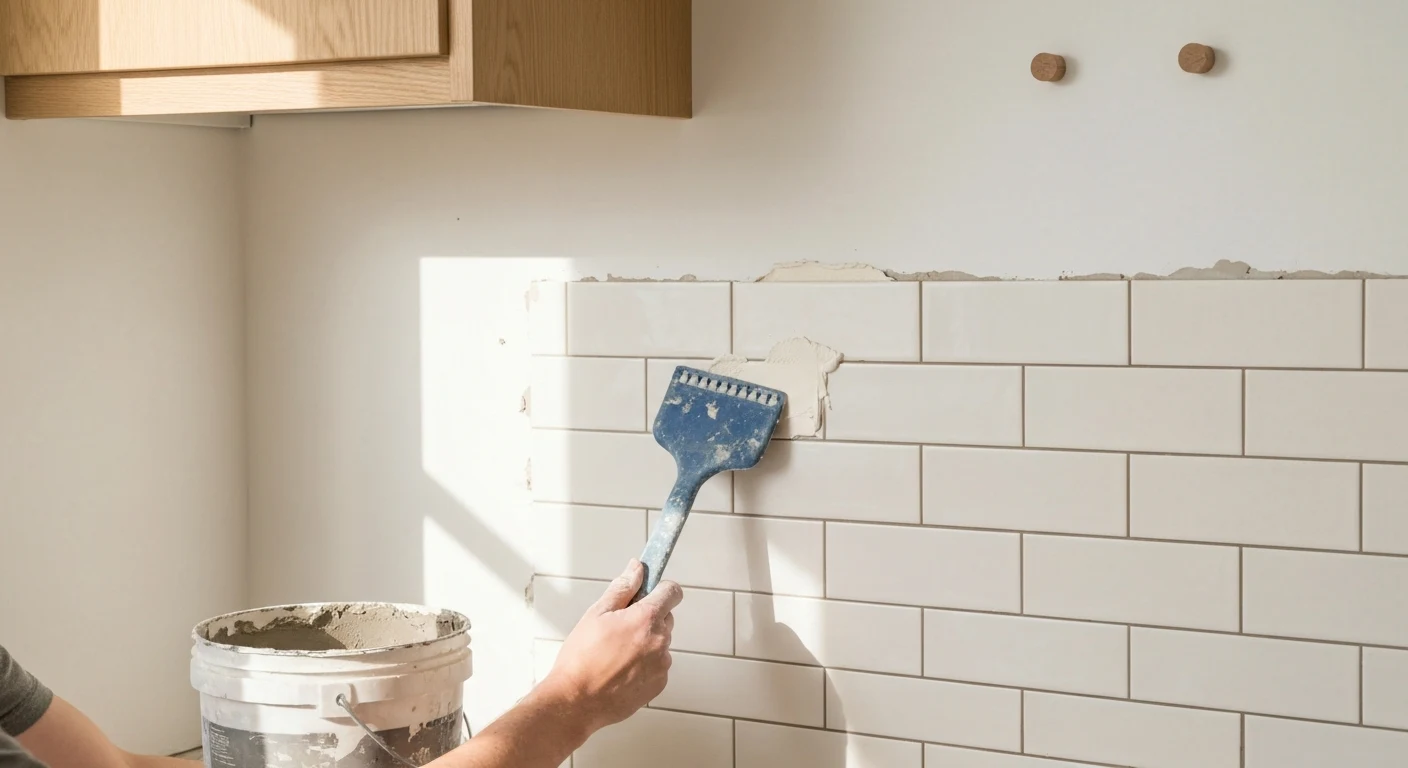
- Subway tile (standard layout): 4 to 6 hours on day one (thinset and tile), 1 to 2 hours on day two (grouting). Tools: notched trowel, tile spacers, sponge, level.
- Herringbone or mosaic tile: 6 to 8 hours on day one, 2 hours on day two. More cuts mean more time.
- Beadboard panels: 2 to 3 hours. Construction adhesive, a level, and a saw for cuts.
The most common mistake I see (and made myself the first time) is not letting thinset cure fully before grouting. Wait 24 hours minimum. Rushing this step leads to tiles shifting when you apply grout pressure, and you'll end up pulling tiles off and starting over. Trust me.
Does a Backsplash Increase Your Home Value?
A minor kitchen remodel, which includes backsplash installation, delivers 112.9% ROI on average, making it the only interior project where you get back more than you spend (Zonda 2025 Cost vs. Value Report). By contrast, a major kitchen remodel ($82,000 to $164,000) returns only 36% to 51%.
The math is simple: spend $200 to $500 on a DIY backsplash as part of a broader kitchen refresh, and you're making one of the highest-ROI home improvements available. Even if you're renting, a clean, well-installed backsplash makes your apartment feel more valuable to you while you live there. That daily quality-of-life improvement is worth the weekend of work.
Frequently Asked Questions
What is the best backsplash for a small kitchen?
Classic white subway tile in a 3x6-inch format. It costs $2 to $7 per square foot, reflects light to make the room feel larger, and matches any cabinet or countertop color. Ceramic tile is the most popular choice at 49% of all backsplash installations (Houzz, 2026).
How many square feet of backsplash do I need for an average kitchen?
Most kitchen backsplashes cover 15 to 30 square feet. Measure the length of your countertop, multiply by the height from counter to cabinet bottom (typically 18 inches), then subtract window and outlet areas. A standard small kitchen needs 15 to 20 square feet. 67% of homeowners extend their backsplash to cabinet height (Houzz, 2025).
Does a backsplash increase home value?
Yes. Minor kitchen remodels (including backsplash) return 112.9% of their cost at resale (Zonda, 2025). A $200 to $500 DIY backsplash is one of the highest-ROI home improvements you can make, outperforming major renovations that return only 36% to 51%.
Is peel-and-stick backsplash worth it?
For renters and short-term solutions, absolutely. Peel-and-stick lasts 3 to 5 years and costs $150 to $240 for a 30-square-foot kitchen. It installs in under 2 hours with zero tools, leaves no wall damage, and over 65% of renters actively seek this type of reversible decor (DataIntelo, 2024).
What backsplash material is safest behind a stove?
Ceramic tile, porcelain tile, glass tile, stainless steel, and natural stone are all heat-resistant and safe behind stovetops. Avoid vinyl, peel-and-stick wallpaper, beadboard, and reclaimed wood directly behind gas burners. Semi-gloss paint is acceptable behind electric stoves but not gas. The global backsplash panel market is projected to reach $9.2 billion by 2032 (DataIntelo, 2024), partly driven by safer, easier-to-clean options.
More from Small Kitchen
Design, decor, and function for small and tiny kitchens.
How Can You Make a Small Kitchen Look More Stylish? 10 Designer Ideas
Looking for unique ways to improve your small kitchen? This guide answers your questions with 10 designer-inspired ideas, from ceiling racks to clever lighti...
Tiny Kitchen, Big Dreams: Your Ultimate Guide to Maximizing Style and Space
14 min read
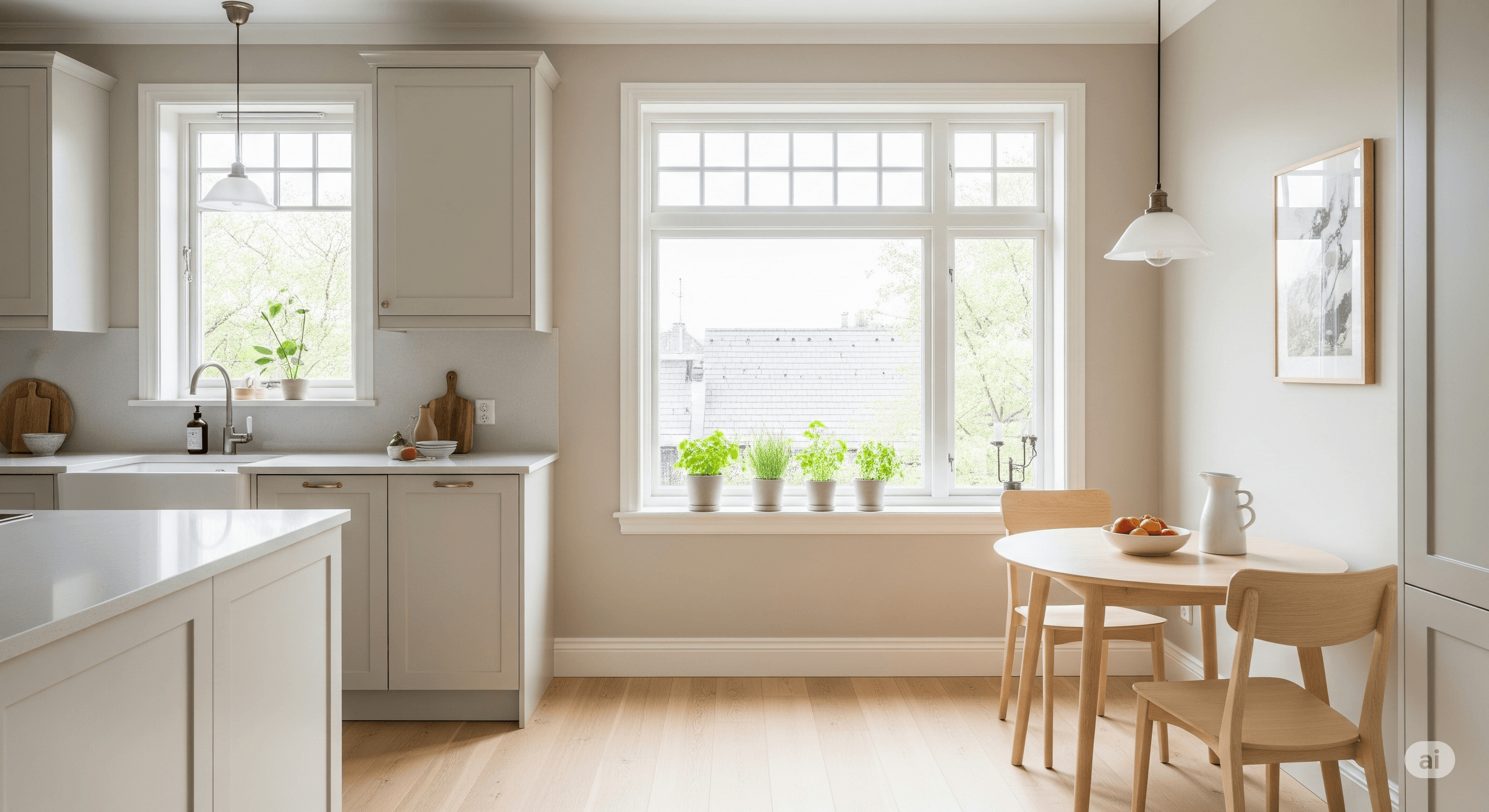
How Do You Design a Small Kitchen? An Interior Designer's Guide
7 min read
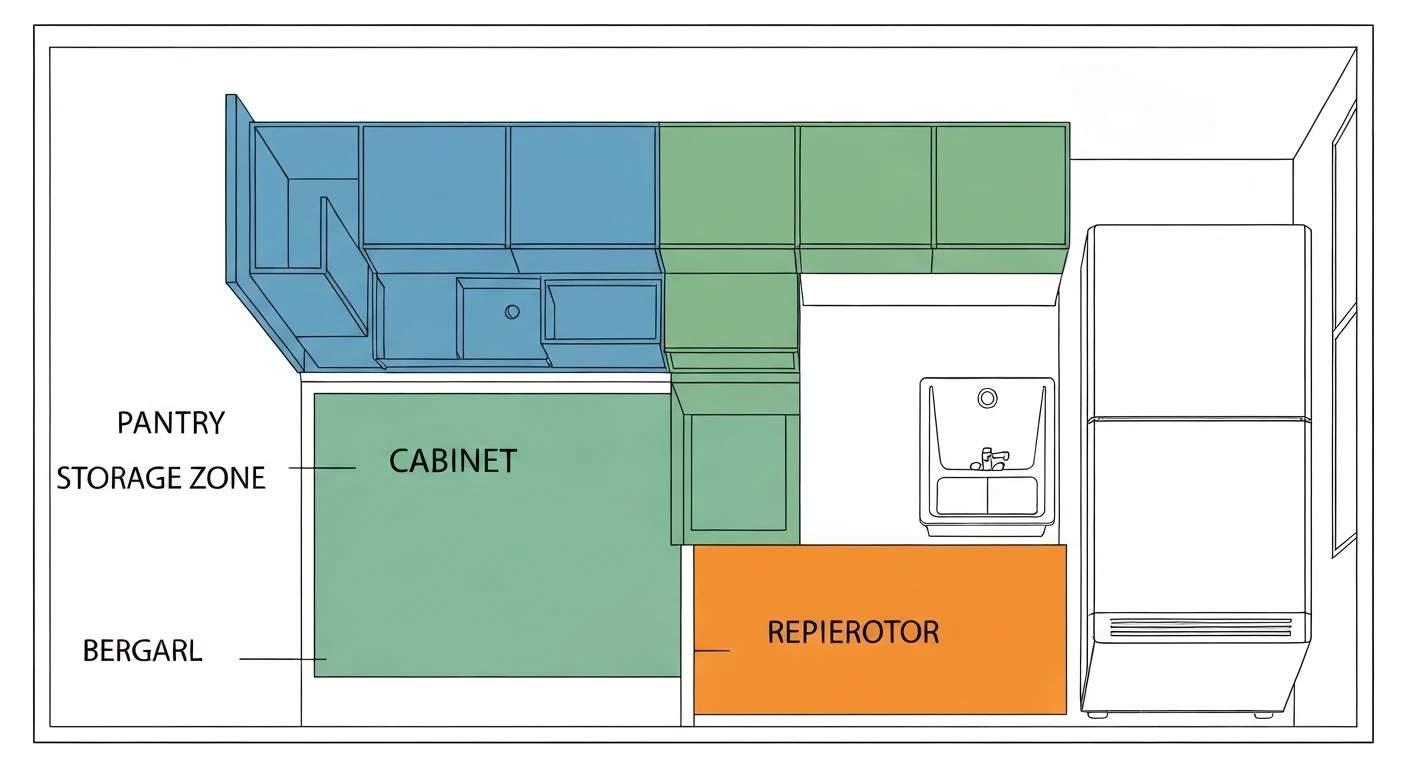
How Can You Make a Small Kitchen More Functional?
17 min read
How Should You Decorate a Small Kitchen?
17 min read
What is the Best Table for a Small Kitchen? 8 Space-Saving Ideas
7 min read
How Do You Choose the Right Mini Fridge? A Complete Buyer's Guide
6 min read
Tags

Written by Joesp H.
Interior Design & Small Space Living Specialist
Former marketing manager turned full-time home optimizer. After living in 7 homes ranging from 450 to 2,000 sq ft, I started CleverSpaceSolutions to help people create organized, functional spaces on real budgets.
Other Articles
How Can You Make a Small Kitchen Look More Stylish? 10 Designer Ideas
Looking for unique ways to improve your small kitchen? This guide answers your questions with 10 designer-inspired ideas, from ceiling racks to clever lighti...
How Do You Design a Small Kitchen? An Interior Designer's Guide
Wondering how to design your small kitchen for maximum style and function? An interior designer shares the most effective methods for color, storage, and lig...
Tiny Kitchen, Big Dreams: Your Ultimate Guide to Maximizing Style and Space
Wondering how to transform your tiny kitchen into a stylish, functional space? This ultimate guide answers your questions, covering everything from smart sto...