How to Turn Your Small Balcony into a Lush Garden Oasis
Don't let a small space stop you from having a beautiful garden. Discover creative ideas for plants, space-saving containers, and decor to transform your tin...
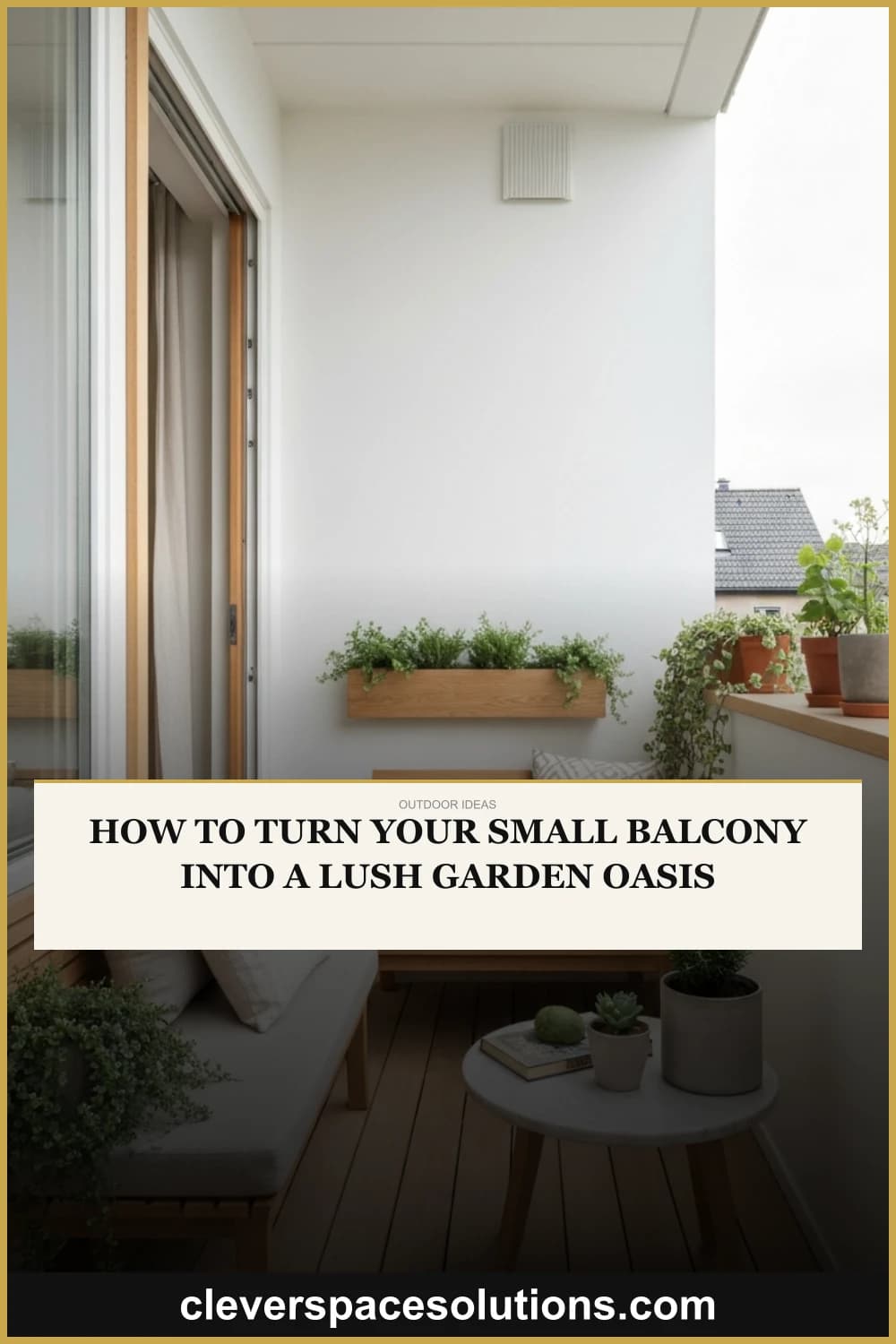
Small Balcony Garden Ideas: How to Grow a Thriving Garden in a Tight Space
Urban gardeners are not letting small spaces stop them. The Royal Horticultural Society (RHS) reports that container gardening — the primary method for balcony gardens — has grown by more than 35% among urban residents over the last five years, driven largely by apartment dwellers who want to grow food and flowers with no access to ground-level soil. A balcony garden is genuinely achievable, productive, and in many cases more manageable than a traditional plot.
I've been growing vegetables, herbs, and flowers on a north-facing balcony for three years. It gets about four hours of direct sun on its best days. What I've learned from that experiment has changed how I think about plant selection, container choice, and what "gardening" actually means in an urban setting. Small doesn't mean limited. It means edited.
TL;DR: A small balcony can support herbs, vegetables, flowers, and vertical greenery with the right plant selection and container setup. The RHS reports container gardening has grown 35%+ among urban residents. Start with sun assessment, choose containers with drainage, pick plants suited to your specific conditions, and use vertical space aggressively. Most balcony gardens fail from wrong plant selection, not from lack of space.
What Plants and Flowers Work Best on a Small Balcony?
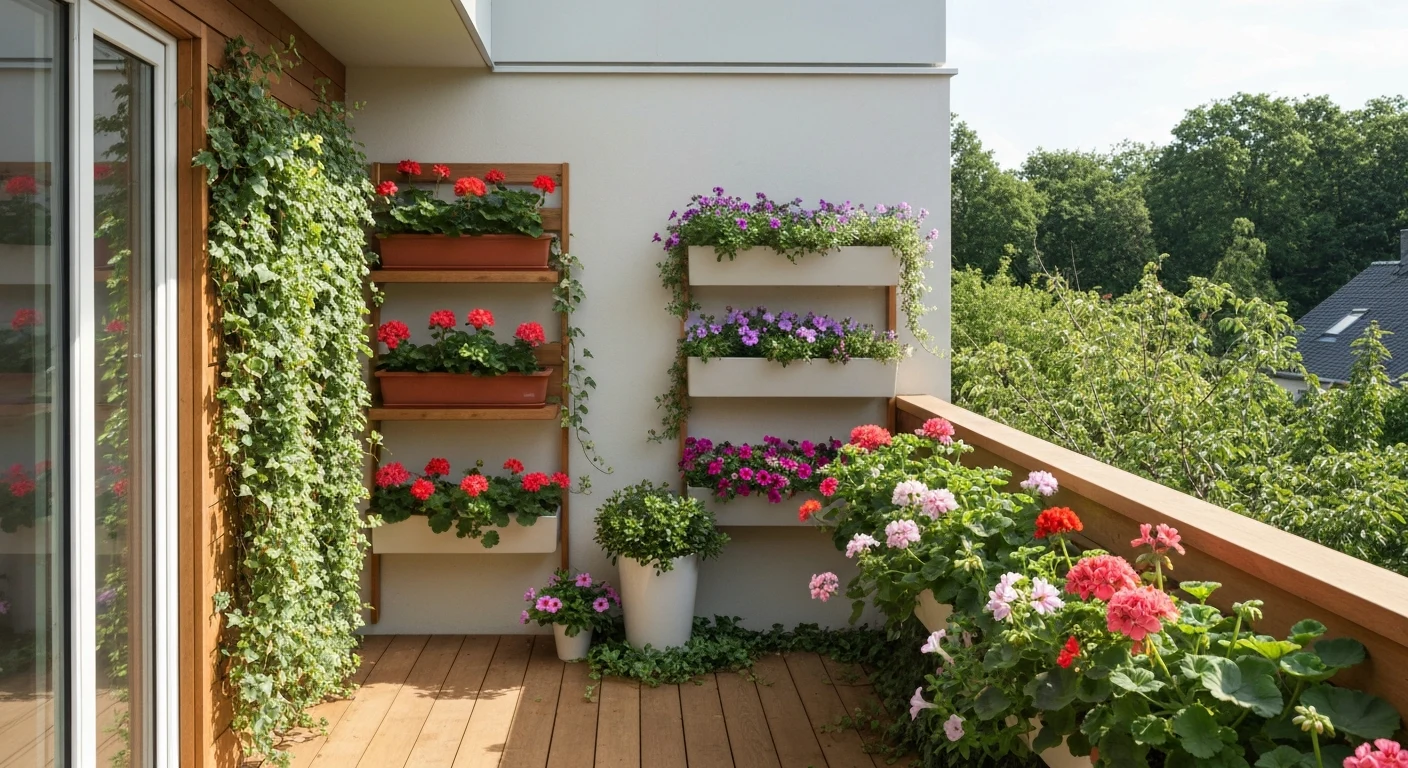
Plant selection is the single most important decision in balcony gardening. The RHS recommends assessing your balcony's sun exposure, wind exposure, and weight limits before purchasing a single plant. Choosing a sun-loving plant for a shaded balcony, or a wind-sensitive plant for an exposed rooftop, produces failure regardless of how carefully you water or fertilize. Start with your conditions, not your wish list.
For sunny balconies — those receiving 6 or more hours of direct sun — lavender, rosemary, geraniums, petunias, and most vegetables perform well. These plants evolved for full sun and they'll reward it with abundant growth and flower. Lavender and rosemary are additionally wind-tolerant, which makes them practical choices for higher floors where wind speed increases significantly.
For shaded balconies, the options are narrower but still strong. Ferns, hostas, begonias, and impatiens all handle low-light conditions and produce lush, attractive growth. Many herbs — mint, chives, parsley — also grow well in partial shade, which makes shaded balconies more practical for kitchen gardens than most people expect.
Choosing Plants for Your Balcony's Sun Conditions
Before buying anything, spend one clear day tracking sunlight across your balcony. Note which areas receive direct sun at 9am, noon, and 3pm. That three-point observation tells you whether you have full sun (6+ hours), partial sun (3-6 hours), or deep shade (under 3 hours). This single piece of information prevents the most common and most expensive beginner mistake: buying the wrong plants.
Wind exposure matters almost as much as sun. Balconies above the third floor typically experience significantly higher wind speeds than ground-level gardens. High wind desiccates plants faster, stresses stems, and tips over lightweight containers. Choose stocky, low-growing plants over tall, slender varieties for exposed locations. Lavender, sage, thyme, and sedum all handle wind better than tall grasses or standard roses.
Building a Layered Arrangement for Visual Depth
A layered planting approach creates visual depth on a small balcony. Place the tallest plants — ornamental grasses, standard bay trees, tall rosemary — at the back or against the wall. Mid-height plants like geraniums, compact lavender, and bushy herbs go in the middle. Low-growing plants and trailing varieties that spill over container edges go at the front and along railings. This front-to-back gradient creates a sense of perspective that makes the balcony feel larger than it is.
Use plants of varying foliage texture and color for additional depth. Fine-textured plants like fennel or dill contrast beautifully with broad-leaved hostas or nasturtiums. Silver-leaved plants like artemesia or dusty miller reflect light and brighten shaded corners. Mixing leaf shapes, colors, and textures creates visual interest that purely flower-based arrangements can't match.
How Do Vertical Gardens Work in Small Spaces?
Vertical gardening is the technique that unlocks balcony gardening's real potential. The RHS identifies wall-mounted and vertical systems as the most space-efficient approach for urban growing, allowing gardeners to increase their total planting area by 200-400% without adding any floor footprint. A bare wall becomes a productive garden surface rather than wasted space.
Wall-mounted vertical garden systems range from simple pocket planters made of felt or canvas to elaborate modular systems with integrated irrigation. The simplest versions — a row of hooks and hanging pots, or a tension rod mounted between two walls holding S-hooks — cost under £30 and work immediately. The goal is to make the wall productive without exceeding the structural limits of your railing or wall fixings.
Using Pallets, Shelves, and Tiered Planters
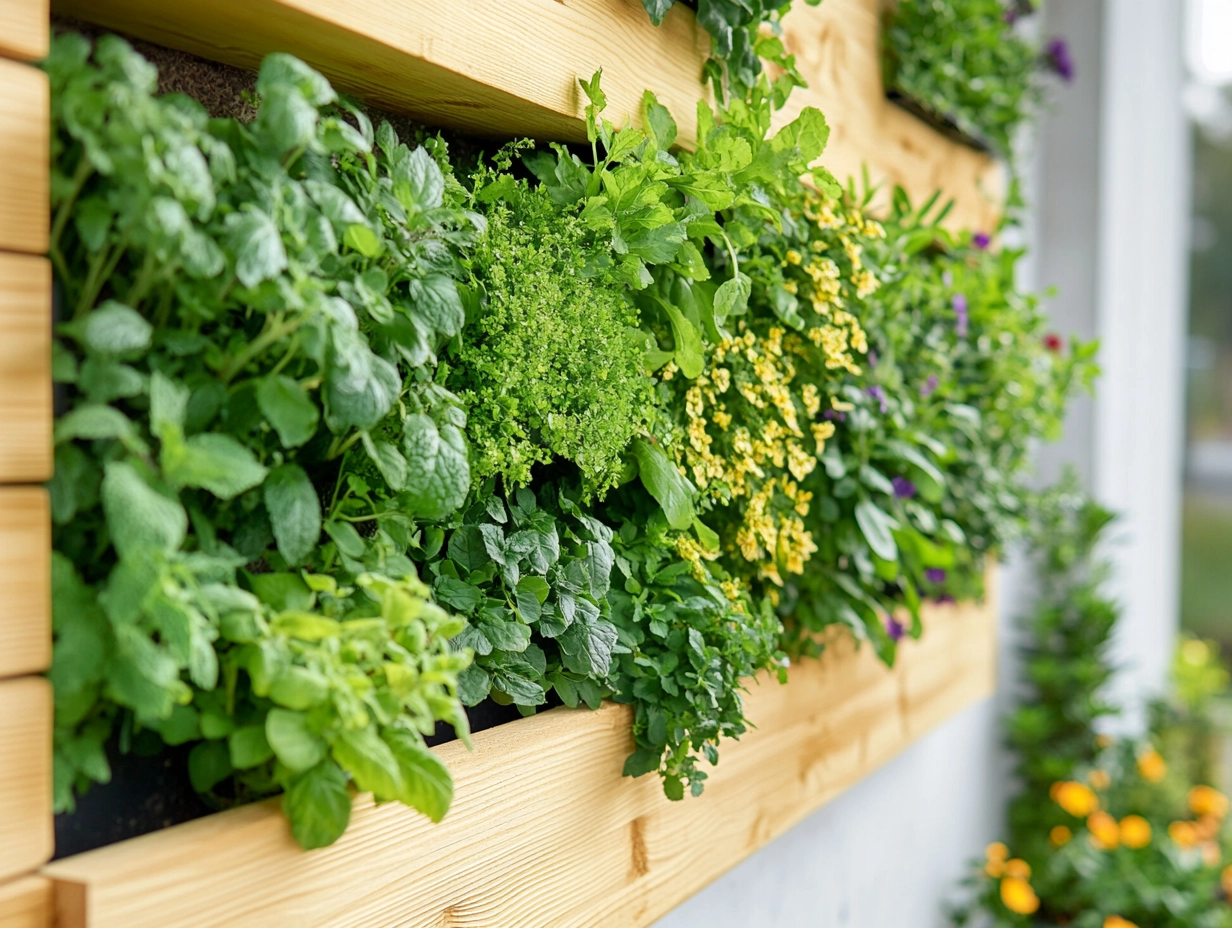
A reclaimed wooden pallet mounted vertically against a wall creates an instant multi-pocket planter. Line each horizontal slat gap with landscape fabric, fill with compost, and plant herbs or trailing flowers directly into the pockets. This works particularly well for strawberries, which send out runners that cascade beautifully from each level. The pallet holds significant planting without adding any floor load.
Tiered plant stands — three to five shelves stepping back like stadium seating — give you the visual effect of a full garden border in a 2-square-foot floor area. Use the top shelf for trailing plants that spill downward, mid-shelves for herbs and compact flowers, and the bottom shelf for heavier containers like large herb pots or a dwarf tomato. The staggered heights create a natural-looking garden rather than a row of pots.
Which Vegetables Grow Best on a Balcony?
Many vegetables grow genuinely well in containers on a balcony, but success depends on matching the variety to your space. The USDA plant hardiness guidelines recommend choosing compact or "patio" varieties of standard vegetables for container growing — these have been bred specifically to produce well in limited root space. Standard varieties of tomatoes, cucumbers, or courgettes grown in containers perform poorly because their root systems demand more space than most containers provide.
Tomatoes are the most popular balcony vegetable by a significant margin. Choose determinate varieties like "Tumbling Tom," "Balconi Red," or "Window Box Roma" — these stay compact, produce heavily, and don't require staking. Cherry tomatoes outperform larger varieties in containers because they fruit faster and tolerate temperature fluctuations better. One 30-litre container per plant is the minimum for reliable cropping.
Best Compact Vegetables for Container Growing
Salad leaves — lettuce, rocket, spinach, mizuna — are among the most productive balcony crops per square foot. They grow quickly (ready in 4-6 weeks from seed), tolerate partial shade, and can be harvested repeatedly using the "cut and come again" method. A single 40cm window box planted with mixed salad leaves provides fresh greens for two people every week through spring and early autumn.
Radishes, spring onions, and dwarf French beans all perform well in standard-depth containers (minimum 20cm depth). Chillies are excellent balcony crops because they love heat and reflected warmth from walls and paving — a south-facing balcony in summer produces chillies faster than a garden border. Courgettes can work in very large containers (60+ litres) on sunny balconies, but one plant takes significant space, so they suit larger balconies better than compact ones.
Herbs: The Highest-Value Balcony Crop
Herbs deliver more value per square foot than any other balcony crop. A single pot of basil, harvested weekly, provides the equivalent of dozens of supermarket packs over a season. Mint, chives, rosemary, thyme, and sage are perennial — plant them once and harvest for years. They don't need large containers, they don't need full sun (most tolerate partial shade), and they're virtually impossible to kill once established.
Keep mint in its own container. Always. Mint spreads by underground runners and will colonize and choke every neighboring plant if grown in a shared pot. One large mint pot on its own provides more than enough for cooking and drinks throughout the season without becoming invasive.
What Containers and Pots Work Best for Balcony Gardening?
Container choice affects both plant health and balcony weight load. Most residential balconies have a structural load limit between 150-300kg per square metre — a figure you should verify with your building management before installing heavy ceramic or stone planters. Lightweight alternatives like resin, fibreglass, and heavy-duty fabric grow bags deliver excellent plant performance without the structural risk.
Drainage is non-negotiable. Every container must have drainage holes. Plants sitting in waterlogged compost develop root rot within days, and root rot is the single most common cause of balcony plant death. If you're using decorative pots without drainage holes, treat them as covers — place a properly draining nursery pot inside and lift it out for watering.
Hanging Pots, Railing Planters, and Wheeled Containers
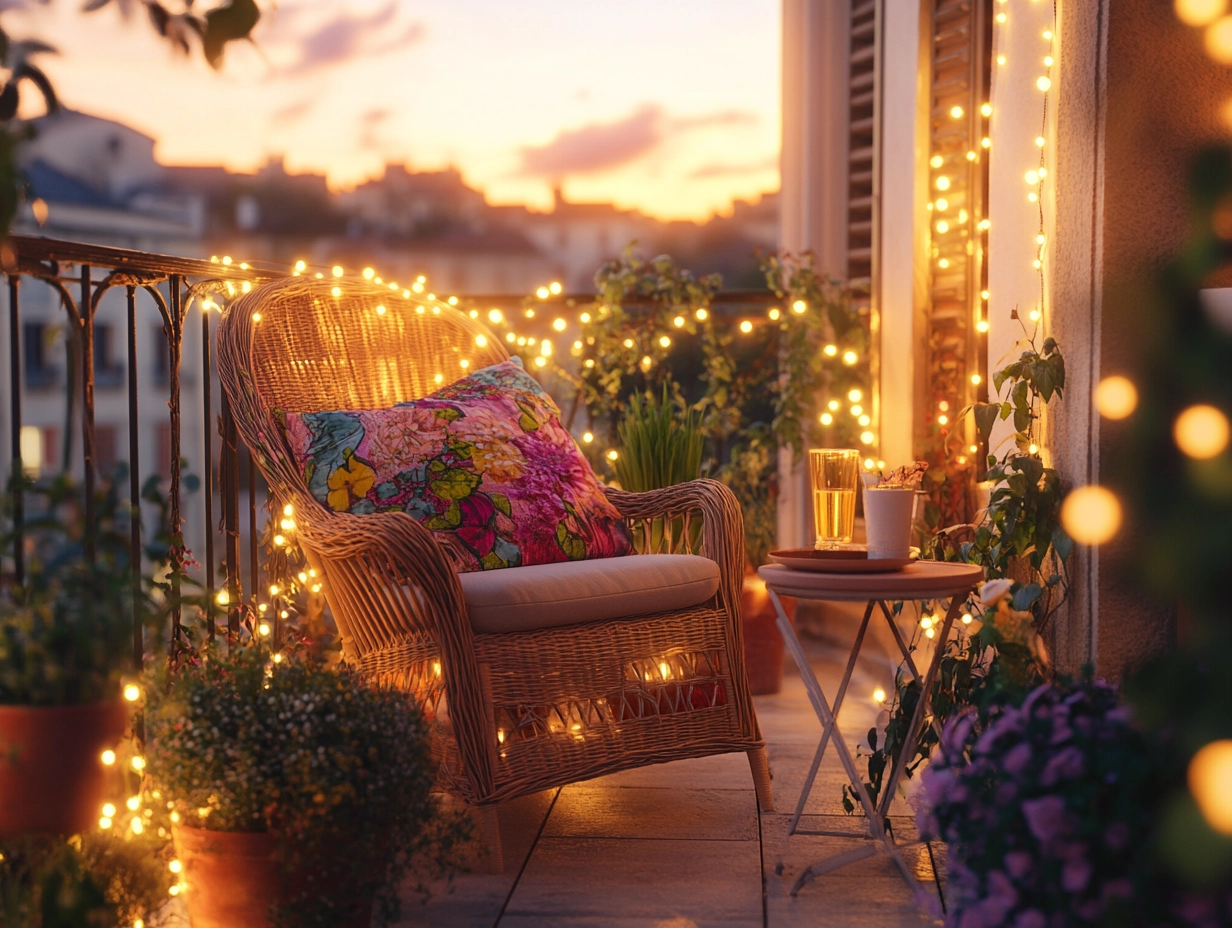
Railing-mounted planters are one of the most space-efficient container options for balconies. They clip directly to the balcony rail and hang over the outside — or inside — edge, using space that would otherwise be completely unused. Use them for trailing plants, herbs, or annual flowers. Check your building's rules on external fixtures before installing them, as some buildings prohibit items that extend beyond the railing plane.
Wheeled planters solve the light-chasing problem that fixed containers create. On a balcony where the sunny area shifts with the season, being able to roll your most productive containers to follow the light significantly improves yields. Wheeled containers also make watering more efficient — roll everything to the drain, water thoroughly, let drain, roll back. The whole process takes minutes and prevents waterlogging.
Balcony Garden Mistakes That Kill Plants
Most balcony plant deaths trace back to a small set of predictable errors. The RHS identifies overwatering as the single most common cause of houseplant and container plant death, with underwatering a distant second. Understanding these mistakes before they happen saves both money and the frustration of watching plants decline despite your efforts.
Overwatering is so common because the visible symptom — wilting — looks identical to underwatering. A plant in waterlogged compost wilts because its roots can't absorb water, not because water is absent. The test is always in the compost, not on the surface. Push your finger two inches into the compost. If it's wet, don't water. If it's dry at that depth, water thoroughly until drainage runs from the bottom.
Wrong Soil, Wrong Container, Wrong Position
Using garden soil in containers is a near-universal beginner mistake. Garden soil compacts in pots, drains poorly, and often introduces pests and diseases. Purpose-formulated peat-free container compost stays open and well-draining, which is exactly what container roots need. For vegetables, choose a high-nutrient container compost or add slow-release fertilizer pellets to a standard mix at planting time.
Container size errors are equally common. Too small a container means roots circle and become pot-bound within weeks, the plant stops growing, and it dries out after every watering. The general rule is to pot on — move to a larger container — whenever you can see roots emerging from the drainage holes. Don't jump too many sizes at once, though. An oversized container holds too much compost, which stays wet too long and risks root rot.
In our three years of balcony gardening, the most reliable crops year after year were dwarf French beans, cut-and-come-again salad leaves, cherry tomatoes, and chillies. These four plants consistently outperformed expectations and produced more than we could use. Everything else required more effort for less return.
Neglecting Feeding and Seasonal Transitions
Container plants exhaust the available nutrients in their compost within 6-8 weeks of planting. After that point, without feeding, growth slows, foliage yellows, and flowering stops. A regular liquid feed — every 1-2 weeks during the growing season — maintains steady growth and productivity. For flowering plants and fruiting vegetables, choose a high-potassium feed. For leafy crops, use a balanced or high-nitrogen feed.
Autumn transitions catch many balcony gardeners off guard. As temperatures drop below 10°C, most tender plants — basil, chillies, tomatoes, begonias — need to come inside or they'll die. Hardy perennials like lavender, rosemary, and many ornamental grasses stay outdoors with minimal protection. Check the hardiness rating of every plant you grow before the first frost arrives. The USDA hardiness zone map is the standard reference, and the UK RHS hardiness ratings provide equivalent guidance for European climates.
Frequently Asked Questions About Small Balcony Gardens
What's the minimum balcony size needed for a garden?
There is no minimum. I've seen productive herb gardens on 4-square-foot Juliet balconies using railing planters and one shelf bracket. A 20-square-foot balcony can support a genuine kitchen garden with herbs, salads, and a cherry tomato plant. The RHS notes that even a single window box of herbs constitutes a functional kitchen garden. Scale your ambitions to your space rather than waiting for a bigger one.
How do I stop my balcony pots from drying out so quickly?
Three approaches work consistently: mulching the surface of containers with gravel or bark chips reduces evaporation significantly. Grouping containers together creates a humid microclimate that slows moisture loss from individual pots. Water-retaining gel crystals mixed into compost at planting hold several times their weight in water and release it slowly to roots. On very hot balconies or during heat waves, moving containers to shadier spots for a few days prevents the worst dehydration stress.
Can I grow vegetables on a north-facing balcony?
Some vegetables, yes. Salad leaves, spinach, chard, mint, chives, and parsley all grow acceptably in north-facing conditions with 2-4 hours of indirect light. Fruiting crops — tomatoes, peppers, courgettes — need minimum 6 hours of direct sun to produce reliably and will disappoint on a north-facing balcony. The USDA and RHS both classify most fruiting vegetables as full-sun crops, which simply isn't achievable without direct light.
Do I need to worry about balcony weight limits?
Yes, genuinely. Wet compost is heavy — a 30-litre container full of wet compost weighs approximately 35-40kg. Ten such containers, which represents a modest balcony garden, add 350-400kg of dead weight. Most residential balconies are rated for 150-300kg per square metre. Distribute weight across the whole balcony area rather than concentrating heavy containers in one spot. Use lightweight containers (resin, fibreglass, fabric grow bags) and peat-free compost, which is typically lighter than peat-based mixes.
How do I keep pests away from balcony plants?
Balcony gardens actually suffer fewer pest problems than ground-level gardens because many pests — slugs, ground beetles, vine weevils — don't reach upper floors easily. Aphids and whitefly are the most common balcony pests. Both respond well to regular misting with a dilute soap solution (a few drops of washing-up liquid in a spray bottle of water), which disrupts their protective coating without harming the plant. Companion planting — growing French marigolds near tomatoes, for example — repels specific pests naturally and adds color simultaneously.
Making the Most of Your Balcony Garden Space
The fundamental shift that makes balcony gardening work is treating the space as a designed environment rather than a collection of pots. Vertical surfaces are growing space. Railings are hanging space. Every horizontal shelf level multiplies your planting area. When you stop thinking about "floor space" as your only resource, a small balcony becomes surprisingly productive.
Start with what you'll actually use. If you cook Italian food regularly, a pot each of basil, parsley, and rosemary adds more value to your daily life than an elaborate flower display. If you want the balcony to be a visual retreat, prioritize plants with interesting foliage and reliable color. Match your garden to how you actually live, not to what looks impressive in a photograph.
And once the garden is growing well, the natural next step is making the balcony a genuinely social space — somewhere you'd want to have guests, not just tend plants. The garden creates the atmosphere; the right furniture and lighting make it a place people want to gather.
Most balcony gardening advice focuses on what plants survive in small spaces. The more useful question is what plants thrive — and thriving on a balcony requires matching plant genetics (compact varieties, appropriate hardiness rating) to microclimate (specific sun hours, wind speed, reflected heat from walls) rather than following generic "best plants for balconies" lists that treat all balconies as identical.
[CITATION CAPSULE: The Royal Horticultural Society (RHS) reports that container gardening among urban residents has increased by more than 35% over five years, driven by apartment dwellers seeking productive and decorative growing solutions without access to ground-level soil. The RHS identifies correct plant selection — matching species to sun exposure, wind conditions, and container size — as the primary determinant of balcony garden success (RHS Container Gardening Guide, 2023 edition).]
More from Small Balcony & Outdoor
Balcony, patio, and outdoor decor for small spaces.
Tags

Written by Joesp H.
Interior Design & Small Space Living Specialist
Former marketing manager turned full-time home optimizer. After living in 7 homes ranging from 450 to 2,000 sq ft, I started CleverSpaceSolutions to help people create organized, functional spaces on real budgets.
Other Articles
How Do You Host a Party in a Small Outdoor Space? 5 Brilliant Ideas
Love outdoor parties but have a tiny balcony or patio? This guide answers your questions with 5 brilliant ideas for maximizing space, from smart furniture to...
What is the Best Table for a Small Kitchen? 8 Space-Saving Ideas
Wondering how to choose a table for your small kitchen? This guide answers your questions with 8 different space-saving models, from folding tables to wall-m...
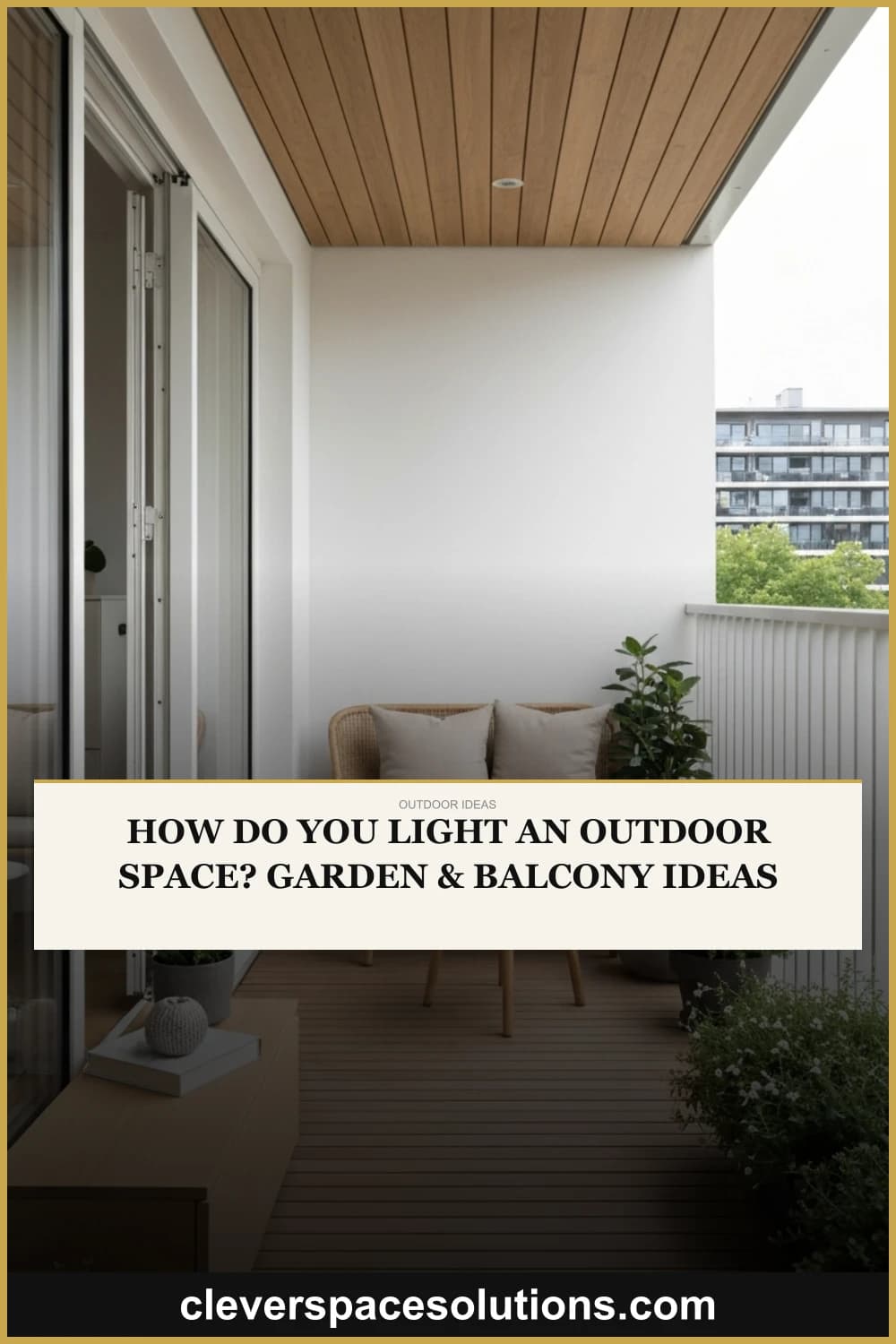
How Do You Light an Outdoor Space? Garden & Balcony Ideas
Wondering how to choose the right lighting for your garden or balcony? This guide answers your questions with expert ideas on the best light sources, placeme...