Tips for Choosing the Perfect Rug for Small Rooms
Struggling with a small space? The right rug can make all the difference. Learn how to choose the perfect size, color, and pattern to make any room feel bigger.
Rugs for Small Rooms: How to Choose the Right Size, Color, and Pattern
The right rug makes a small room feel larger, warmer, and more intentional — the wrong one shrinks it. For most small rooms, a light-colored, low-pattern rug sized to leave 12–18 inches of bare floor around the edges works best. According to Architectural Digest's rug sizing guide, the single most common decorating mistake in small spaces is choosing a rug that's too small, which visually fragments the floor and makes rooms feel cramped rather than cozy.
TL;DR
- Always size up: a rug that's too small makes a small room look more cramped, not cozier.
- Light, solid colors or subtle patterns keep small rooms feeling open and airy.
- Leave 12–18 inches of bare floor between the rug edge and the wall.
- Low-pile materials like flatweaves and short-pile wool are the most practical choices for tight spaces.
If you're working through a full small-space refresh, our guide on decorating a one-bedroom apartment covers how rugs fit into a larger layout strategy.
Tips for Choosing the Perfect Rug for Small Rooms
Choosing rugs for small rooms comes down to three decisions: size, color, and pattern — in that order. Research from the American Society of Interior Designers found that floor coverings are among the top five elements that affect perceived room size. Get the sizing right first, and color and pattern become much easier choices. Rush those decisions and even a beautiful rug can work against you.
The room's color palette, natural light levels, and your personal style all play a role. That said, some rules hold up across nearly every small-room situation: choose a size that visually expands the floor, use lighter tones in low-light spaces, and avoid large bold patterns that overwhelm a tight footprint. Think of the rug as the foundation — everything else layers on top of it.
Before you shop, take 10 minutes to sketch your room layout and mark where the furniture sits. This tells you immediately what rug shape and size will work, and it saves you from the frustration of returns. Rectangular rooms almost always call for rectangular rugs. Round rooms or reading nooks often suit circular rugs in the 4-foot or 5-foot diameter range.
Be Realistic When Choosing a Rug Color
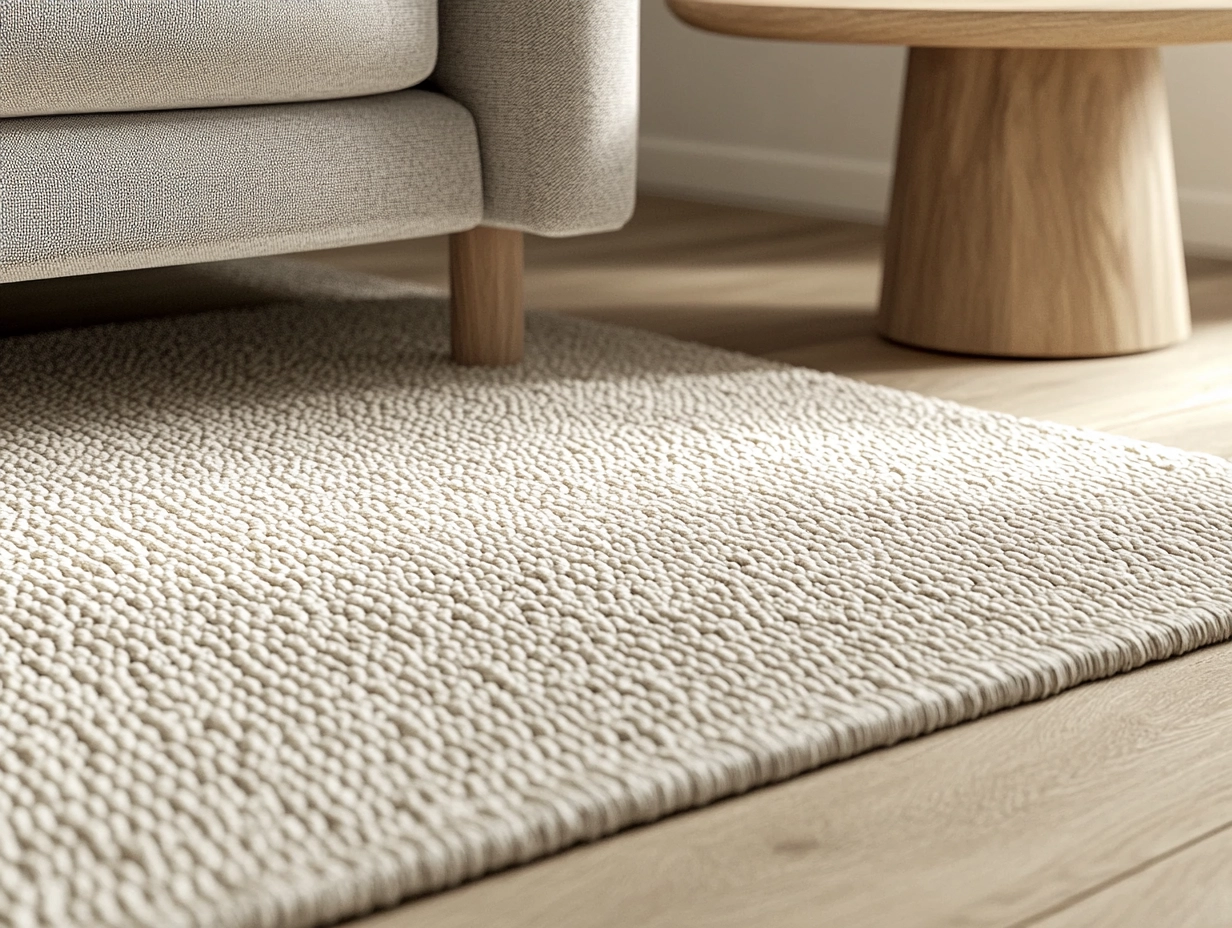
Light colors reflect more light and make walls feel farther apart — that's why interior designers consistently recommend off-whites, warm creams, soft grays, and pale blues for small rooms. A rug in one of these tones can visually push the walls back by several feet, even in a room with no windows. That said, "light" doesn't have to mean boring.
While vibrant and sunny colors can certainly uplift a room's energy, using too many contrasting bright shades is visually tiring rather than invigorating. For a more harmonious look, choose rug colors and tones that complement your existing furniture. In smaller rooms, it's often best to opt for a solid-colored rug. If you prefer a pattern, choose one with small, subtle designs that add movement without making the space feel cluttered.
One practical tip: pull your rug color from a secondary color already present in the room — a throw pillow, a piece of artwork, or the undertone of your sofa fabric. This connects the rug to the space rather than making it look like an afterthought. It also means you don't have to redecorate everything around a new rug choice.
Dark rugs aren't always wrong. A deep navy or charcoal rug in a room with white walls and light furniture can create a grounding, sophisticated effect. The key is contrast: if your floors are already dark hardwood, a dark rug will blend in and disappear rather than define the space.
Make Your Room Look Bigger with the Right Pattern
For a small room, the ideal rug is often a single piece with a minimal pattern. Using multiple small rugs or one with large, bold designs can visually divide the floor and make the room appear even smaller. Non-obtrusive patterns — or better yet, pattern-free models in light colors — create a sense of openness and calm. If you want a pattern but wish to keep the spacious feel, consider rugs with a self-pattern, such as those with embossed or textured high-low piles, especially in lighter shades.
Geometric patterns with thin lines and open spacing work better than dense florals or oversized medallions. A simple thin-stripe rug running lengthwise down a narrow room can actually make it feel longer. The key is scale: patterns should be proportionate to the room. A large-scale pattern that works beautifully in a 400-square-foot living room will look chaotic in a 120-square-foot bedroom.
Stripes deserve special mention. Horizontal stripes widen a room visually. Vertical stripes lengthen it. If your small room is more square, a diagonal or diamond pattern breaks up the boxy feeling without overwhelming the floor. These aren't decorating myths — they're based on well-documented principles of visual perception that interior designers rely on regularly.
It Pays to Measure Correctly
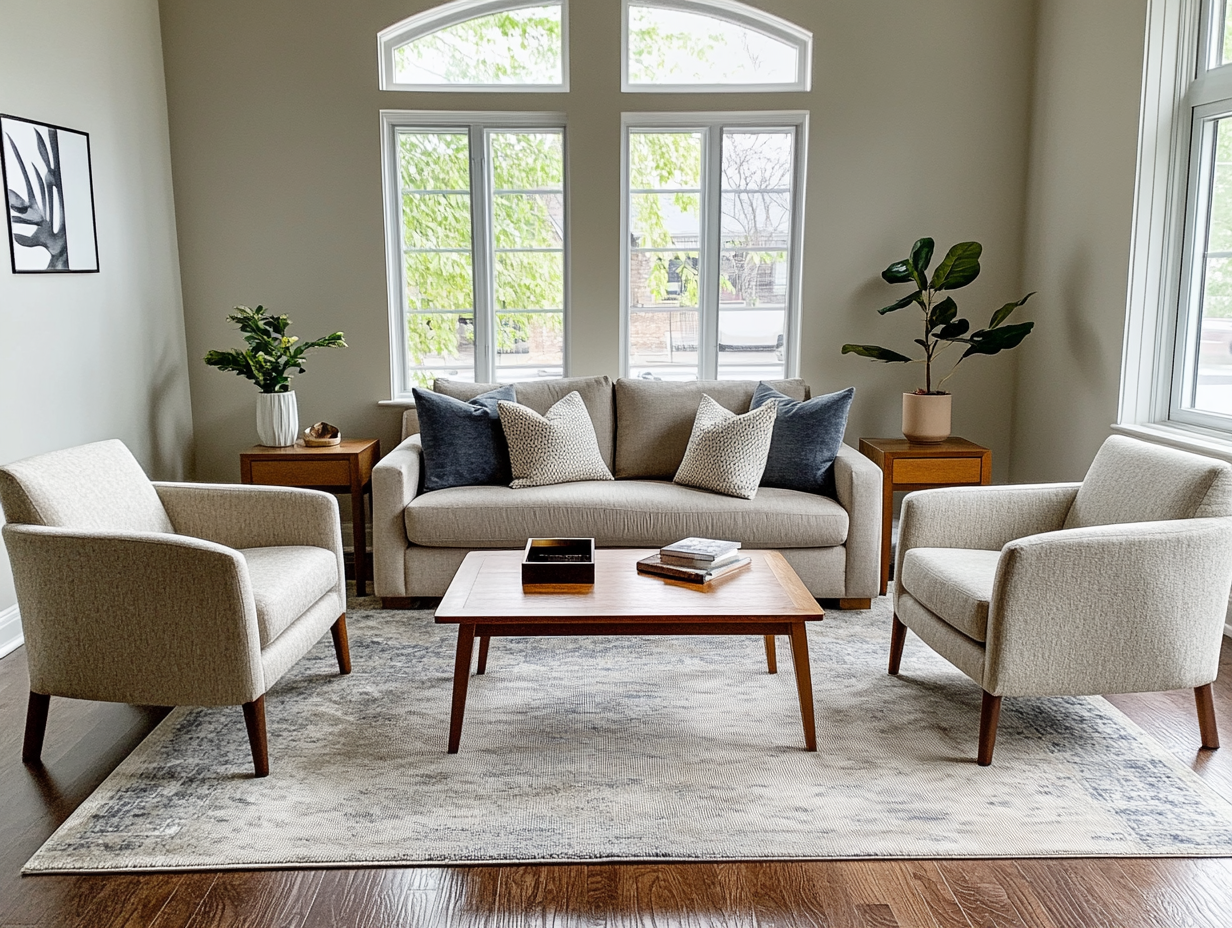
Before you start shopping, decide how much of the floor you want the rug to cover. Are you looking for a rug that covers most of the room, or do you want a smaller accent piece in the center? These are very different purchases, and mixing them up is the most common and expensive mistake people make when buying rugs for small rooms.
Once you have a clear idea, use a measuring tape to find the length and width of the area you want to cover. Write it down. Then, before ordering, use painter's tape on the floor to outline the rug's footprint — this is the single most useful step you can take. It shows you exactly how the rug will relate to your furniture and walls before any money changes hands.
For round rugs, measure the diameter — the distance across the widest part of the circle — to make sure it fits comfortably in your chosen spot. A 4-foot round rug works well under a small accent chair. A 5-foot round suits a reading nook or the foot of a twin bed. Don't guess; tape it out first.
Best Rug Sizes for Every Small Room
Rug sizing isn't one-size-fits-all, but there are reliable starting points for each room type. According to Architectural Digest, the most common rug-buying mistake is choosing a size too small — and this applies to small rooms just as much as large ones. For more on placing furniture around a rug, see our guide on furnishing a small living room.
Here are the recommended rug sizes by room type, based on standard small-space dimensions:
Small Living Room: 5x8 ft or 8x10 ft
In a small living room (roughly 10x12 ft or 12x15 ft), a 5x8 ft rug works when you only want the front legs of your sofa and chairs on the rug. An 8x10 ft rug is better if you want all furniture legs fully on the rug — a layout that makes the room feel more intentional and unified. If your living room is narrow, don't go smaller than 5x8; anything under that will look like a bath mat.
Small Bedroom: 5x8 ft Under the Bed
For a queen bed in a small bedroom, place a 5x8 ft rug so that roughly two-thirds of it extends under the bed frame, with 18–24 inches showing on the sides and foot of the bed. For a full or twin bed, a 4x6 ft rug positioned the same way works well. The goal is to have something soft underfoot when you step out of bed — not a rug that's confined to a corner of the room.
Small Dining Room: 6x9 ft or 8x10 ft
The rug needs to be large enough that chairs stay on it even when pulled out from the table. For a table that seats four, a 6x9 ft rug is the minimum. For a table that seats six in a compact space, 8x10 ft is more appropriate. A rug that's too small here looks odd and also causes chair legs to catch on the edge constantly — a daily frustration you want to avoid.
Small Home Office or Entryway: 2x3 ft or 3x5 ft
Entryways and home offices often get overlooked when it comes to rug sizing. A 2x3 ft rug works as a doormat-style accent. A 3x5 ft rug defines a desk zone in a small home office without overwhelming the room. For a narrow hallway, a runner in the 2x8 ft or 2x10 ft range adds warmth and direction without closing in the space visually.
Choose Your Rug Based on Your Furniture
In home decor, rug selection should always account for the room's existing furniture. Sofas, being the largest pieces in most living rooms, are the primary factor in deciding rug color. If your room already has many accessories and decorative items, a simple, plain-colored rug provides balance and prevents the space from looking too busy. In a minimalist room, a rug with a noticeable pattern can prevent things from feeling empty and adds a point of interest.
Also consider practicality: a room with a lot of furniture accumulates more dust around and beneath it. In this case, a low-pile rug that doesn't trap dust and isn't overly shaggy is a more practical choice. High-pile or shag rugs look great in photos but they're harder to vacuum around furniture legs, and in a small room where furniture is close together, that matters.
If your furniture is dark — think espresso wood finishes, black metal frames, or navy upholstery — a lighter rug creates contrast and keeps the room from feeling heavy. If your furniture is already light-toned, a medium-toned rug adds the visual weight the room needs to feel grounded. The rug and the furniture should work together, not compete.
How Much Light Does Your Room Get?
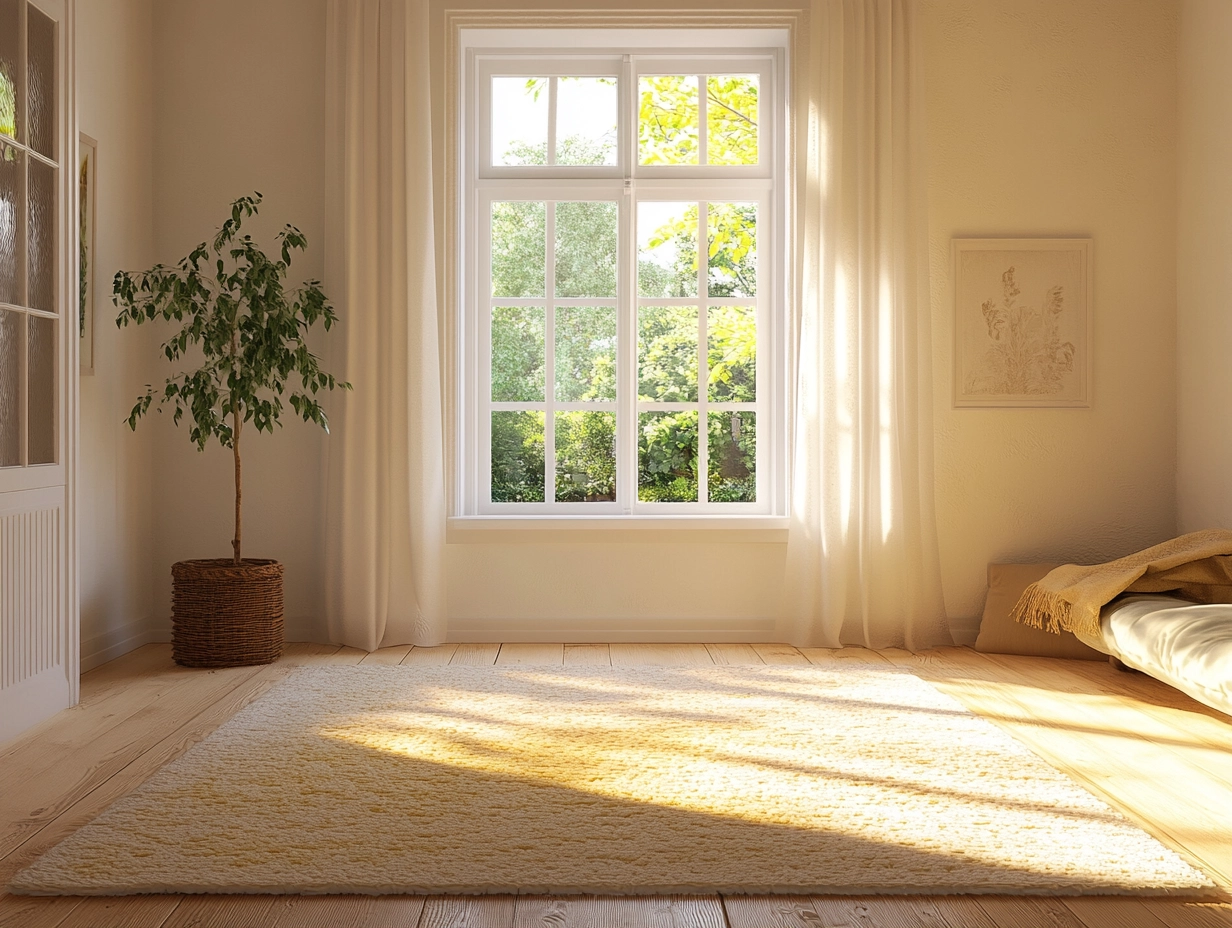
The amount of natural light a room receives directly shapes which rug colors will work. A home office where you spend hours concentrating should feel bright, airy, and refreshing. If that room doesn't get much natural light, your rug can compensate. A light-colored rug in a dark room reflects available light around the space, essentially acting as a passive brightener.
In a dark room, opting for light colors and warm shades in your rug can significantly improve the atmosphere. In rooms that already get plenty of sunlight, light-colored rugs further enhance the airy feel and make the space seem even larger. If you love darker colors, shades of sage green or soft olive can be excellent choices — they add depth without making the room feel confined, and they work well with both warm wood tones and cool gray walls.
North-facing rooms (which get cooler, bluer light) tend to benefit most from rugs in warm tones: creams, warm whites, terracotta, or soft amber. South-facing rooms that get warm light all day can handle cooler rug tones — light blues, soft greens, and even pale grays — without feeling cold.
Consider How Frequently the Room Is Used
Think about how often you use the room and what kind of traffic it gets. A high-traffic area needs a rug that holds up to regular use, not one chosen purely for aesthetics. A family living room with kids and pets is a different situation from a guest bedroom that sees light use a few times a year. Your durability requirements should shape your material choice just as much as your visual ones.
A room used constantly should feel energetic, bright, and motivating. If the room's location or architecture limits natural light, a rug is one of the most powerful tools you have to instantly change its entire vibe — almost as effective as a new coat of paint. Choose a material that can handle the traffic, and a color that will still look reasonably clean between washings.
For high-traffic small rooms, avoid very light-colored rugs unless you're committed to regular cleaning. A medium-toned rug in a neutral like warm gray, taupe, or a muted sage will hide everyday dust and light staining far better than ivory or cream. It's a small compromise that pays off over years of daily use.
Rug Materials That Work Best in Small Spaces
Material choice affects how a rug feels underfoot, how long it lasts, and how easy it is to keep clean — all of which matter more in a small room where the rug gets concentrated daily use. If you're also thinking about rugs for a compact bathroom, our bathroom decor ideas guide covers moisture-resistant options. For small rooms generally, here's how the main materials stack up.
Flatweave and Low-Pile Wool: Best All-Around
Flatweave rugs — kilims, dhurries, cotton flatweaves — are thin, easy to clean, and don't trap dust. They're ideal for small rooms because they don't add visual bulk. Low-pile wool rugs (pile height under half an inch) offer more cushioning while still being practical. Wool is naturally stain-resistant, durable, and doesn't flatten under furniture the way synthetic fibers do. For most small living rooms and bedrooms, a low-pile wool rug in a 5x8 ft or 8x10 ft size is the best investment you can make.
Jute and Sisal: Good for Low-Traffic Small Rooms
Natural fiber rugs like jute and sisal have a textured, earthy look that works well in small rooms with a lot of wood tones or neutral palettes. They're durable and affordable, but they're not soft underfoot and they're difficult to clean once stained. Use them in low-traffic spaces — a small study, a guest room, or a reading corner — rather than in a heavily used living room or under a dining table where spills are likely.
Polypropylene and Synthetic Blends: Best for High-Traffic and Outdoor-Adjacent Spaces
Synthetic rugs made from polypropylene or nylon are the most stain-resistant and easiest to clean. They're a good practical choice for small entryways, kids' rooms, or any small room that takes heavy daily use. The trade-off is feel: synthetics don't have the warmth or softness of natural fibers. In a small room, that distinction matters more because you're closer to every surface. Use synthetics where performance matters most; use natural fibers where comfort is the priority.
Avoid Thick Shag in Small Rooms
High-pile shag rugs are cozy and photogenic, but they're genuinely difficult to manage in small rooms. They're hard to vacuum, they flatten under furniture legs and don't recover well, and their thick pile adds visual bulk that makes tight spaces feel heavier. If you love the softness of a shag, limit it to a low-traffic area like a reading nook or bedroom corner, and choose a version with a pile height under 1.5 inches.
Frequently Asked Questions About Rugs for Small Rooms
What size rug makes a small room look bigger?
The counterintuitive answer: bigger rugs make small rooms look bigger, not smaller. A rug that's too small isolates furniture and fragments the floor, which shrinks the room visually. For a small living room, a 5x8 ft rug is a reasonable minimum — an 8x10 ft rug often works even better. Leave 12–18 inches of bare floor between the rug's edge and the wall for the best visual effect.
Should rugs be lighter or darker than the floor in a small room?
For most small rooms, a rug that's lighter than the floor works better. Light rugs reflect more ambient light, reduce visual contrast between the floor and furniture, and make the room feel more open. That said, if your floors are already very light — pale oak or whitewashed wood — a medium-toned rug adds the contrast and grounding the room needs. Avoid rugs that are nearly identical in tone to the floor; without contrast, the rug disappears.
What rug pattern is best for a small room?
Minimal or no pattern is usually the safest choice. Simple geometric patterns with open spacing, thin stripes, or tonal textures work well. Avoid large-scale florals, oversized medallions, or high-contrast bold patterns — these draw the eye across the rug rather than letting it settle, which makes rooms feel busier and smaller. If you want pattern, keep the scale small and the contrast soft. A self-patterned or tone-on-tone rug adds interest without visual noise.
Can you use multiple rugs in a small room?
In most small rooms, one well-sized rug is better than two smaller ones. Layering rugs or placing two separate rugs in a tight space divides the floor into competing zones, which makes the room feel fragmented. The exception is a studio apartment where one rug defines the living area and a separate smaller rug (like a 2x3 ft) anchors a desk zone or entryway. Keep them in the same color family to maintain visual cohesion across the space.
What type of rug is best for a small bedroom?
For a small bedroom, a low-pile wool rug or a flatweave cotton rug in the 5x8 ft range placed under the lower two-thirds of the bed is the most practical and visually effective choice. You want something soft underfoot when you wake up, easy to clean, and sized so it shows on both sides of the bed. Avoid thick shag in small bedrooms — it's harder to clean and visually heavy in a tight space.
Written by Joesp H. for CleverSpaceSolutions — a resource for practical small-space home organization.
More from Studio & Small Apartment
Layout, decor, and life in studio and small apartments.
How Do You Decorate a Studio Apartment?
Wondering how to furnish your studio apartment without it feeling cramped? This guide answers your questions with smart ideas for zoning, furniture, and deco...

How to Decorate a Studio Apartment: An Expert's Guide
8 min read

How Do You Decorate a Studio Apartment?
10 min read

The Art of Studio Living: Your Complete Guide
10 min read

How to Layout a Small Apartment?
25 min read

3 Flawless Layouts and 5 Real-Life Studio Solutions
21 min read

How Do You Decorate a One-Bedroom Apartment?
18 min read
Tags

Written by Joesp H.
Interior Design & Small Space Living Specialist
Former marketing manager turned full-time home optimizer. After living in 7 homes ranging from 450 to 2,000 sq ft, I started CleverSpaceSolutions to help people create organized, functional spaces on real budgets.
Other Articles

The Ultimate Guide to Jute Rugs: Are They Right for Your Home?
Considering a jute rug? Our complete guide covers everything you need to know, from their benefits and durability to how to clean and style them in any room.
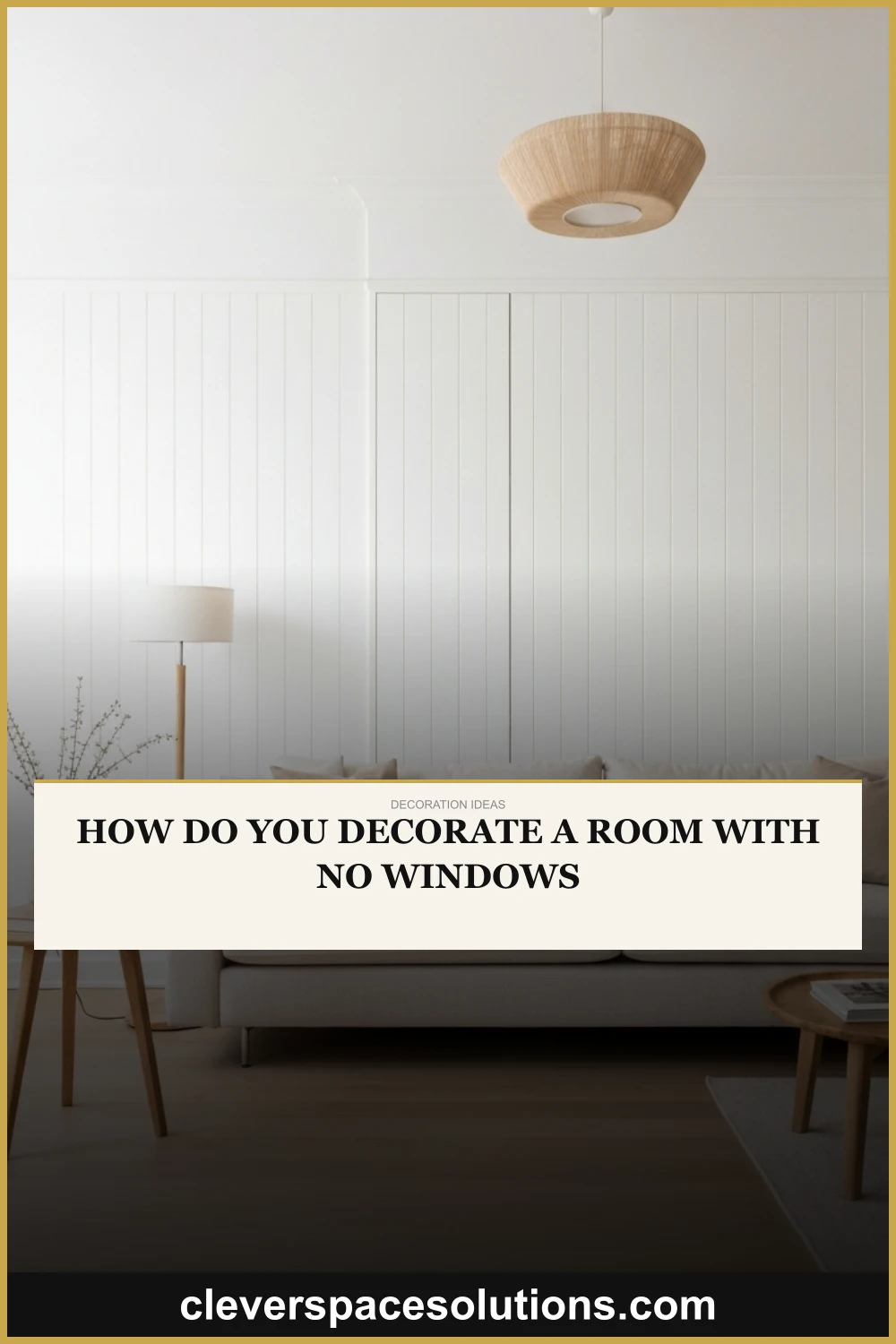
How Do You Decorate a Room with No Windows?
Wondering how to make a windowless room feel bright and inviting? This guide answers your questions with clever decor tricks for lighting, mirrors, and color...

Small Bathroom, Big Style: Game-Changing Decor Ideas
Struggling with a small bathroom? Discover smart and stylish decor ideas to make your space feel bigger, brighter, and more organized. From clever storage to...