Small Bedroom Storage Ideas When You Have No Closet Space
Creative storage solutions for small bedrooms without closets. From under-bed drawers to open closet systems, organize any bedroom on a budget.
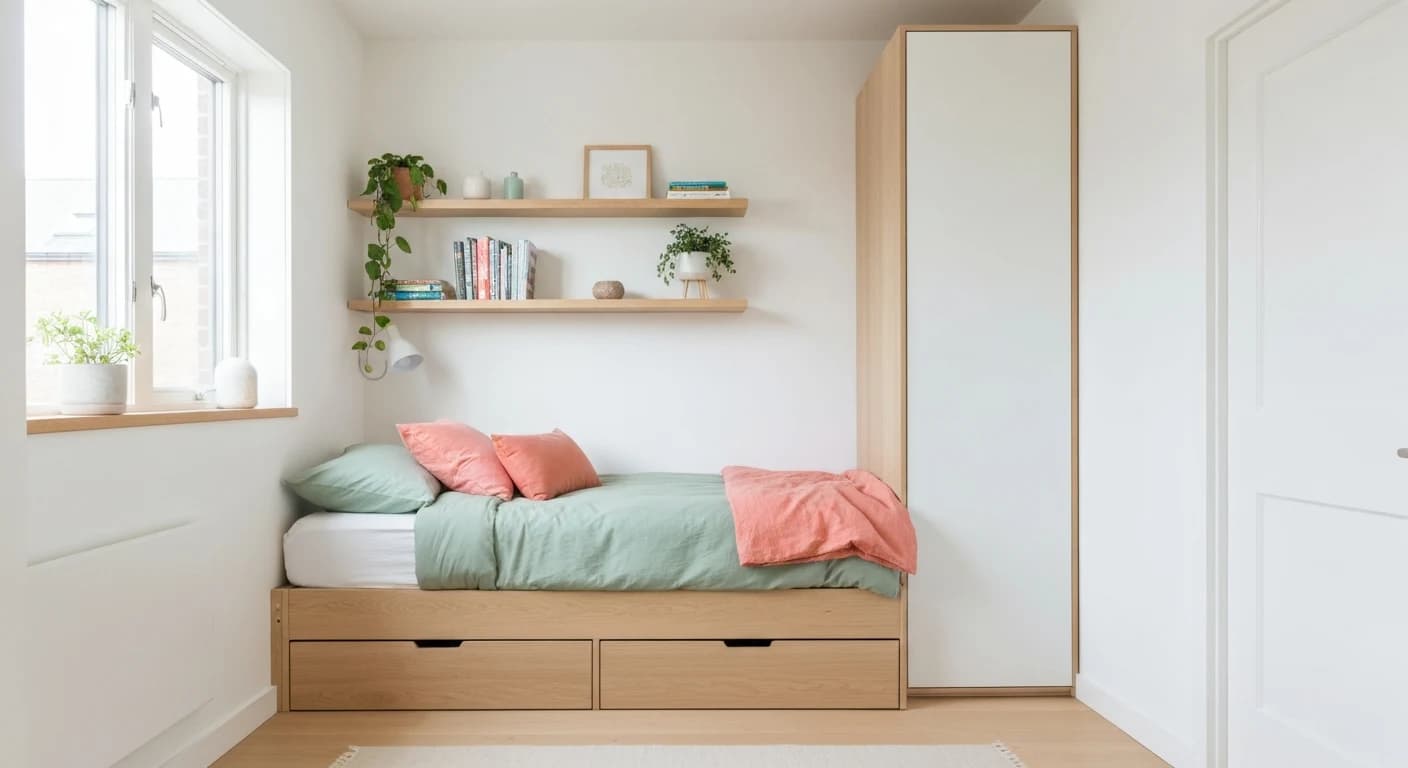
TL;DR: No closet? No problem. Use under-bed drawers, vertical wall shelving, freestanding wardrobes, and multi-functional furniture to unlock hidden storage in a small bedroom. DIY solutions start at $200 and can save you thousands compared to custom closet systems, while a well-organized room measurably reduces daily stress.
If you have ever opened the door to your bedroom and wondered where all the floor space went, you are not alone. The typical secondary bedroom in a US home measures just 120 square feet (This Old House, 2025), and once you place a full-size bed and a nightstand, storage becomes an afterthought. Factor in apartments with no built-in closet at all, and you have a real problem that affects millions of renters every day.
I have spent years helping people design small bedrooms that feel functional and calm, and the single biggest pain point is always the same: not enough places to put things. One in three Americans now rents a self-storage unit (StorageCafe, 2025), and a staggering 44% of one-bedroom apartment dwellers use off-site storage because their bedroom simply cannot hold everything. That means people are paying $100 or more per month to store items that smarter bedroom storage could keep right at home.
This guide walks you through every storage strategy I know, from the space under your bed to the walls above your head. Whether you recently moved into a closetless studio or you just want to squeeze more function out of a tight bedroom layout, you will find practical, renter-friendly solutions backed by real numbers. Let us turn that cramped bedroom into a place where everything has a home.
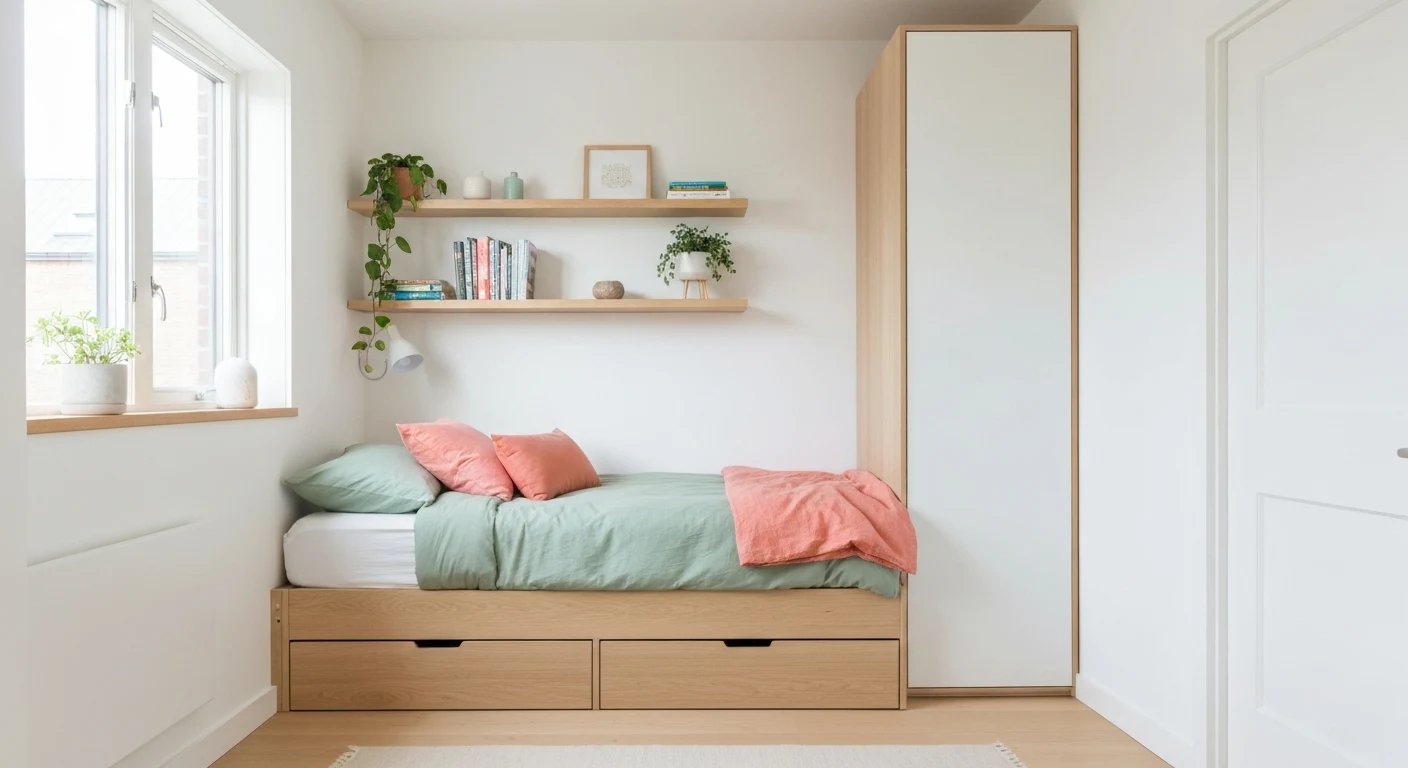
Why Your Bedroom Needs a Storage Plan (Not Just More Bins)
Before you buy a single organizer, it helps to understand what disorganized bedroom storage actually costs you. A landmark UCLA study found that women who described their homes as "cluttered" had flatter cortisol slopes, a stress biomarker linked to poorer health outcomes, compared to those who called their homes "restful" (Saxbe & Repetti, Personality and Social Psychology Bulletin, 2010). The bedroom is the last room you see before sleep and the first one you face in the morning. Its state sets the tone for your entire day.
The financial toll adds up too. Americans spend 2.5 days per year looking for lost items and collectively waste $2.7 billion annually on replacements (Pixie Survey). Over 60% have been late to work or school because they could not find something in time. In a small bedroom where every item competes for limited surface area, those numbers feel conservative.
Storage is not about cramming more stuff into a tiny room. It is about building a system where frequently used items are within arm's reach, seasonal items are tucked away but accessible, and nothing lives on the floor. The strategies below are organized from easiest to most involved, so you can start with quick wins and build from there.
Under-Bed Storage: The $4 Billion Solution Hiding in Plain Sight
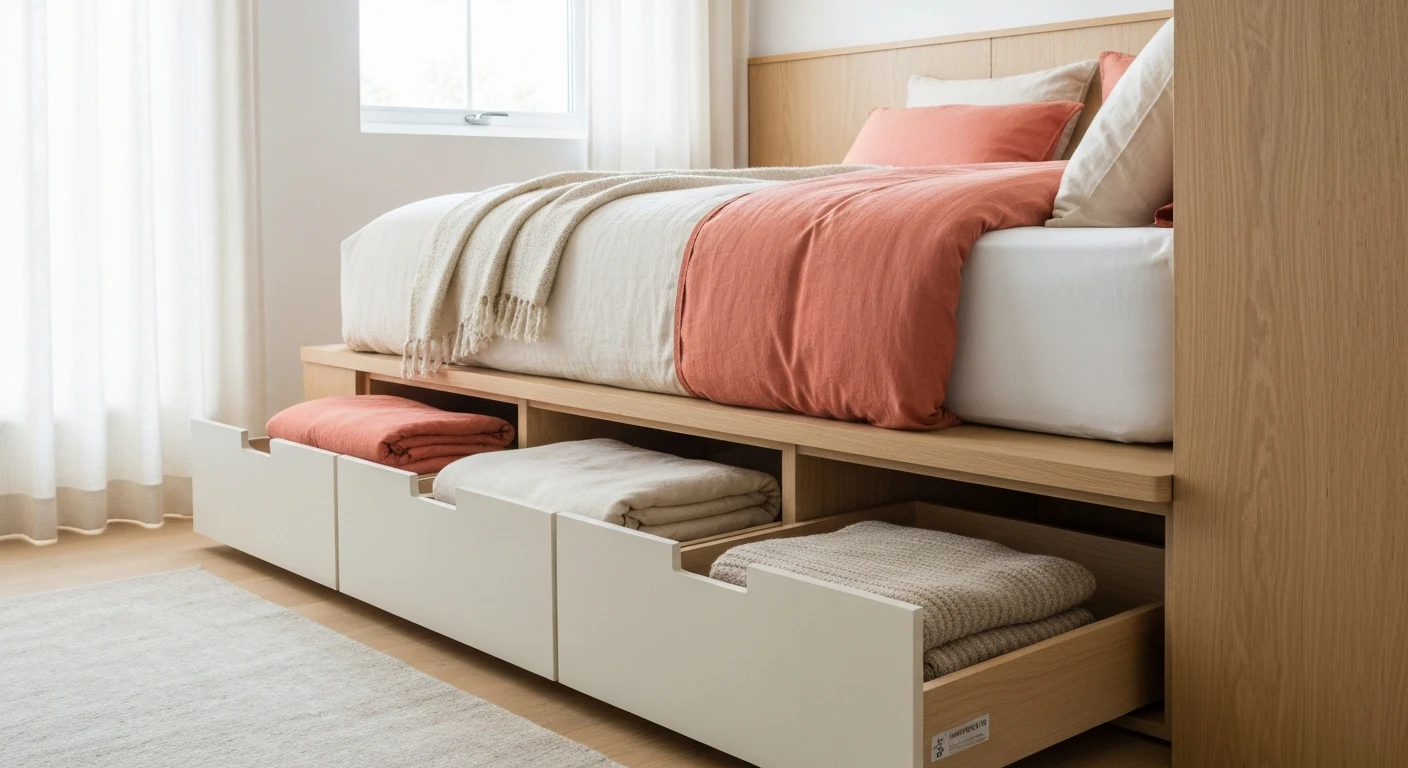
The space under your bed is the single largest untapped storage zone in most small bedrooms. The global under-bed storage market reached $4.21 billion in 2024 (DataIntelo), with North America accounting for over $1 billion of that total. These numbers exist for a good reason: in a 120-square-foot bedroom, the area beneath a full or queen bed can add 12 to 16 square feet of usable storage.
Here is how to make it work:
- Bed risers: If your bed frame sits low, a set of 5- to 8-inch risers instantly creates enough clearance for rolling bins. They cost $15 to $30 and take two minutes to install.
- Shallow rolling drawers: Look for clear, lidded bins with wheels. Clear sides let you see contents without pulling everything out, and wheels mean you never have to wrestle a heavy box across carpet.
- Vacuum storage bags: For seasonal items like winter coats or extra blankets, vacuum bags compress bulk by up to 75%. Stack the flat bags under the bed and forget about them until October.
- Platform beds with built-in drawers: If you are buying a new bed, a platform frame with two to four drawers eliminates the need for a separate dresser. This is one of the best examples of multi-functional furniture for small spaces.
The key rule: keep frequently used items in front-facing, easy-access bins and push seasonal storage toward the back or sides of the bed.
Vertical Storage Ideas That Double Your Usable Space
When floor space is limited, the only direction left is up. Most bedroom walls have 6 to 7 feet of completely unused vertical space between furniture height and the ceiling. Here is how to claim it.
Floating Shelves
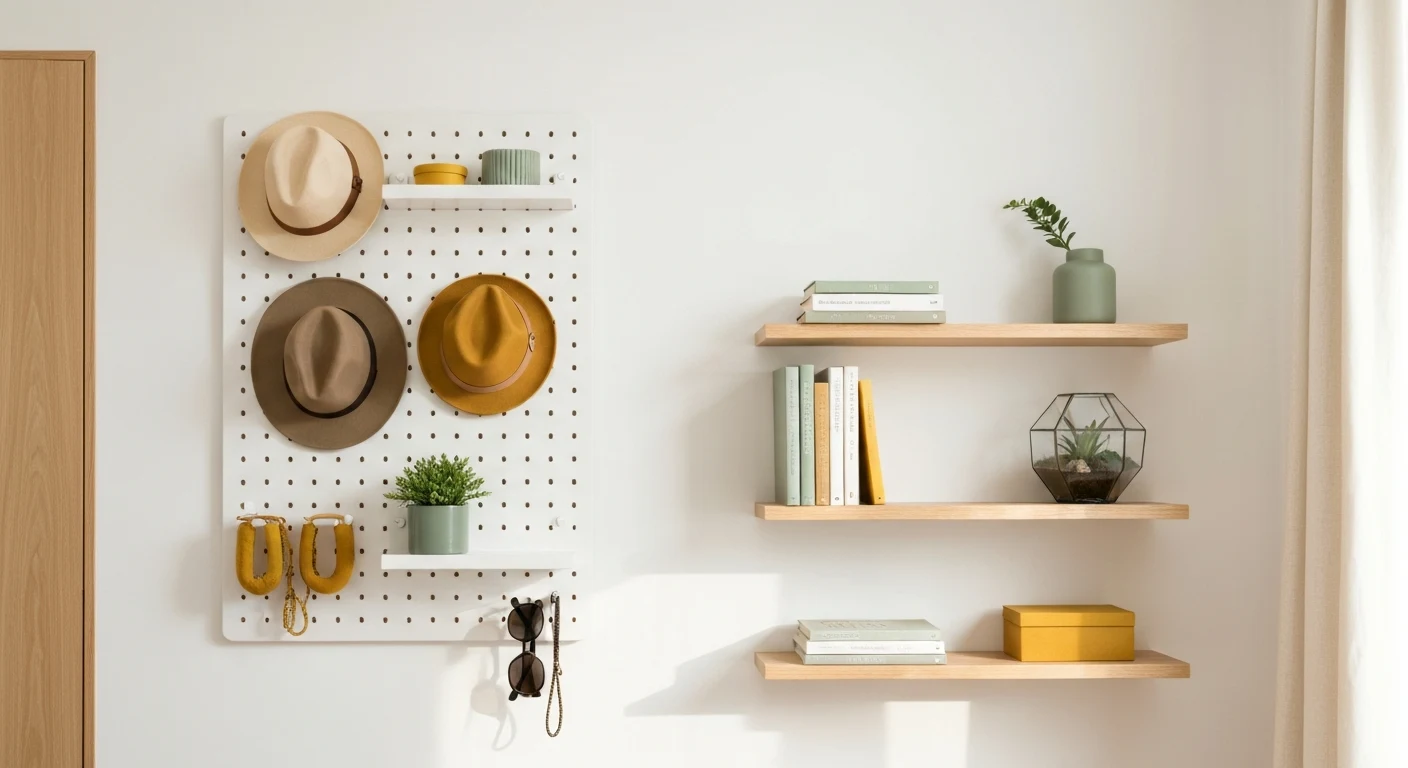
A row of floating shelves above the bed or along a side wall can hold books, small bins, decorative items, and everyday essentials. Mount them at staggered heights for visual interest and make sure heavy items go on the lowest shelf for stability. For renters who cannot drill, damage-free wall mounting options like heavy-duty Command strips rated for 16 pounds or more work well for lighter shelves.
Pegboard Walls
A 2-by-4-foot pegboard mounted near your desk or closet area turns an empty wall into a customizable storage grid. Hooks hold bags, hats, jewelry, and headphones. Shelves clip in for sunglasses, wallets, or small baskets. The whole setup costs under $40 and leaves zero permanent damage if you use adhesive-mounted standoff brackets.
Over-Door Organizers
The back of your bedroom door is prime storage real estate that almost everyone ignores. An over-the-door shoe organizer with clear pockets can hold far more than shoes: scarves, chargers, toiletries, craft supplies, and socks all fit neatly. A hanging hook rack on the door's interior edge is perfect for tomorrow's outfit, bags, or a robe.
Tall, Narrow Bookcases
A 12-inch-deep bookcase that reaches near the ceiling stores more per square foot of floor space than almost any other piece of furniture. Place one on either side of a window or in a slim gap between the bed and wall. Anchor it to the wall for safety, even in a rental (small anchor holes are far easier to patch than a toppled bookcase is to explain).
Freestanding Wardrobes for Bedrooms Without Closets
If your bedroom has no closet at all, a freestanding wardrobe or armoire becomes essential. The closet organizers market surpassed $4 billion in 2025 (Future Market Insights) and is projected to double by 2035, driven largely by urban renters who need portable, non-permanent storage solutions.
When choosing a wardrobe for a small room, keep these principles in mind:
- Measure first, shop second: A wardrobe deeper than 24 inches will feel like a wall in a tight bedroom. Look for "slim" or "compact" models at 18 to 22 inches deep.
- Choose a light finish: White, light oak, or birch wardrobes reflect light and feel less imposing than dark wood. Mirrored doors do double duty by making the room feel larger.
- Prioritize internal layout: A wardrobe with one hanging rod, two adjustable shelves, and a drawer is more versatile than one with just a single hanging bar. You need options for folded items, accessories, and longer garments.
- Consider modular systems: IKEA's PAX line or similar modular wardrobes let you configure the interior to match your exact needs and budget.
Position the wardrobe along the longest wall where it will not block natural light or room lighting paths. If possible, place it near the bedroom entry so you can grab what you need without crossing the entire room.

Headboard Storage Hacks You Have Not Thought Of
Your headboard occupies some of the most valuable wall space in the room, and if it is just a decorative slab, it is wasting potential. Storage headboards and the area around them can replace a nightstand entirely, freeing up 2 to 3 square feet of floor space on each side of the bed.
Here are the approaches that work best in small bedrooms:
- Bookcase headboards: These come with 6 to 12 cubbies built into the headboard frame. Use the center shelves for your phone, glasses, and a book. Side cubbies hold chargers, journals, or a small lamp.
- Floating nightstand shelves: A single floating shelf on each side of the bed, mounted at mattress height, replaces bulky nightstands. You gain the surface you need for essentials while keeping the floor completely clear. This visual openness makes a room without much light feel significantly less cramped.
- Behind-the-headboard shelf: If your headboard is a few inches away from the wall, slide a slim shelf or console table into that gap. It creates a hidden ledge for chargers, remotes, and small items that would otherwise clutter the mattress surface.
- DIY fabric pocket organizer: Drape an over-the-headboard caddy with fabric pockets down the back side. It keeps your phone, earbuds, and a book within reach while you are in bed, without adding any furniture footprint.

Multi-Functional Furniture That Earns Its Floor Space
In a small bedroom, every piece of furniture needs to pull double duty. The global multi-functional furniture market reached $15.9 billion in 2024 (Global Market Insights) and is growing at nearly 5% per year as apartment dwellers embrace pieces that combine storage with everyday function.
Here are the best multi-taskers for tight bedrooms:
- Storage ottomans: Place one at the foot of the bed. It serves as seating, a surface for putting on shoes, and a hidden bin for blankets or out-of-season clothing. A 36-inch ottoman can hold as much as a small dresser drawer.
- Lift-top desks: If your bedroom doubles as a workspace, a desk with a lift-top lid hides a laptop, notebooks, and supplies when you are done working. It keeps the visual clutter contained so your bedroom still feels like a place to rest.
- Bed frames with side storage: Some bed frames include open shelving or closed cabinets along the side rails. This is especially useful if your bedroom layout pushes the bed against a wall, turning the exposed side into a functional surface.
- Fold-down murphy beds: For extremely tight spaces (under 100 square feet), a wall-mounted murphy bed folds up during the day and reveals an open floor area, shelf space, or even a fold-out desk. These run $1,500 to $5,000 depending on complexity, but the floor space return is unmatched.
The rule I follow: if a piece of furniture only does one thing in a bedroom under 150 square feet, it probably does not deserve the floor space.
Behind-the-Door and Corner Storage
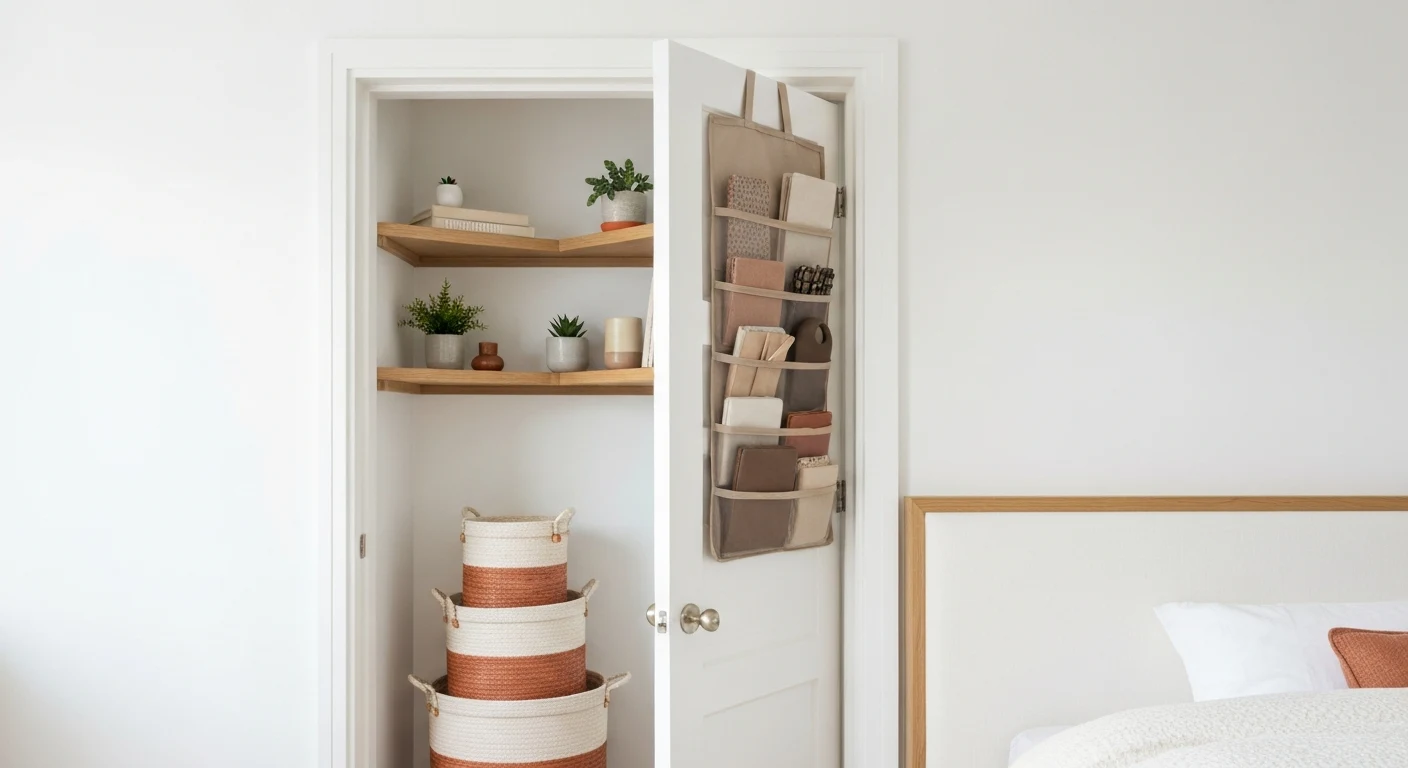
Two of the most overlooked spots in any bedroom are the back of the door and the room's corners. Both tend to collect dust rather than serve a purpose, which is a waste in a room where square footage is at a premium.
Behind the Door
- Over-door hooks (3 to 6 hooks): Hang tomorrow's outfit, a bathrobe, bags, or a hat. This frees up chair and door-handle clutter.
- Over-door shoe rack: A 24-pocket clear organizer holds 12 pairs of shoes vertically, removing them from the floor and the bottom of a wardrobe.
- Full-length mirror with storage: Some over-door mirrors open to reveal a jewelry cabinet with hooks for necklaces, rings, and earrings. This is a two-for-one that solves two small bedroom problems at once.
Corner Solutions
- Corner floating shelves: Triangular floating shelves fit into 90-degree corners and create display or storage space from otherwise dead zones.
- Slim corner wardrobes: A handful of manufacturers make wardrobes designed to fit into corners, taking advantage of depth that flat-wall furniture cannot reach.
- Stacked baskets or crates: Three woven baskets stacked vertically in a corner hold scarves, seasonal accessories, or gym gear without needing any wall mounting.
These small wins individually seem minor, but together they can reclaim 5 to 8 square feet of usable surface area, which is significant in a room that only has 120 square feet to begin with.
Open Closet Systems That Need Zero Construction
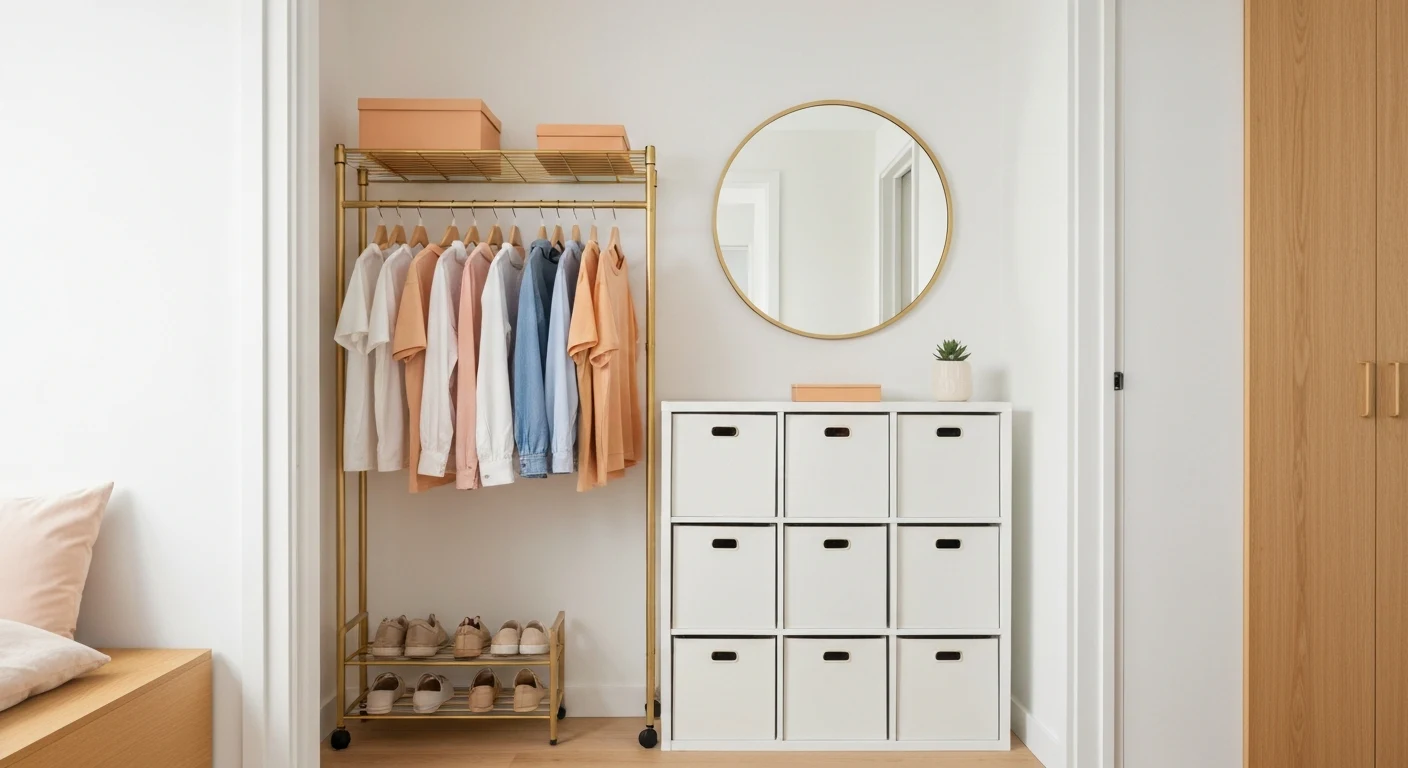
If drilling into walls is not an option (or you simply do not want to commit to a permanent setup), open closet systems let you build a wardrobe without any construction at all.
The concept is simple: a freestanding clothing rack, a few stackable bins, and a shelf or two create an open-air closet that can be disassembled and moved when your lease ends. Here is how to execute it well:
- Rolling garment rack with a shelf: A double-rod garment rack with a lower shelf holds hanging clothes on top and shoes or folded items below. Choose a rack with locking casters so it stays put against a wall.
- Modular cube organizers: A 6- or 9-cube unit placed below or beside a garment rack acts as a dresser. Fabric drawers in each cube keep contents hidden and tidy. This approach works beautifully alongside the organization principles in our closet organization guide.
- S-hooks and hanging organizers: Attach fabric hanging shelves to the garment rack's top rod for folded sweaters, t-shirts, or jeans. S-hooks on the side hold bags, belts, or scarves.
- A curtain for concealment: If you prefer your clothing out of sight, mount a tension rod a few inches in front of the open closet system and hang a simple curtain. It takes 5 minutes, costs under $20, and turns a utilitarian rack into something that looks intentional.
The biggest advantage of an open system? You can see every single item you own at a glance. That visibility alone reduces morning decision fatigue, which is the same reason entryway organization cuts down on the chaotic scramble to leave the house.
DIY vs Professional Closet Systems: A Cost Breakdown
Let us talk money. A professional closet organizer averages $1,542 installed (Angi, 2026), with custom walk-in systems running anywhere from $5,000 to $20,000 depending on materials and complexity. DIY closet kits, by contrast, start at $200 and rarely exceed $1,200 even for comprehensive setups.
For small bedroom renters, the math is especially clear. You likely cannot modify the built-in closet (if one exists), and you definitely cannot install a custom system in a space you do not own. That leaves DIY and portable solutions as the practical options, which also happen to be the most affordable ones.
Here is a quick budget framework:
- Under $50: Bed risers + clear under-bed bins + over-door hooks. This alone can double your accessible storage in a weekend afternoon.
- $50 to $200: Add a cube organizer, floating shelves, and a fabric hanging closet organizer. You now have a place for everything.
- $200 to $500: A freestanding wardrobe or garment rack system, a storage ottoman, and pegboard wall storage. This is a complete bedroom storage overhaul without touching a single wall stud.
- $500 to $1,200: A platform bed with built-in drawers or a murphy bed mechanism, plus the accessories above. At this tier, you are approaching the functionality of a built-in closet at a fraction of the cost.
Decluttering before a home sale adds an average of $11,706 to the sale price nationally (HomeLight, 2025). While renters are not selling their apartments, the principle applies: organized spaces feel larger, function better, and reduce the kind of daily friction that eventually drives people to pay $100 a month for a storage unit they visit twice a year.
How to Maintain Your System Without Letting It Slide
Building a storage system is the easy part. Keeping it organized three months later is where most people struggle. New single-family homes have been shrinking since 2015 (NAHB/Census, Q3 2025 median: 2,176 sq ft), which means storage pressure is only going to increase as spaces get tighter. A maintenance routine keeps your hard work intact.
- The one-in, one-out rule: Every time you bring something new into the bedroom, one comparable item leaves. A new sweater means an old one goes to donation. This prevents the slow creep of accumulation that undoes any organizational system.
- Seasonal rotation (twice per year): Swap out-of-season clothing into vacuum bags under the bed, and move the current season's wardrobe to eye-level. Doing this in April and October keeps your active wardrobe manageable.
- Weekly 10-minute reset: Pick one evening each week to refold what has been tossed, return stray items to their designated bins, and clear off surfaces. Ten minutes is enough to prevent a full-day reorganization later.
- Label everything: Bins, baskets, and boxes without labels become mystery containers within weeks. A simple label maker or masking tape and a marker keeps the system legible for everyone in the household.
If your bedroom also needs to function as a nursery, the same principles apply at a smaller scale. Our guide to furnishing a small nursery covers how to balance baby storage with adult storage in the same room.
Frequently Asked Questions
How do you store clothes in a bedroom with no closet?
Use a combination of a freestanding wardrobe (or open garment rack) for hanging items, a cube organizer with fabric bins for folded clothes, and under-bed storage containers for out-of-season items. Wall hooks and over-door organizers handle accessories. Together, these pieces replicate everything a traditional closet does without any permanent installation.
What is the cheapest way to add storage to a small bedroom?
Bed risers paired with clear rolling bins (under $30 total) are the most affordable first step. An over-door hook rack ($10 to $15) and a set of stacking shelf risers for inside a small closet ($20) round out a complete budget kit for under $75 that can double your accessible storage.
Are platform beds with storage worth the investment?
Yes, especially in bedrooms under 150 square feet. A platform bed with four built-in drawers eliminates the need for a separate dresser, which frees up 4 to 6 square feet of floor space. Quality storage platform beds range from $300 to $800 and last for years.
How much weight can floating shelves hold?
Wall-anchored floating shelves typically support 20 to 50 pounds per shelf depending on the bracket type and wall material. Adhesive-mounted shelves (renter-friendly) support 5 to 16 pounds. For heavy items like books, always use shelves with hidden bracket hardware screwed into wall studs or use appropriate drywall anchors.
Can open closet systems look neat, not messy?
Absolutely. The key is color coordination (group clothing by color), consistent hanger types (matching slim velvet hangers look cohesive), and covering the bottom section with matching fabric bins. A tension-rod curtain in front of the system lets you hide it when company comes over.
What should I do with bedroom items I rarely use?
Vacuum-seal seasonal clothing and bedding, then store them under the bed or on high shelves. Items used less than once a year should be evaluated honestly: donate, sell, or recycle. The US self-storage industry is a $23 billion market (Precedence Research, 2025), built largely on people storing things they could part with. Save yourself the monthly rental fee and be intentional about what stays in your home.
Tags

Written by Joesp H.
Interior Design & Small Space Living Specialist
Former marketing manager turned full-time home optimizer. After living in 7 homes ranging from 450 to 2,000 sq ft, I started CleverSpaceSolutions to help people create organized, functional spaces on real budgets.
Other Articles
Romantic Bedroom Ideas for Small Spaces (Cozy, Not Cramped)
A research-backed guide to building a romantic small bedroom on any budget, with real stats on lighting, scent, bedding, and 2026 Pinterest trends.
Small Bedroom Layout Ideas: How to Arrange Furniture in 100-150 Sq Ft
Seven small bedroom layouts with exact clearance rules, bed-placement math, and storage tricks for 100 to 150 square foot rooms.
How Do You Decorate a Small Bedroom for Functionality and Style?
Wondering how to make your small bedroom feel bigger and look stylish? This complete guide answers your questions with expert tips on furniture, storage, col...