Small Bedroom Layout Ideas: How to Arrange Furniture in 100-150 Sq Ft
Seven small bedroom layouts with exact clearance rules, bed-placement math, and storage tricks for 100 to 150 square foot rooms.
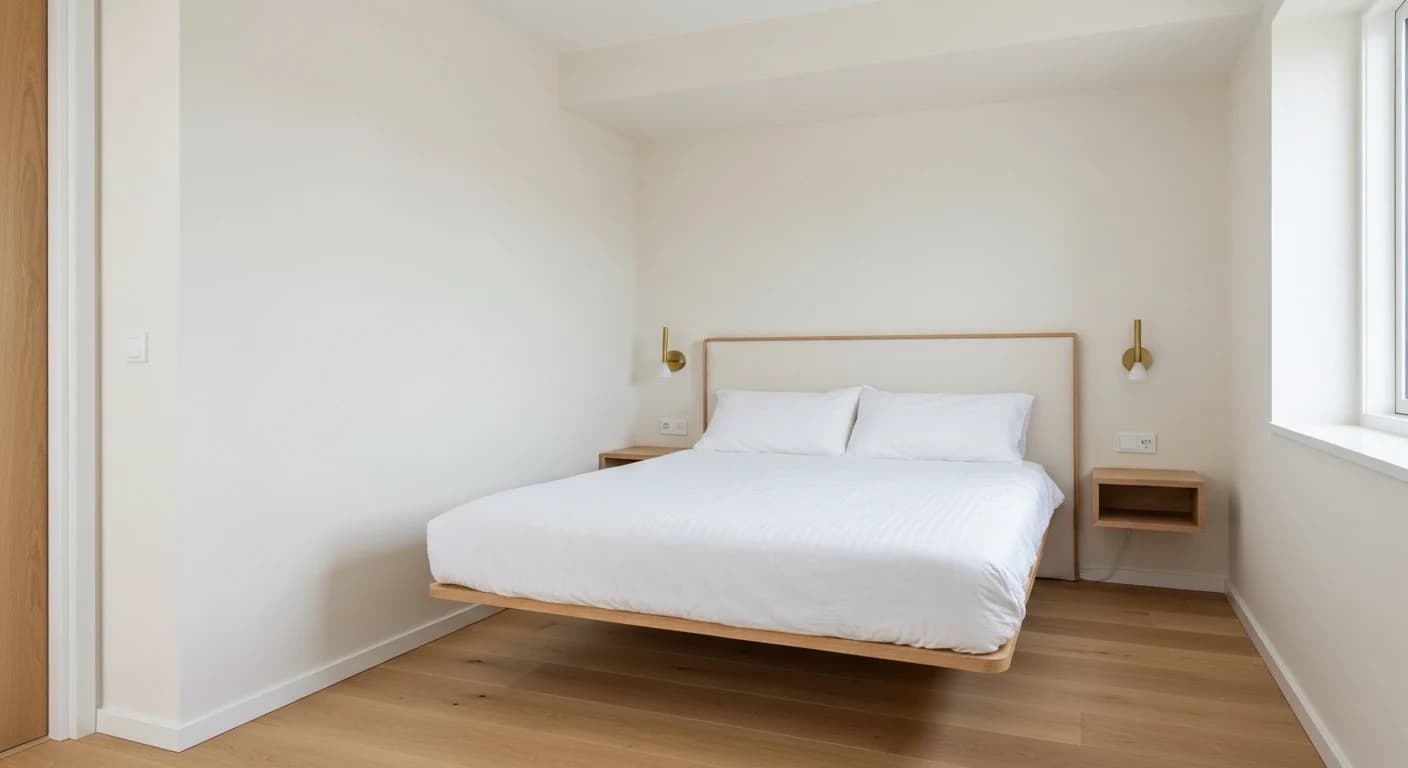
Everyone told me small bedrooms are about "maximizing space," but after helping four friends rearrange their sub-150-square-foot rooms, I learned the real job is different. It's choosing the right two pieces of furniture and then fighting for clearance. Most layouts fail because the bed landed in the obvious spot, not the correct one, and the room spends the rest of its life compensating. This guide starts with the sizes you're actually working with, spells out the three rules that carry most of the weight, then gives you seven real layouts sorted by room shape. For the color, finishes, and mood side of things, pair it with my small bedroom design guide once you've got the floorplan figured out.
TL;DR: Most US small bedrooms measure 100 to 150 square feet. The single biggest decision is where the bed goes: place it on the longest uninterrupted wall, keep at least 24 inches of walking clearance on the side you get in and out of, and leave a 36-inch path from the door to the bed. A Queen mattress needs roughly 100 square feet of functional floor once you count clearances, which is why a "small" room fills up faster than the tape measure suggests. Float the bed when you can, use wall sconces and floating nightstands to save inches, pick one storage bed instead of two separate dressers, and guard the window for natural light because bedroom environment directly affects sleep quality.
Before I walk through any template, one thing: layouts don't fail because the room is too small. They fail because someone put a Queen bed in a room that really wants a Full, or they lined up three pieces of furniture on the same wall when two would have been plenty. I'll flag every place I've seen that mistake so you can skip it.

What counts as a "small" bedroom in 2026?
When I say "small bedroom" in this guide, I mean 100 to 150 square feet with a ceiling at 8 to 9 feet. That range is the reality for most US renters right now. The national average apartment is just 908 square feet, with one-bedroom units averaging 735 square feet and studios only 457 square feet (RentCafe, April 2025). Subtract the kitchen, living room, and bathroom from a 735-square-foot one-bedroom and the bedroom itself usually lands somewhere between 100 and 140 square feet. With roughly 45 million US households (34.3%) currently renting (iPropertyManagement, 2026), a big share of the country is solving this exact problem.
Homeowners are not immune either. The median new single-family home dropped to 2,176 square feet in Q3 2025, down from a 2015 peak of 2,466 square feet (NAHB Eye on Housing, 2026), and NAHB's 2024 What Home Buyers Really Want report found the typical buyer now wants 2,067 square feet, down from 2,260 square feet in 2003. Smaller footprints mean smaller secondary bedrooms. In the average new home, the primary bedroom occupies 11 to 12 percent of finished floor space according to NAHB's Spaces in New Homes study, but in smaller homes that climbs to 14 percent because it's the only room the builder couldn't shrink further.
Before you start moving furniture, measure. Pull a tape from the longest wall to the opposite wall, then from the window wall to the closet wall. Write both numbers down. If your bedroom is under 100 square feet, drop a King or split-Queen out of consideration now. If it's between 100 and 120 square feet, a Queen will fit but only with a specific bed placement. If it's 120 to 150 square feet, you have real options.
The three layout rules that do 80% of the work
Before the templates, three rules handle most layout decisions for me. I come back to these every time a room feels wrong.
Rule 1: The 36-inch walking path
From the door of the room to either side of the bed, you need a path at least 36 inches wide. Interior designers call this the primary circulation lane, and it's the rule of thumb referenced by professional clearance guides (Homes and Gardens). Less than that and the room reads as cramped even when nothing is actually in the way. If closing the door requires you to step sideways past the dresser, your path is too narrow.
Rule 2: Side clearance by bed size
The bed needs 18 inches of clearance on a Twin side, 24 inches on a Queen side, and 30 inches on a King side for comfortable getting in and out. The absolute floor is 18 inches, but go below 24 inches on a Queen and you'll hip-check the nightstand every morning. Plan for the side you sleep on to get the full clearance; the opposite side can drop to 18 inches if the bed is against a wall or partner-side-only.
Rule 3: One dominant surface, not three
Small bedrooms fail when someone tries to fit a bed, two nightstands, a dresser, and a bench. Pick the bed plus one dominant surface, usually a dresser or a single nightstand, and put everything else on walls or inside the bed itself. This is where multifunctional pieces carry you. A bed with built-in drawers eliminates a dresser; a floating wall shelf eliminates a nightstand. I walk through specific picks in my multifunctional furniture guide for small apartments, but the rule is: each item has to earn the square footage it takes.
How to place the bed: the single biggest decision
The bed wall sets everything else. Pick wrong and no amount of clever storage will rescue the room. I use a three-step test, in this order: longest wall, window rule, door rule.
Longest wall first. Run your tape around the room and find the longest uninterrupted wall, meaning no door, no closet cutout, no radiator. That's almost always where the bed wants to go. It gives you maximum headboard length and the longest symmetrical clearance on the foot and opposite side.
Window rule: It's fine to put the bed under the window if the window is centered and the sill is at least 4 inches above a standard 25-inch mattress height. That means the window's bottom edge should be roughly 29 inches above the floor or higher. Lower than that and the headboard blocks the glass. Avoid blocking the window entirely because natural daylight regulates your circadian rhythm and sleep quality. A PMC study found that even ordinary room light before bed suppresses melatonin in 99% of people and shortens the body's internal night by about 90 minutes (Gooley et al., 2011), and the Sleep Foundation's bedroom environment guidelines recommend protecting morning daylight as part of a healthy sleep setup (Sleep Foundation).
Door rule: The bed should not be directly in the swing path of any door. That includes the bedroom door, closet door, and bathroom door if you have an en-suite. The foot of the bed can point toward the door; the head and long side cannot intercept a door swing.
If the longest wall has a door in it, use the second longest wall and build the layout around the disruption. I'll show exactly how in the templates below.
Queen, Full, or Twin: the functional floor test
Bed size decisions are usually made emotionally. "We want a Queen." Fair, but check the math first. A Queen mattress measures 60 by 80 inches, which is 33 square feet of mattress alone (Better Sleep Council). Add 24 inches of clearance on each long side and 36 inches at the foot and you need roughly 100 square feet of functional floor just to get in and out comfortably. That's 83% of a 120-square-foot room. No wonder the dresser won't fit.
My rule: if your room is under 110 square feet, go Full. Between 110 and 140, you can force a Queen but only against a long wall with the headboard centered. Above 140 and a Queen fits naturally. A King is almost never right in a small bedroom, and when I've seen people try, the layout collapses and they end up selling the bed within a year.

7 small bedroom layouts by room shape
Here are seven layouts I've walked through for real rooms. Each one assumes a Queen unless noted, because Queen is the hardest-fit size and everything smaller gets easier.
1. The square 10 x 10 (100 sq ft)
Ten by ten is the point where Queen becomes aspirational and Full becomes smart. If you insist on the Queen, center the headboard on any long wall and lose the nightstands. A single floating wall shelf replaces both. Put a 30-inch-wide skinny dresser on the wall opposite the bed, and skip the bench. Walking path around the foot of the bed will be exactly 36 inches, which is legal but not generous.
2. The narrow 8 x 12 (96 sq ft)
This is the railroad bedroom. The only way the bed fits is with the long side against one of the 12-foot walls and the headboard tucked into the far corner. Access is from one side only, which means the partner-side rule applies: one nightstand on the access side, 24 inches of clearance. The other long wall holds a horizontal dresser or nothing at all. Add a narrow over-bed wall light so you don't lose a nightstand surface to a lamp.
3. L-shaped alcove bedroom
If your room has an alcove or a nook carved out by a closet, that alcove is almost always the correct bed spot. Build a three-sided headboard wall treatment, push the bed into the alcove, and use the main part of the room for everything else. This is also the layout where an under-bed storage bed really earns its keep because you won't have floor space for a dresser.
4. Awkward door placement (door near corner)
When the door opens into a corner, the instinct is to put the bed on the wall directly across from the door. Resist. Put the bed on the wall perpendicular to the door wall, headboard toward the corner the door opens into. That way the door swings past the foot of the bed, not into it, and you keep the opposite wall free for a dresser.
5. Window-wall too short
If the only window is on a wall too short for the bed to fit, put the bed on the longest solid wall and treat the window wall as your "light wall." Use a small armchair or a reading corner under the window, curtains to the floor to lengthen the room visually, and preserve the daylight flow. Never block the window with the headboard on a short wall. It kills the light and the bed juts into the room.
6. Sloped ceiling (attic) bedroom
Tuck the bed under the slope on the low side because you don't need headroom while lying down. Use the taller side of the room for the dresser, closet doors, and standing height. The slope wall becomes a nook, and the ceiling line visually widens the opposite wall.
7. Kid's room with bunk bed
For a child's small bedroom, a bunk bed or loft bed resets the math. You trade vertical height for doubled floor space. I broke down the size-by-age-by-ceiling-height decision in my bunk bed guide, but the layout rule is simple: bunk against the longest wall, 36 inches of clearance at the foot, and a 30-inch-wide desk or dresser on the short wall. A nursery follows different rules because crib placement has to satisfy safe-sleep guidelines, which I cover in my small nursery furnishing guide.

When you cannot fit a nightstand
Half the small bedrooms I've worked on don't have room for a proper nightstand, and pretending otherwise jams the room. Here are the five nightstand alternatives I rotate through.
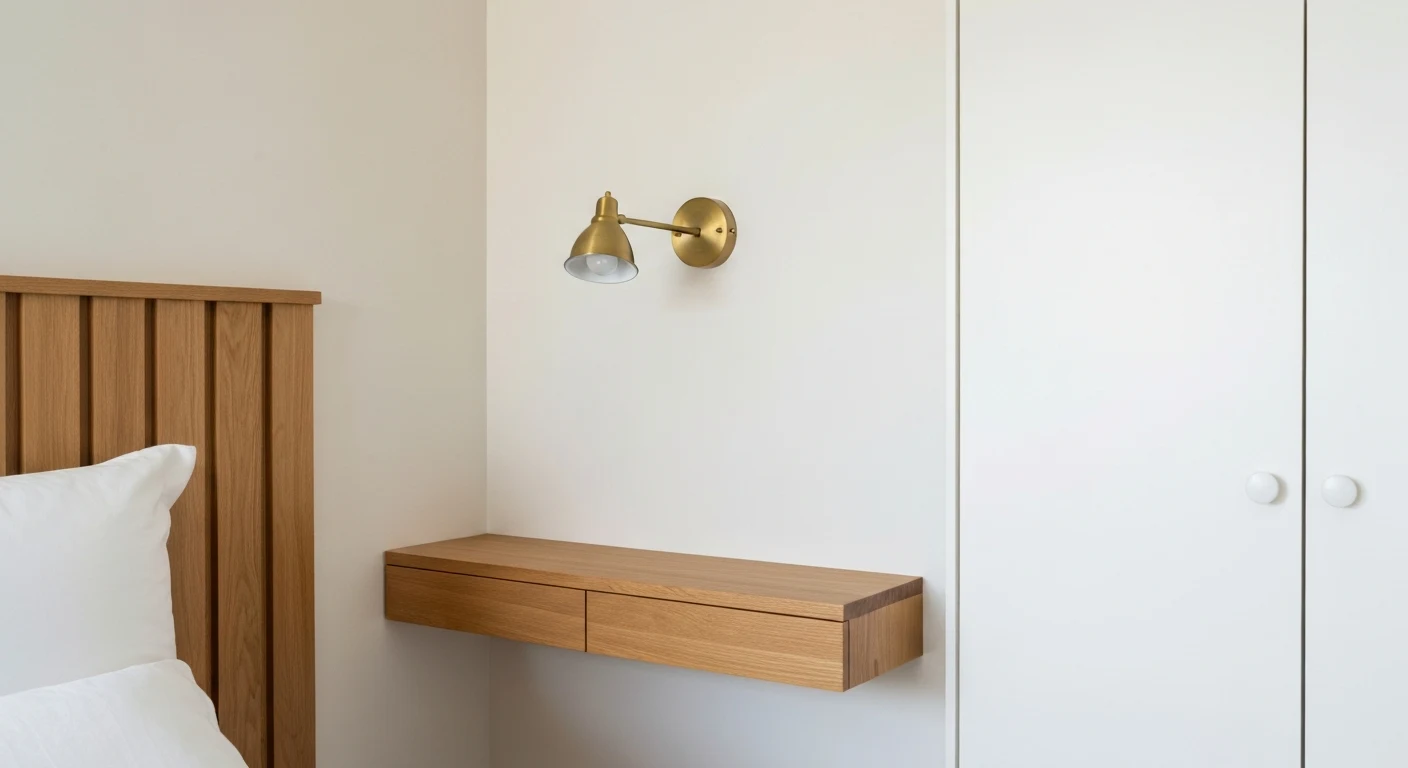
- Floating wall shelf. A 16-inch-deep shelf mounted 4 inches above the mattress gives you a phone, a book, and a small lamp with zero floor footprint.
- Wall-mounted cube. One drawer or one open cube at bed height, installed with a French cleat. Takes about 14 inches of wall and no floor.
- Slim accent stool. A 12-inch-square accent stool in oak or rattan fits between bed and wall without looking like it belongs at a kids' table.
- Under-mattress pocket. Works if you only need your phone and a glass of water. A velcro pocket that clips between the mattress and box spring.
- Over-bed clamp shelf. A metal clamp that rides the top of the headboard and holds a phone, glasses, and a lamp. Renter-friendly and costs under $40.
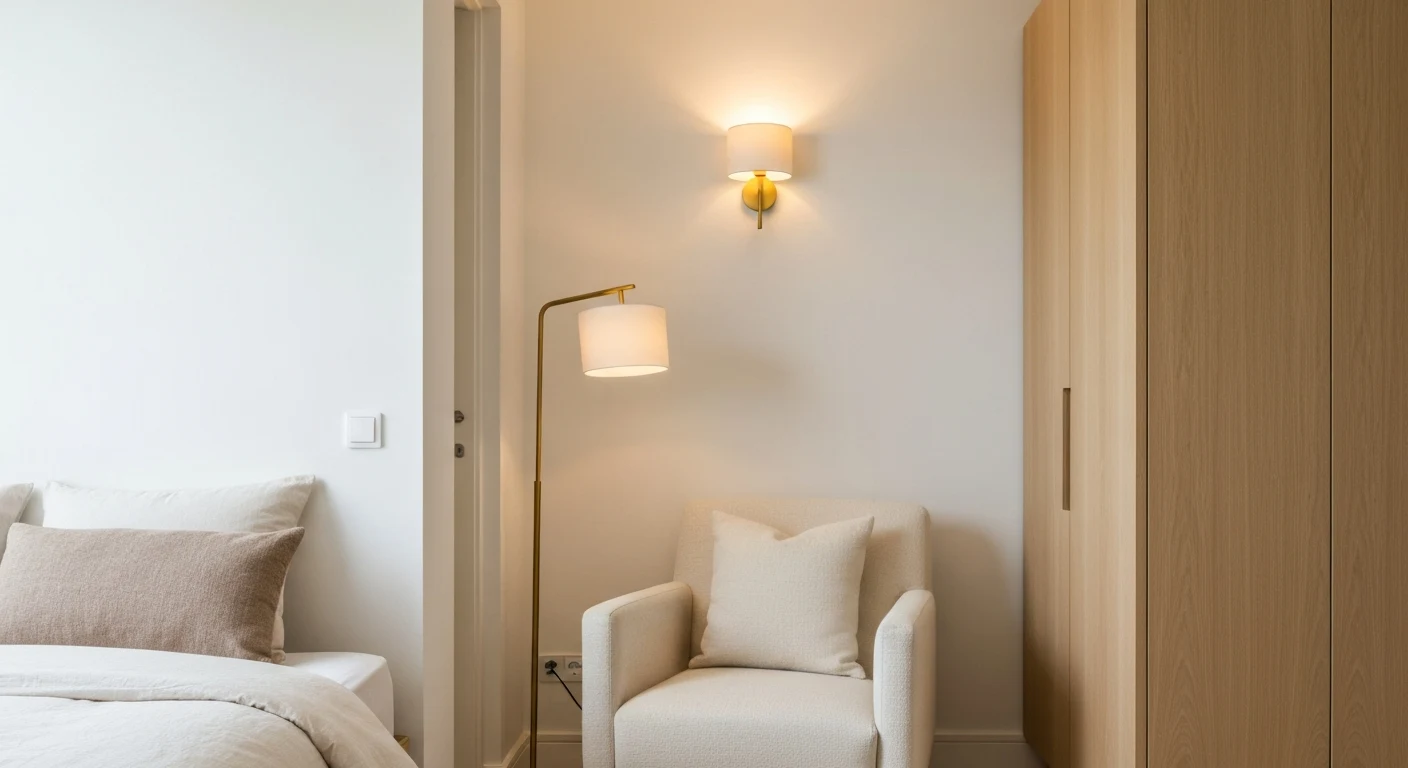
The single most important swap for any small bedroom: replace the nightstand lamp with a wall sconce. That one change returns a quarter of the nightstand surface for actual use. If your place has no ceiling fixture, you'll want my full breakdown in how to light an apartment with no overhead lighting.
Storage furniture that earns its square footage
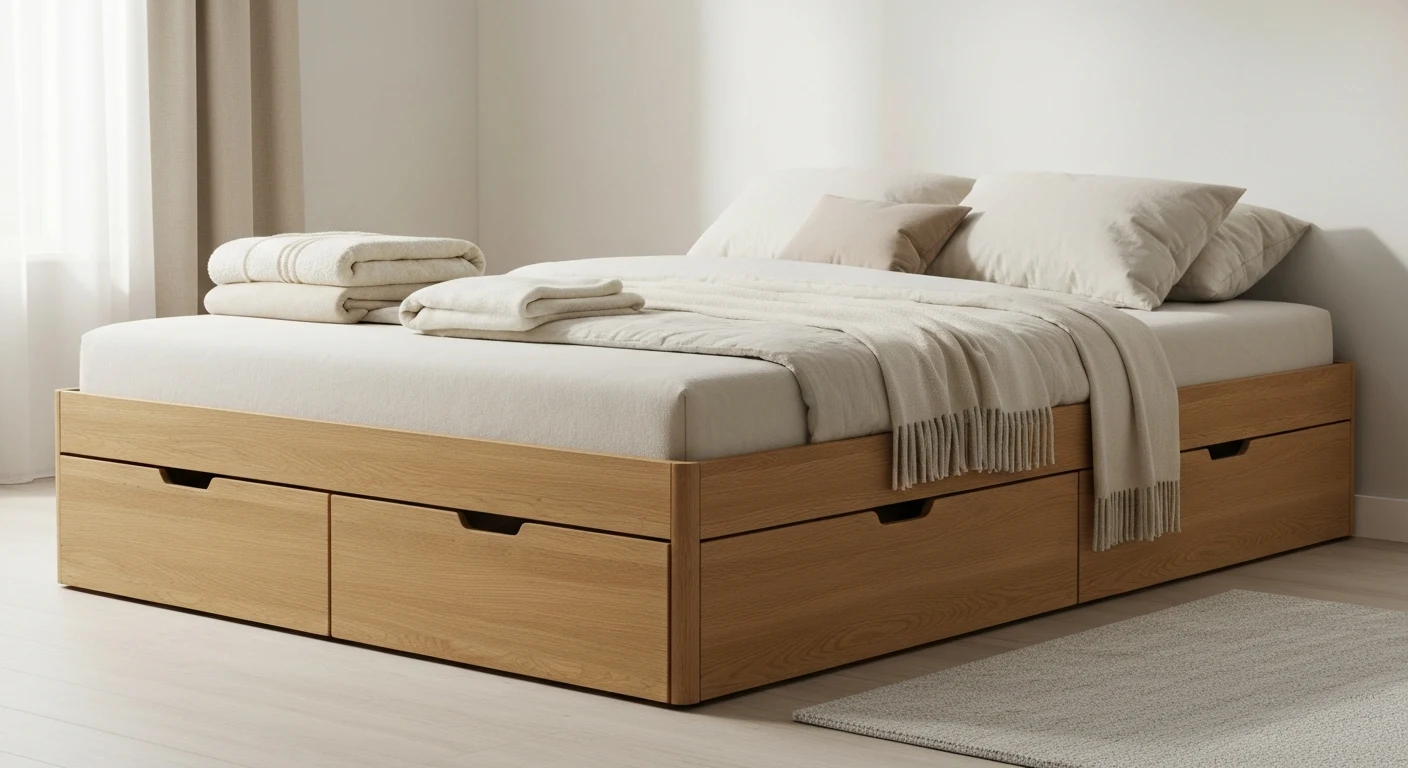
Bedroom storage is where small rooms are either saved or doomed. The global under-bed storage segment hit roughly $5 billion in 2024 and is projected to double by 2035 according to Market Research Future, driven almost entirely by urban renters doing exactly what you're doing. The broader multifunctional furniture market reached $15.9 billion in 2024 and is growing at 4.9% CAGR through 2034 (Global Market Insights). Translation: the market expects you to buy one piece that does two jobs.
My ranking for small-bedroom storage, from highest to lowest square-foot ROI:
- Storage bed with under-drawers (best). Four full-extension drawers replace a dresser outright. Costs more upfront, saves 12 to 14 square feet of floor.
- Lift-top platform bed. The entire mattress platform lifts to reveal a cavity underneath. Great for seasonal storage like bulky blankets and off-season clothes. A little annoying for daily access.
- Tall skinny dresser, 30 inches wide by 48 inches tall. Replaces a wide lowboy and eats 30% less wall length.
- Over-the-door storage on the closet door. Shoes, accessories, belts. Zero floor footprint.
- Wall-mounted pegboard or grid. Above the dresser. Replaces a second dresser or a bench for light storage.
Closets are their own battle, and small-bedroom closets are almost always worse than the room itself. If yours is the bottleneck, I broke down the whole closet doubling strategy in small closet organization ideas that actually work.
Lighting a small bedroom without eating walls
Lighting a small bedroom well is mostly about getting lamps off the nightstand and onto the wall. Three sources cover almost every small bedroom: one overhead or semi-flush ceiling fixture for ambient light, two wall sconces or plug-in wall lamps for reading, and one ambient accent, like a small table lamp on the dresser or a plug-in wall picture light. That's it.
Color temperature matters more than brightness. Stick to 2700K to 3000K bulbs in the bedroom. Anything cooler signals daytime and interferes with melatonin release in the evening. The Sleep Foundation's bedroom environment guide recommends blackout-level darkness at sleep time and limited light exposure for the 90 minutes before bed, and the 2025 Sleep in America Poll from the National Sleep Foundation found 6 in 10 US adults don't get enough sleep and nearly 4 in 10 struggle to fall asleep three or more nights per week (NSF, 2025). A small bedroom with bad lighting is a functional sleep hazard, not just an aesthetic problem.
If you have no ceiling junction box at all, my no-overhead-lighting guide walks through the plug-in wall sconce, torchière, and rechargeable table-lamp setups that replicate ceiling light without an electrician.
Rugs, mirrors, and the illusion of more floor
Two furniture-adjacent moves open up a small bedroom more than any decor trick: the right rug size and one well-placed mirror.
Rug: In a small bedroom, the rug should either run under the entire bed with 18 to 24 inches exposed on each long side, or skip a rug under the bed entirely and use a runner along the access side. What you must not do is put a small rug centered in front of the bed. It chops the floor visually and makes the room read as smaller. I wrote out the exact sizing for every room shape in rugs for small rooms.
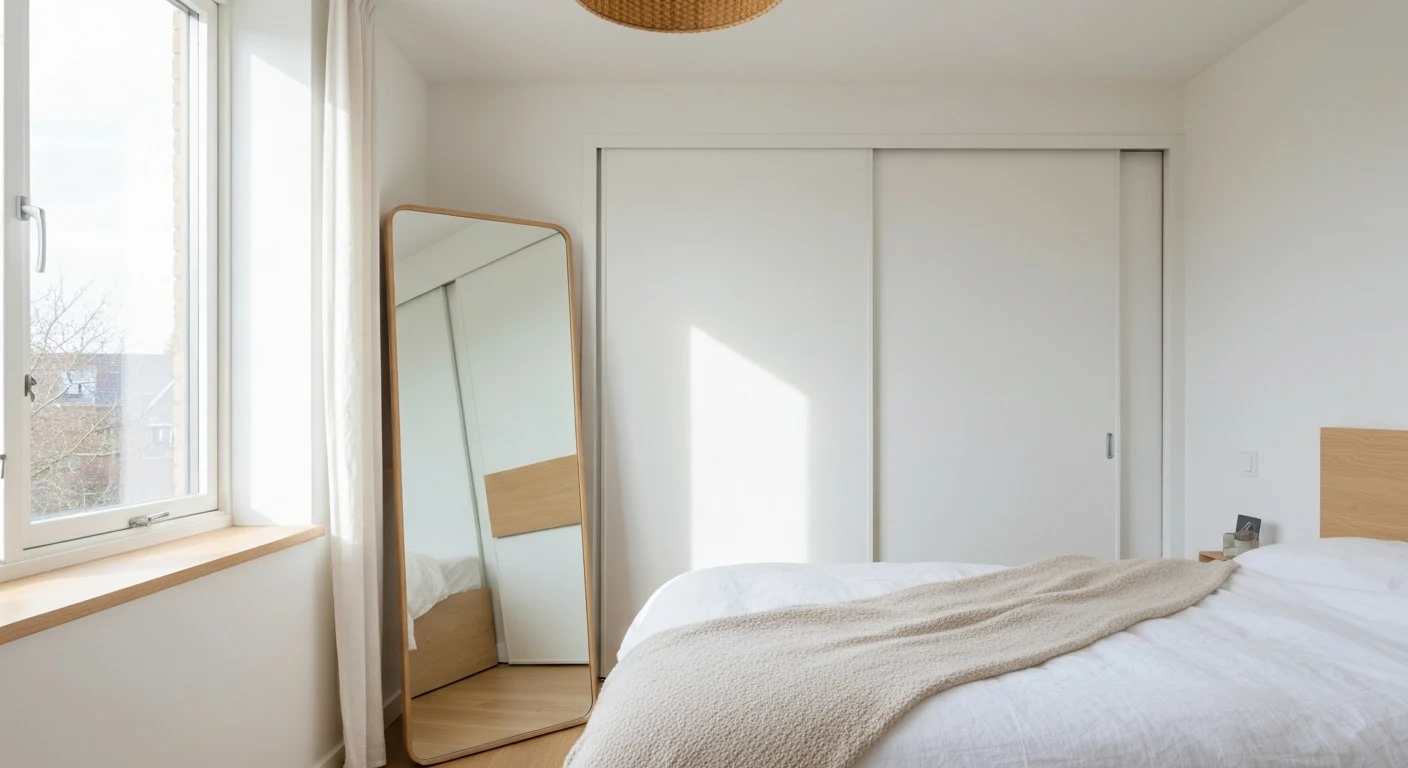
Mirror: One large mirror, leaning or mounted opposite the window, bounces natural daylight deep into the room. A full-length 60-inch mirror on the back of the closet door, or on the wall perpendicular to the window, is the right move. Avoid multiple small mirrors. They fragment the space.
One honorable mention: biophilic elements. A single medium-sized plant by the window adds depth and a sense of layered space without eating floor, and I break down which plants actually survive low-light apartments in my biophilic design guide for small apartments.
Common small bedroom layout mistakes
After walking through dozens of tight bedrooms, these are the mistakes I see most often. Every one of them is fixable without spending money.
- Bed in the center of the room. Fine for a hotel suite. Disastrous in 120 square feet because it destroys every walking path at once.
- Matching tall dressers on either side of the bed. Visual weight doubles the wall and the room closes in. Use one asymmetric dresser instead.
- Under-bed boxes used as permanent storage. If you can't reach it in under 30 seconds, you won't use it, and the boxes collect dust. Use the under-bed for seasonal rotation only.
- Heavy curtains on a small window. They drop visual ceiling height and eat light. Use a light linen panel, floor length, mounted 8 inches above the window frame.
- No rug at all on hardwood. Sound bounces, the room feels raw. A rug is a layout tool, not just decor.
- Forgetting the door swing. Measure the arc the door sweeps through. Nothing lives inside that arc, not even the corner of a dresser.
- Cluttered nightstands. APA research summarized by Dr. Joseph Ferrari at DePaul University found a significant negative correlation between clutter and life satisfaction, with women's cortisol especially elevated in cluttered environments (APA). In a 120-square-foot bedroom, clutter is a sleep issue, not just a tidiness issue.
How much does a small-bedroom refresh cost?
I get asked this constantly. Angi's 2025 cost data puts a full bedroom remodel at roughly $20,000 nationally, but an 80-square-foot small bedroom makeover lands between $7,800 and $11,300, and a cosmetic refresh starts as low as $3,500 (Angi, 2025). The layout-only budget is much lower. Reshuffling existing furniture is free. Swapping two nightstands for one floating shelf and a wall sconce runs $120 to $250. Replacing a box spring and frame with a storage bed is the biggest single-line cost, usually $500 to $1,500 depending on material.
Pinterest's 2026 trend report shows searches for "my room, my rules" up 415% and "comfortable reading chair for small spaces" up 455%, both pointing at Gen Z personalizing tight bedrooms rather than waiting for a bigger apartment (Pinterest Predicts 2026). The takeaway: small bedroom layout is having a cultural moment, and the work pays back in how the room feels every morning.
Frequently asked questions
What is the smallest room that can fit a Queen bed?
A Queen fits in 100 square feet but only with a specific placement: bed against a long wall, headboard centered, 24 inches of clearance on the access side, and no nightstand or a floating wall shelf instead. Below 100 square feet, go with a Full or Twin XL. Most small bedrooms in the 100 to 110 square foot range work better with a Full and a real nightstand than a Queen with no nightstand.
Should the bed face the door in a small bedroom?
The foot of the bed can face the door, and that's fine. What you want to avoid is the head or long side of the bed intercepting the door's swing arc. Feng shui adherents call the bed-facing-door position the "coffin position" and avoid it, but the functional reason is simpler: your eyeline from the bed should see the door without fully facing it, which reads as both safer and calmer.
Where do you put a TV in a small bedroom?
Wall-mount it above the dresser opposite the bed. Never on a separate stand because a stand eats floor, and never on the wall adjacent to the bed because the viewing angle is terrible. If there's no wall long enough opposite the bed, skip the bedroom TV entirely. Sleep Foundation data on bedroom environment quality is clear that TVs disrupt sleep quality, and a small bedroom doesn't have room for a compromise.
Can a dresser go next to the bed as a nightstand?
Yes, if the dresser is no taller than the top of the mattress plus 6 inches. Otherwise it looms over the bed. A 28 to 32-inch-tall dresser works well as a dual-purpose piece in small bedrooms and saves an entire piece of furniture. This is one of the highest-ROI moves in a 100 to 120 square foot room.
How do I make a small bedroom feel bigger?
Three things, ranked: protect the window for natural daylight, keep one dominant furniture piece instead of three small ones, and get lamps off the nightstand and onto the wall. Color and mirrors help too, and I walk through the visual side in detail in my small bedroom decorating guide.
What's the best bedroom layout for sleep quality?
The layout that keeps the window unblocked, lets the bed sit on a solid (non-door) wall, minimizes visible clutter from the pillow, and uses 2700K to 3000K lighting only. The NSF's 2025 poll showed 6 in 10 US adults don't get enough sleep, and the APA's research on clutter shows visible mess raises stress hormones, especially in women. Layout is a sleep-quality lever, not just an aesthetic one.
The bottom line
Small bedroom layout is a game of constraints, not creativity. The room tells you where the bed goes if you measure the longest wall, check the window, and respect the door swing. From there you pick one storage piece, swap nightstand lamps for wall sconces, and refuse to fill the rest of the wall space just because it's empty. A 120-square-foot room that follows the three rules feels bigger than a 150-square-foot room that doesn't. If you're starting from scratch on the style side of things, head over to my small bedroom design guide for paint, textiles, and mood. If you're also rethinking the rest of the apartment, the same logic scales to the living room in my studio apartment decorating guide.
Tags

Written by Joesp H.
Interior Design & Small Space Living Specialist
Former marketing manager turned full-time home optimizer. After living in 7 homes ranging from 450 to 2,000 sq ft, I started CleverSpaceSolutions to help people create organized, functional spaces on real budgets.
Other Articles
Romantic Bedroom Ideas for Small Spaces (Cozy, Not Cramped)
A research-backed guide to building a romantic small bedroom on any budget, with real stats on lighting, scent, bedding, and 2026 Pinterest trends.
Small Bedroom Storage Ideas When You Have No Closet Space
Creative storage solutions for small bedrooms without closets. From under-bed drawers to open closet systems, organize any bedroom on a budget.
How Do You Decorate a Small Bedroom for Functionality and Style?
Wondering how to make your small bedroom feel bigger and look stylish? This complete guide answers your questions with expert tips on furniture, storage, col...