Small Closet Organization Ideas That Actually Work in 2026
55% of Americans say closets are their most disorganized space. These 10 renter-friendly closet organization ideas cost under 50 and work in any apartment.
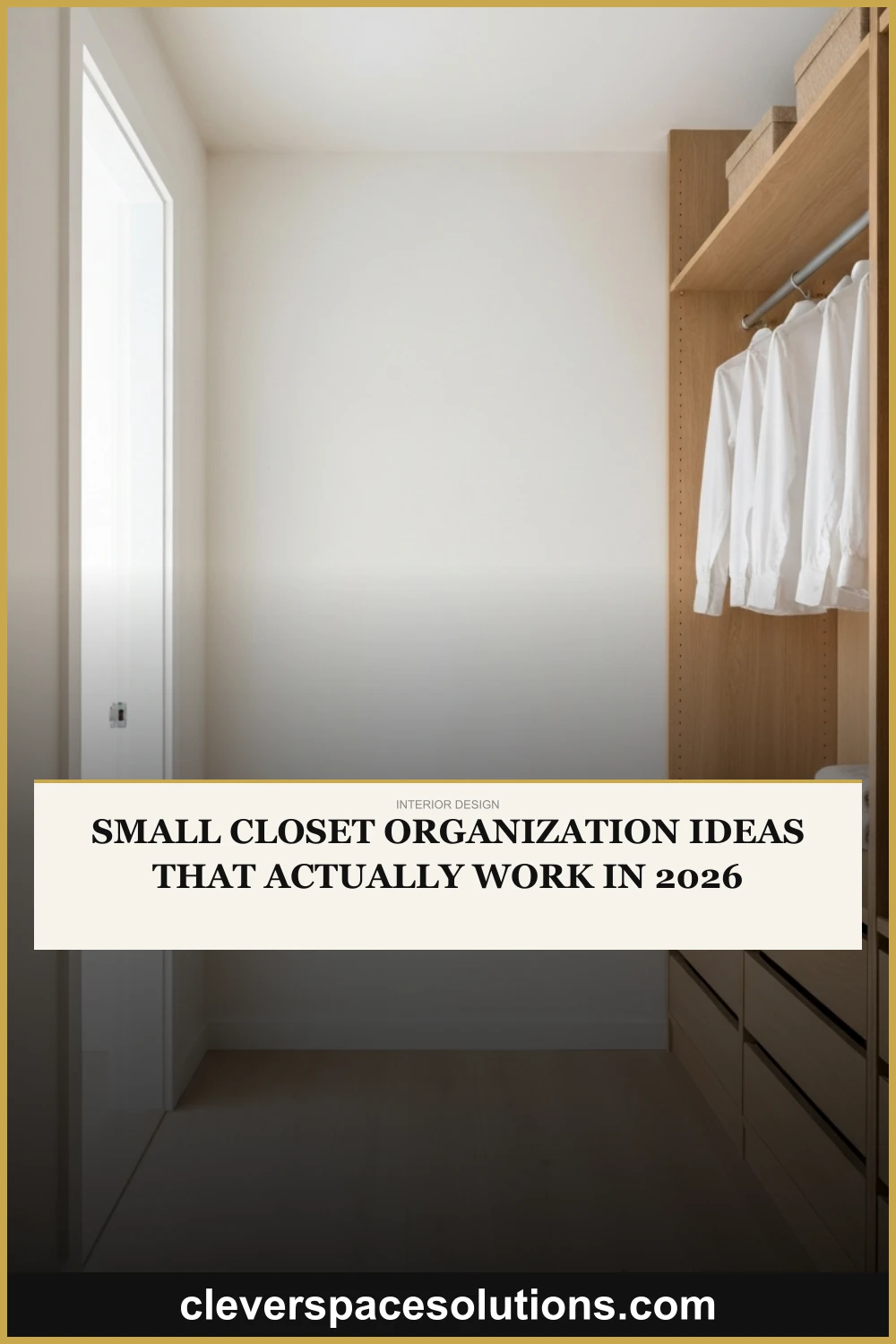
In a national survey by the National Association of Productivity and Organizing Professionals, 55% of Americans named their closets as the most disorganized storage area in the home (NAPO, 2019). Not the garage. Not the kitchen junk drawer. The closet. And if you live in an apartment where your closet is a 24-inch-deep reach-in with a single rod and one shelf, that number probably feels low.
I have lived in five apartments over the past eight years. Every single one had the same closet problem: not enough space, not enough structure, and not enough reason to open the door without wincing. It took me longer than I'd like to admit to figure out that the solution isn't a bigger closet. It's a smarter system inside the one you already have.
This guide covers ten practical closet organization strategies that I've tested in real apartments. We'll walk through slim hangers, vertical space tricks, over-the-door organizers, shelf dividers, seasonal rotation, capsule wardrobes, lighting upgrades, and the honest math on what's worth buying versus building yourself. Every method here is renter-friendly, reversible, and designed for closets under six feet wide.
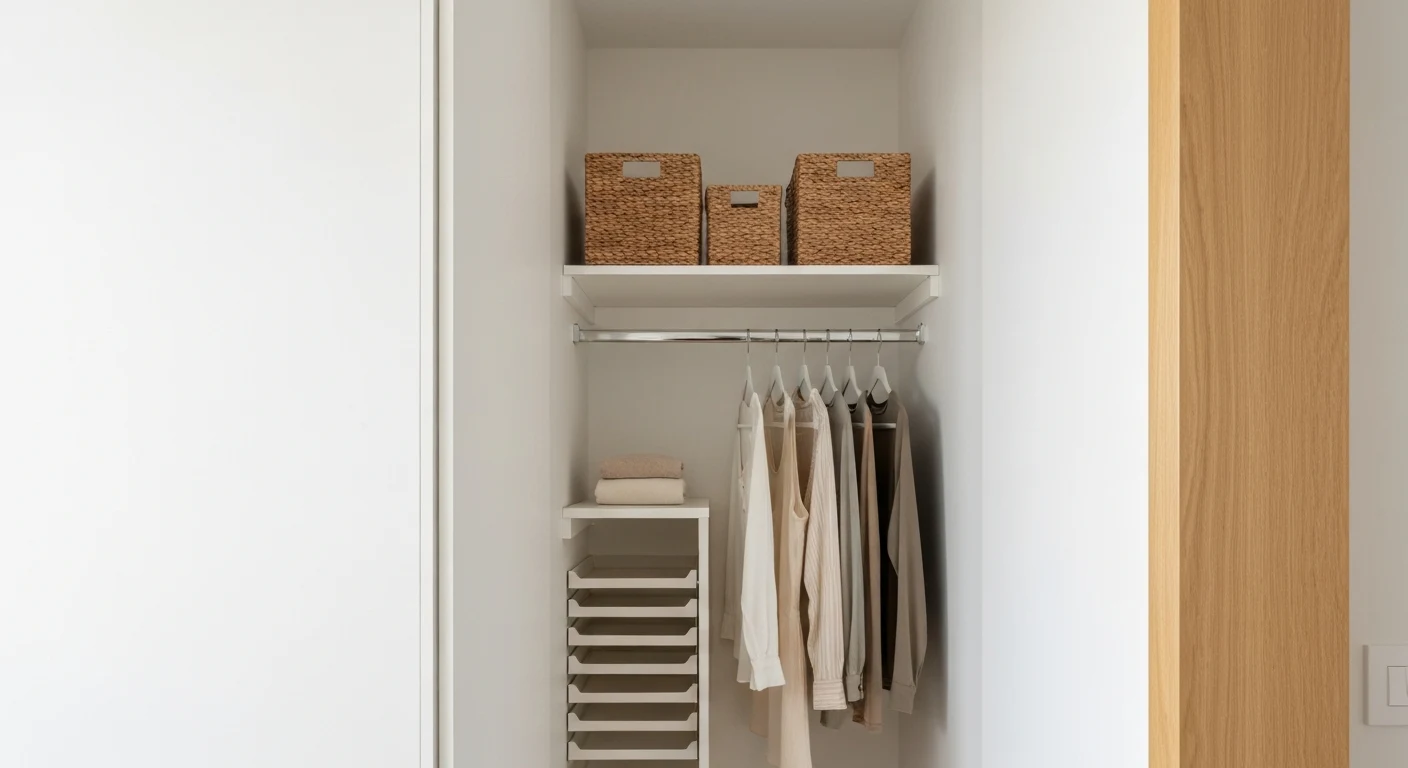
TL;DR: The average American woman owns 103 clothing items but considers 21% of them unwearable (ClosetMaid, 2016). Fixing a small closet isn't about buying more storage products. Start with a 15-minute audit to remove what you don't wear, switch to slim velvet hangers (saves 40% rod space), add shelf risers and over-the-door organizers for vertical gains, then implement seasonal rotation. Total cost: $50 to $150 for a full apartment closet makeover.
Why Your Small Closet Feels More Overwhelming Than It Should
The average American woman owns 103 items of clothing but considers 21% of them "unwearable." Another 33% are too tight and 24% are too loose (ClosetMaid, 2016). That means roughly 78 out of 103 items aren't serving their purpose on any given day. And they're all crammed into a closet that was designed for maybe 40.
Here's the thing most organization advice gets wrong. The problem isn't that your closet is too small. It's that your closet is full of things you don't actually use. A typical wardrobe now contains 148 items on average, yet garments are worn only 7 times before disposal (Rawshot.ai, 2025). We're stuffing more into less space and wearing less of what we own.
I learned this the hard way in my third apartment. I had a 30-inch-wide closet, and I spent $200 on organizers before realizing that no system can fix a closet that contains three winter coats you don't wear, a bridesmaid dress from 2019, and 14 free conference t-shirts. The organizers just made the mess look tidier. The real fix started when I pulled everything out and asked one question: did I wear this in the last 12 months?
There's actual science behind why a packed closet makes your mornings worse. A UCLA study of 60 dual-income couples found that women who described their homes as "cluttered" had elevated cortisol levels throughout the entire day, while people in organized spaces showed normal declining cortisol, meaning they actually relaxed at home (Saxbe & Repetti, 2010). Your closet is one of the first things you interact with every morning. If opening it triggers stress, that stress follows you to work.
The 15-Minute Closet Audit (Do This Before Buying Anything)
A joint survey by Decluttr and NAPO found that 54% of Americans feel overwhelmed by the amount of stuff in their homes and don't know what to do with it (Decluttr/NAPO, 2015). The closet is where that overwhelm concentrates. Before you spend a dollar on any organizer, spend 15 minutes sorting.
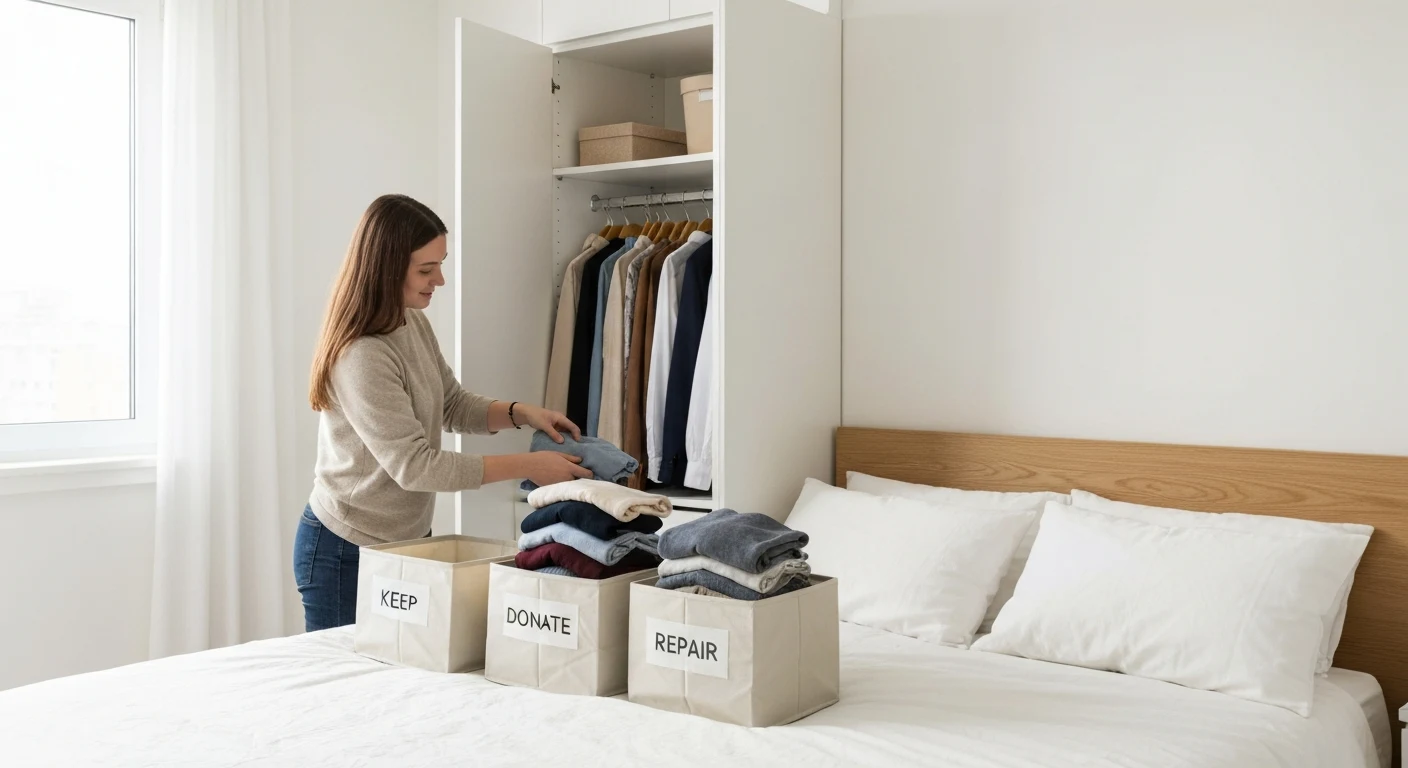
Here's the method I use every time I move into a new apartment. Pull everything out of the closet and put it on the bed. Everything. Then sort into four piles: keep (wore it in the last 12 months), donate (good condition but you're done with it), repair (needs a button or hem fix), and toss (stained, torn, or beyond saving). Be honest. If you haven't worn it in a year, you won't wear it next year either.
The "maybe" pile is a trap. Don't create one. If an item doesn't earn a clear "keep," it goes into donate. I've never once regretted donating a maybe. I've regretted keeping them dozens of times because they just sit there eating space for another six months.
Once you've sorted, count what's left in the keep pile. That number determines your organization strategy. Under 50 items? A single rod with slim hangers and one shelf will work fine. Between 50 and 80? You'll want to add shelf dividers and a door organizer. Over 80? You need a seasonal rotation system, which we'll cover later. If you're working with a one-bedroom apartment, you probably have one main closet plus a coat closet, so split your keep pile accordingly.
Slim Velvet Hangers: The Single Best $20 Upgrade
The global closet organizers market hit $4.03 billion in 2025 and is projected to reach $8.53 billion by 2035 (Future Market Insights, 2025). That's a lot of products competing for your money. But if I could only recommend one purchase for a small closet, it would be slim velvet hangers. No contest.
Standard plastic hangers are about 0.5 inches thick. Slim velvet hangers are about 0.2 inches. That sounds like nothing, but across 40 hangers, you save roughly 12 inches of rod space. That's an entire foot of closet rod you just reclaimed without removing a single garment. In a 30-inch closet, that's a 40% gain in hanging capacity.
I switched to velvet hangers in my fourth apartment and it was the single most noticeable improvement I've made to any closet. Clothes stopped sliding off and piling on the floor. Everything hung at the same height and depth. The visual effect alone made the closet feel twice as organized. I spent $18 on a 50-pack and I've moved them to two apartments since.
One tip that took me a while to figure out: match your hanger colors. All one color, preferably a neutral like grey, black, or blush. Mixed hanger colors create visual noise that makes even an organized closet look chaotic. It sounds small, but your brain processes uniformity as "clean" and variety as "busy." If you're working on making your whole apartment feel more put-together, that same principle applies to how you approach wall decor too.
How to Use Every Inch of Vertical Space
The average U.S. apartment is 908 square feet, with studios at just 457 square feet (RentCafe, 2024). In spaces this tight, your closet's vertical real estate is the most underused resource you have. Most reach-in closets are 8 feet tall but only use the bottom 5 feet. That's three feet of wasted height.
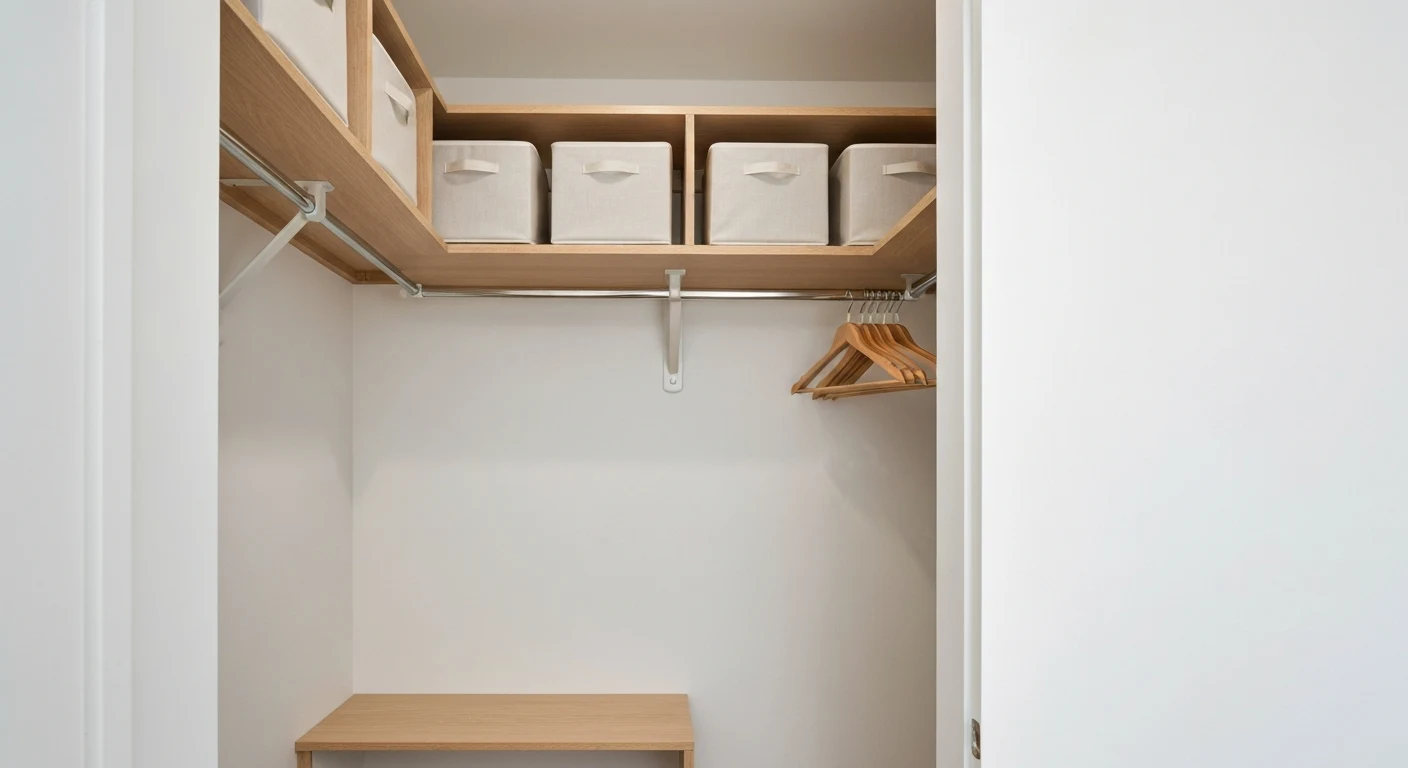
Start by looking up. The space between your top shelf and the ceiling is storage territory. Add a second shelf up there (renter-friendly tension shelf rods work if you can't drill) or stack fabric bins on the existing shelf. This is where off-season items, luggage, and rarely used accessories should live.
Next, look at the rod. If your closet has a single rod at shoulder height, you're using maybe 40 inches of vertical hanging space. Add a double hang rod below it for shorter items like shirts, blouses, and folded pants. The top rod handles dresses, coats, and longer items. This one addition effectively doubles your hanging capacity without changing the closet footprint at all.
Shelf risers: the underrated hero
Shelf risers (also called shelf doublers) create a second tier on any flat shelf. They cost $10 to $20 and instantly double your shelf capacity. I use them on my top closet shelf to stack sweaters on the bottom and bins on top. Without the riser, those items would be one messy pile. The same trick works in your kitchen cabinets and bathroom shelves too.
The vertical space principle extends beyond shelving. Hooks on the closet sidewalls hold bags, belts, and scarves. A small tension rod mounted vertically between shelves can hold several pairs of shoes. If you can make your apartment feel more spacious by using walls and ceilings strategically, your closet deserves the same treatment.
Over-the-Door Organizers That Hold Up for Renters
Approximately 34.3% of U.S. households are renters, and for adults under 35, that figure jumps to 62.1% (U.S. Census Bureau, Q4 2024). If you rent, your closet door is the most valuable surface in your apartment that you're probably not using. And the best part? Over-the-door organizers require zero holes, zero tools, and zero landlord permission.
The classic over-the-door shoe organizer holds 12 to 24 pairs in a space that was doing nothing. But shoes are just the beginning. I use a clear-pocket door organizer in my bedroom closet for accessories: sunglasses, watches, small bags, hair tools, and charging cables. Everything visible at a glance. No digging through drawers.
Quality matters here more than with most organizers. Cheap door organizers with thin hooks will scratch the door and fall off within weeks. Look for organizers with padded or rubber-coated hooks rated for at least 10 pounds. Metal door hooks outperform plastic ones by a wide margin. If you've learned that lesson with renter-friendly wall solutions, the same principle applies here: invest once in the right hardware.
For coat closets and entryway spaces, a sturdy over-the-door rack with 5 to 6 hooks handles jackets, bags, and umbrellas. That frees up the rod inside for things that actually need to hang.
Shelf Dividers and Risers: Double Your Shelf Space Instantly
Bedroom closets captured 39.12% of all U.S. home organizer sales in 2024, the largest single category in a $12.05 billion market (Mordor Intelligence, 2025). Within that category, shelf dividers and risers are the most cost-effective items you can buy, often under $15 for a set.
Shelf dividers are vertical separators that clip onto closet shelves to create sections. Without them, stacked sweaters turn into leaning towers that topple every time you pull one from the middle. Dividers keep stacks upright and defined. I use them to separate sweaters from jeans from t-shirts on a single shelf. Each section stays contained.
The combination play is powerful: shelf risers on top, dividers below. A 24-inch shelf with one riser and two dividers gives you six defined storage zones where you previously had one chaotic surface. Label each zone (I use small adhesive labels on the front edge of the shelf) and you've created a system that maintains itself.
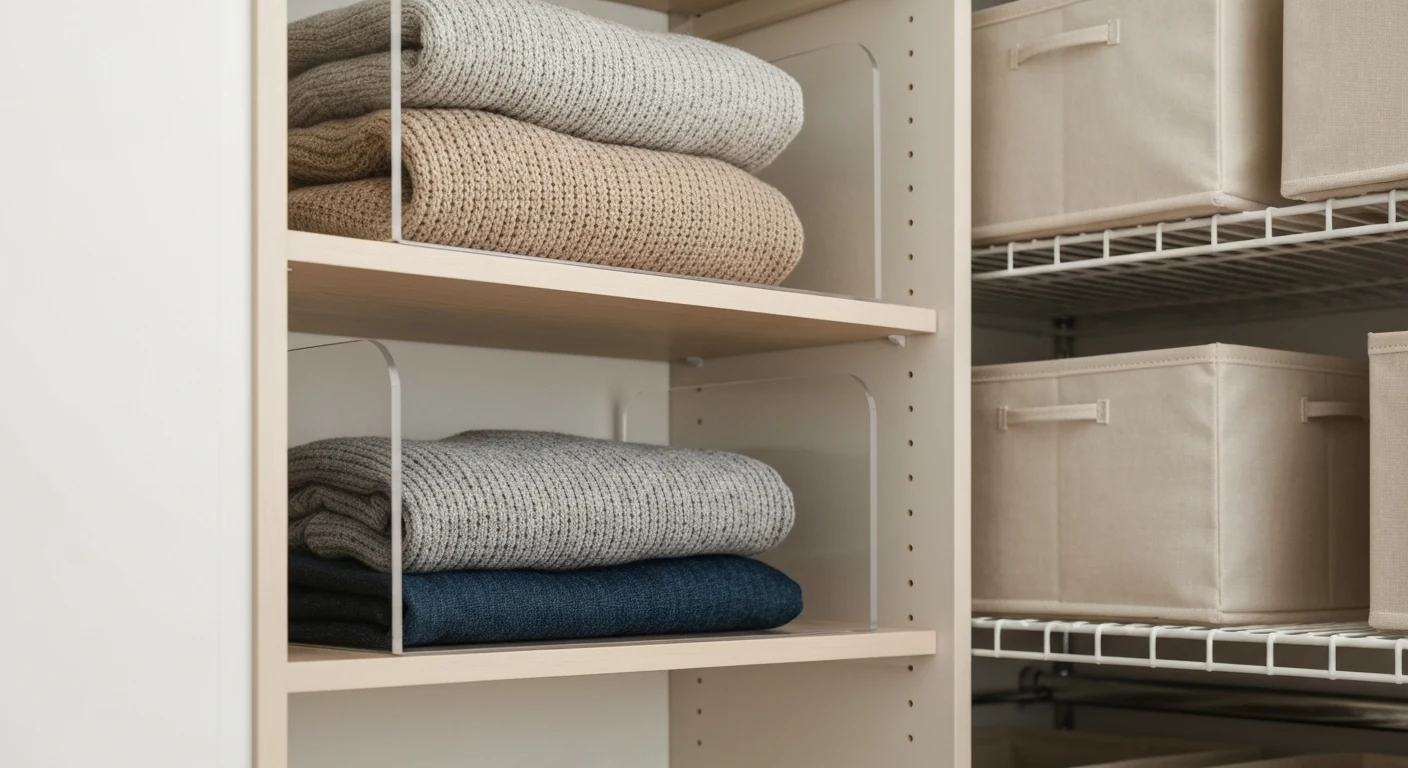
For studio apartment closets that serve as bedroom, linen, and general storage all in one, dividers become even more important. They let you visually and physically separate categories in a closet that's pulling triple duty.
Drawer Dividers and Folding Systems That Save Hours
Americans spend 2.5 days per year looking for lost items, collectively costing U.S. households $2.7 billion annually in replacement costs (Pixie Survey, 2017). A good chunk of that time vanishes into dresser drawers where everything sinks to the bottom. If your closet includes built-in drawers or you use a dresser inside your closet, dividers change everything.
Adjustable bamboo or plastic drawer dividers turn a single deep drawer into four to six compartments. Socks in one section, underwear in another, workout gear in a third. The key is file folding: fold each item into a rectangle and stand it upright so you can see everything from above, like files in a filing cabinet. No more digging to the bottom of a stack.
I resisted file folding for years because it seemed fussy. Then I tried it with one drawer of t-shirts. That single drawer went from holding 12 shirts in a pile (where I could only see the top one) to holding 20 shirts all visible at once. I haven't gone back. The time I save each morning picking a shirt is small, maybe 30 seconds. But that adds up. And it eliminated the "I forgot I owned that" problem for good.
If you're someone who also keeps your desk organized, you already know this principle. The same organization habits that boost productivity at your desk work in your closet too. Visible, accessible, categorized. That's the formula.
The Capsule Wardrobe Approach (Even If You Love Clothes)
The capsule wardrobe market was valued at $1.3 billion in 2023 and is projected to reach $2.6 billion by 2030, growing at 10.5% annually (Strategic Market Research, 2024). That's not a fad. It's a shift in how people think about clothing, especially in small spaces where every hanger counts.
A capsule wardrobe doesn't mean owning 30 items and wearing the same outfit every day. It means curating a core set of versatile pieces that mix and match easily, then rotating specialty items seasonally. For a small closet, I recommend a core of 35 to 45 pieces that cover work, casual, and one "going out" context. Everything else rotates into storage.
The math supports this approach. The typical wardrobe now contains 148 items, but garments are worn an average of just 7 times before being discarded (Rawshot.ai, 2025). That's a massive waste of both money and closet space. By reducing to items you actually wear, you free up 40 to 60% of your closet for proper spacing and organization.
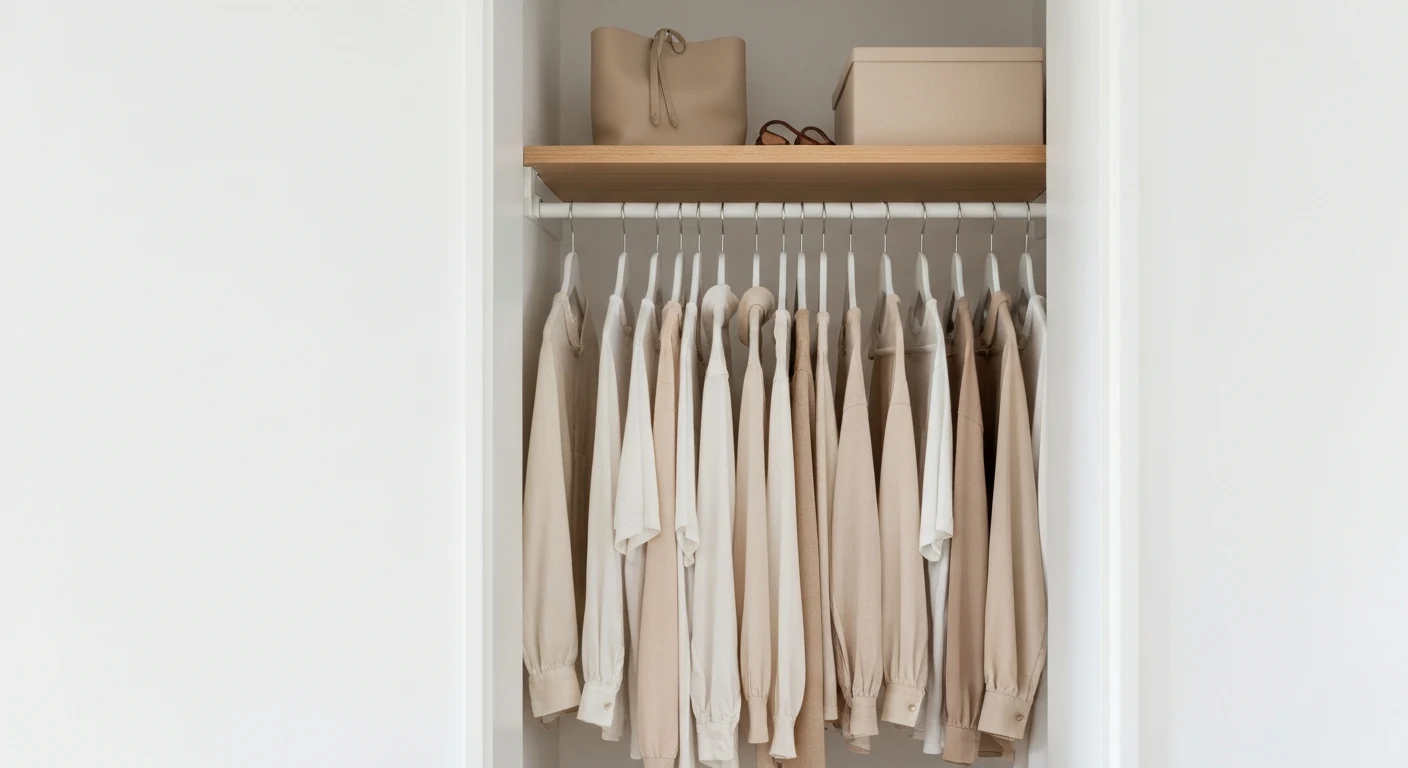
I'll be upfront: the hardest part isn't deciding what to keep. It's accepting that you don't need a "just in case" category. That dress you might wear to a hypothetical event? Donate it. If the event happens, you'll find something. In my experience, the relief of opening a closet where everything fits and everything gets worn outweighs any hypothetical loss. If you're drawn to bold style choices, consider using color drenching techniques with fewer pieces rather than owning more items in muted tones.
Closet Lighting: The Upgrade Nobody Thinks About
Over 11% of U.S. households rent a self-storage unit, and the industry generated $44.3 billion in 2024 revenue across 52,000+ facilities (StorageCafe, 2024). Part of the reason people pay for external storage is that their existing closets feel unusable. And one major reason closets feel unusable? They're dark. You literally can't see what you own.
Most apartment closets have no built-in lighting. You open the door and peer into a shadow. Items at the back of shelves become invisible. Colors look wrong. You end up pulling everything out to find one shirt, and then you don't put it all back neatly. The disorganization cycle starts with darkness.
Battery-powered LED strip lights changed my closet completely. I spent $12 on a motion-activated LED strip and stuck it under the top shelf with adhesive backing. Now the closet lights up when I open the door and turns off 30 seconds after I close it. No wiring, no electrician, no landlord conversation. Just light where there was none. For closets with deeper shelves, puck lights (those small round adhesive LEDs) placed every 12 inches illuminate the back wall where forgotten items hide.
Here's something I didn't expect: proper closet lighting reduced how often I reorganized. When I could see everything clearly, I put items back in the right spot the first time. When it was dark, things ended up wherever my hand landed. If you've been thinking about adding atmosphere to other parts of your apartment, the same lighting awareness that helps in a reading nook setup applies to functional spaces like closets.
The Seasonal Rotation System
In that same NAHB survey of over 3,000 home buyers, 76% rated closet space as essential or desirable, and walk-in closets ranked as the third most-wanted feature for repeat buyers (NAHB, 2024). Most apartment renters don't have walk-in closets. But you can simulate the capacity of one with a simple seasonal rotation.
The concept is straightforward: only keep the current season's clothing in your closet. Everything else goes into labeled bins stored under the bed, on top of a wardrobe, or in a hallway closet. When the season changes, swap the bins.
Here's how I do it. I have three bins: winter heavy (coats, thick sweaters, boots), summer light (shorts, tank tops, sandals), and transitional (layers, light jackets, items that span seasons). The transitional bin stays accessible year-round. The other two rotate in and out. This alone freed up about 35% of my closet rod space because winter coats are bulky and summer clothes are thin. The closet breathes during both seasons instead of being stuffed with everything at once.
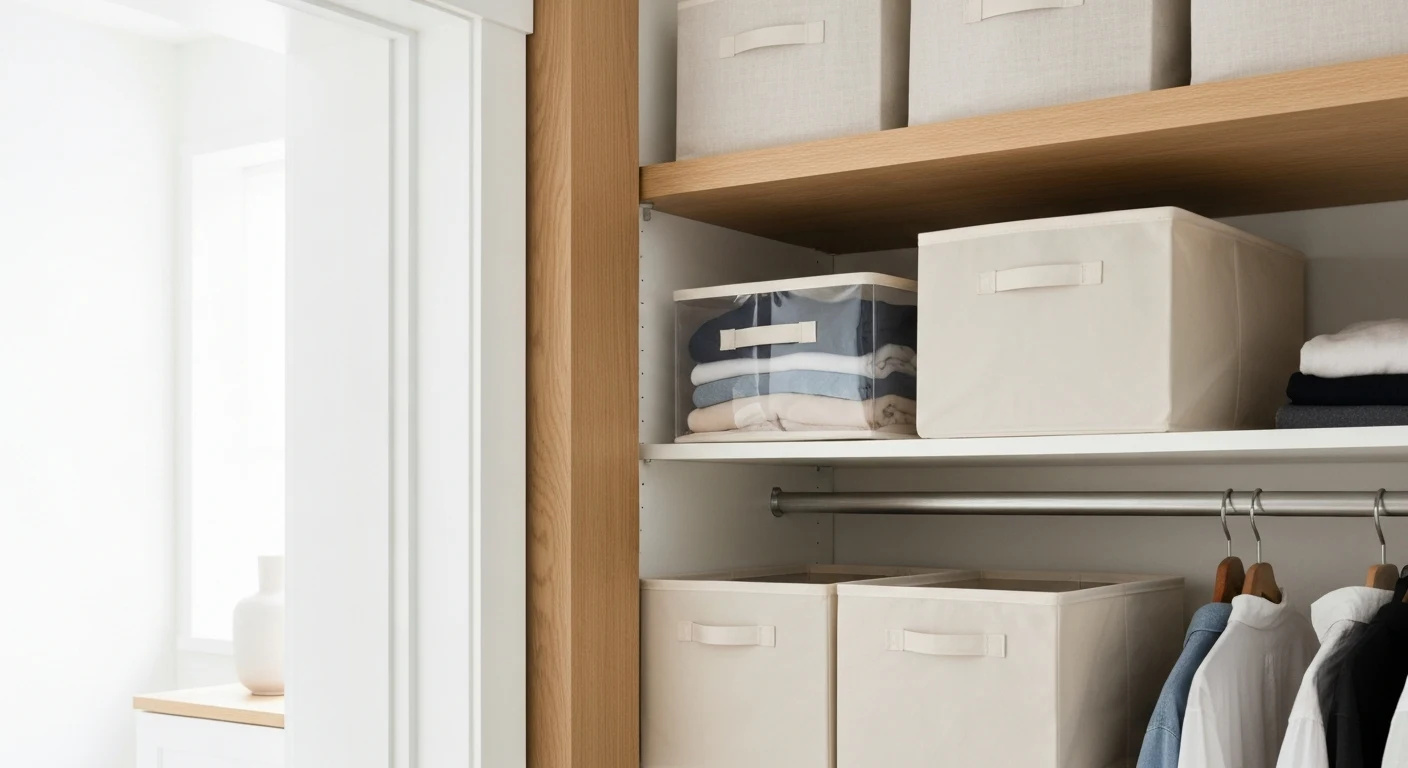
Vacuum-seal bags are worth considering for bulky winter items like puffer jackets and thick blankets. They compress items to about a third of their size. I use them for exactly two things: my winter comforter and my heavy coat. For everything else, standard fabric bins work fine and are gentler on clothing fibers. The key is labeling clearly so you don't end up opening every bin to find your favorite sweater in October.
DIY vs. Store-Bought: What's Actually Worth the Money?
The U.S. home organizers and storage market is valued at $12.05 billion in 2025, with a projected growth to $15.21 billion by 2030 (Mordor Intelligence, 2025). That's a lot of products marketed at people with small closets. But not all of them deserve your money. After years of testing, here's my honest breakdown of what to buy and what to build.
Worth buying (don't DIY these)
- Slim velvet hangers ($15 to $25 for 50-pack): The consistency and slim profile can't be replicated with DIY. Buy once, keep forever.
- Over-the-door organizers ($15 to $30): The hook design needs to be precise to avoid door damage. Factory-made wins here.
- LED motion-sensor lights ($8 to $15): Wiring your own LED strips is possible but the adhesive-backed, battery-powered versions are so cheap that DIY doesn't save money.
- Drawer dividers ($10 to $20): Adjustable bamboo or spring-loaded dividers fit any drawer width. Cardboard DIY versions warp within weeks.
Worth making yourself (save the money)
- Shelf dividers: Sturdy bookends from a thrift store do the same job as $20 acrylic dividers. Cost: $2 to $4 per pair.
- Shelf risers: A small stacked crate or even a sturdy shoe box covered in contact paper creates a second tier. Cost: $0 to $5.
- Seasonal storage bins: Old suitcases, large tote bags, or even clean trash bags inside a pillowcase work fine for off-season items.
- Scarf and belt organizers: Shower curtain rings on a hanger hold a dozen scarves or belts. Total cost: $1.
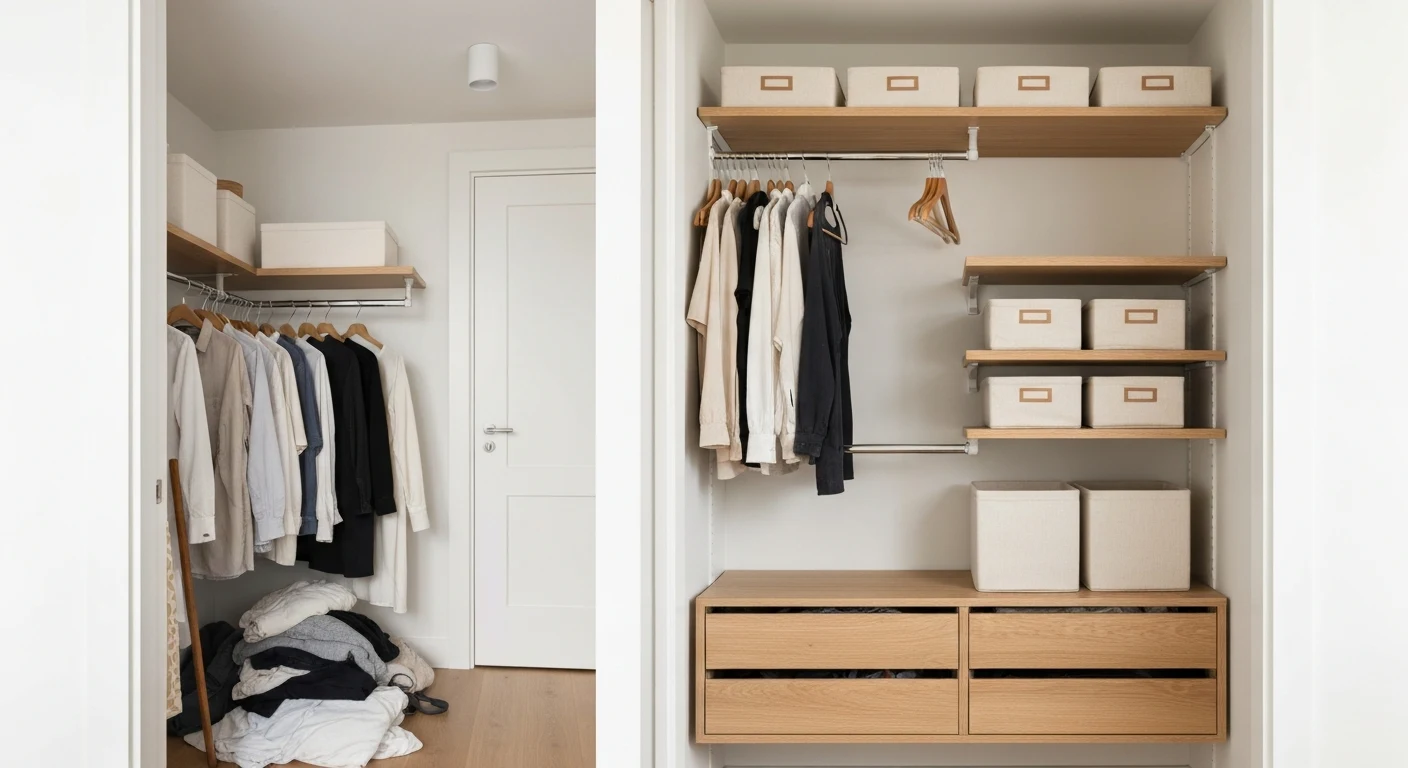
The total cost of a full apartment closet makeover using a mix of bought and DIY solutions runs $50 to $150. That's less than one month of the smallest self-storage unit in most cities. And unlike storage units, the investment actually fixes the root problem. For more ways to make your small home more functional without overspending, the same buy-smart-and-DIY-the-rest approach works in every room.
Frequently Asked Questions
How do I organize a closet that has no built-in shelves?
Use a freestanding shelf unit (a small bookcase or cube organizer) inside the closet to create structure. Tension rods mounted between the closet walls add hanging space without drilling. Pair those with an over-the-door organizer and you've built a full system from scratch. The closet organizers market is growing at 7.8% annually (Future Market Insights, 2025), so options are plentiful at every price point.
What is the best way to store seasonal clothes in a small apartment?
Use labeled fabric bins under the bed or on top shelf space. Vacuum-seal bags compress bulky winter items to one-third their size. The typical wardrobe contains 148 items (Rawshot.ai, 2025), so rotating 40 to 50 off-season pieces out of the closet can free up a third of your total space. Swap bins when seasons change and label everything clearly.
How many hangers do I need for a small reach-in closet?
Plan for 30 to 50 slim velvet hangers in a standard 3-to-5-foot reach-in closet. That gives each item enough spacing (about 1 inch between hangers) to stay wrinkle-free and visible. If you need more than 50 hangers, you likely have too many hanging items. Fold bulkier pieces like sweaters and jeans on shelves instead.
Can I add a closet organization system as a renter without losing my deposit?
Yes. Stick to adhesive-mount solutions, tension rods, freestanding shelves, and over-the-door organizers. None of these require drilling or permanent changes. About 34.3% of U.S. households rent (U.S. Census Bureau, Q4 2024), and the entire renter-friendly decor industry has adapted. Every product mentioned in this guide is fully removable.
How do I keep a small closet from getting disorganized again after organizing it?
Use the "one in, one out" rule: every time you buy a new item, donate one you already own. Do a 5-minute weekly reset where you rehang fallen items and return anything that wandered to the wrong section. People who described their homes as organized showed healthier stress hormone levels throughout the day (Saxbe & Repetti, 2010). A quick weekly habit protects both your closet and your wellbeing.
More from Studio & Small Apartment
Layout, decor, and life in studio and small apartments.
How Do You Decorate a Studio Apartment?
Wondering how to furnish your studio apartment without it feeling cramped? This guide answers your questions with smart ideas for zoning, furniture, and deco...

How to Decorate a Studio Apartment: An Expert's Guide
8 min read

How Do You Decorate a Studio Apartment?
10 min read

The Art of Studio Living: Your Complete Guide
10 min read
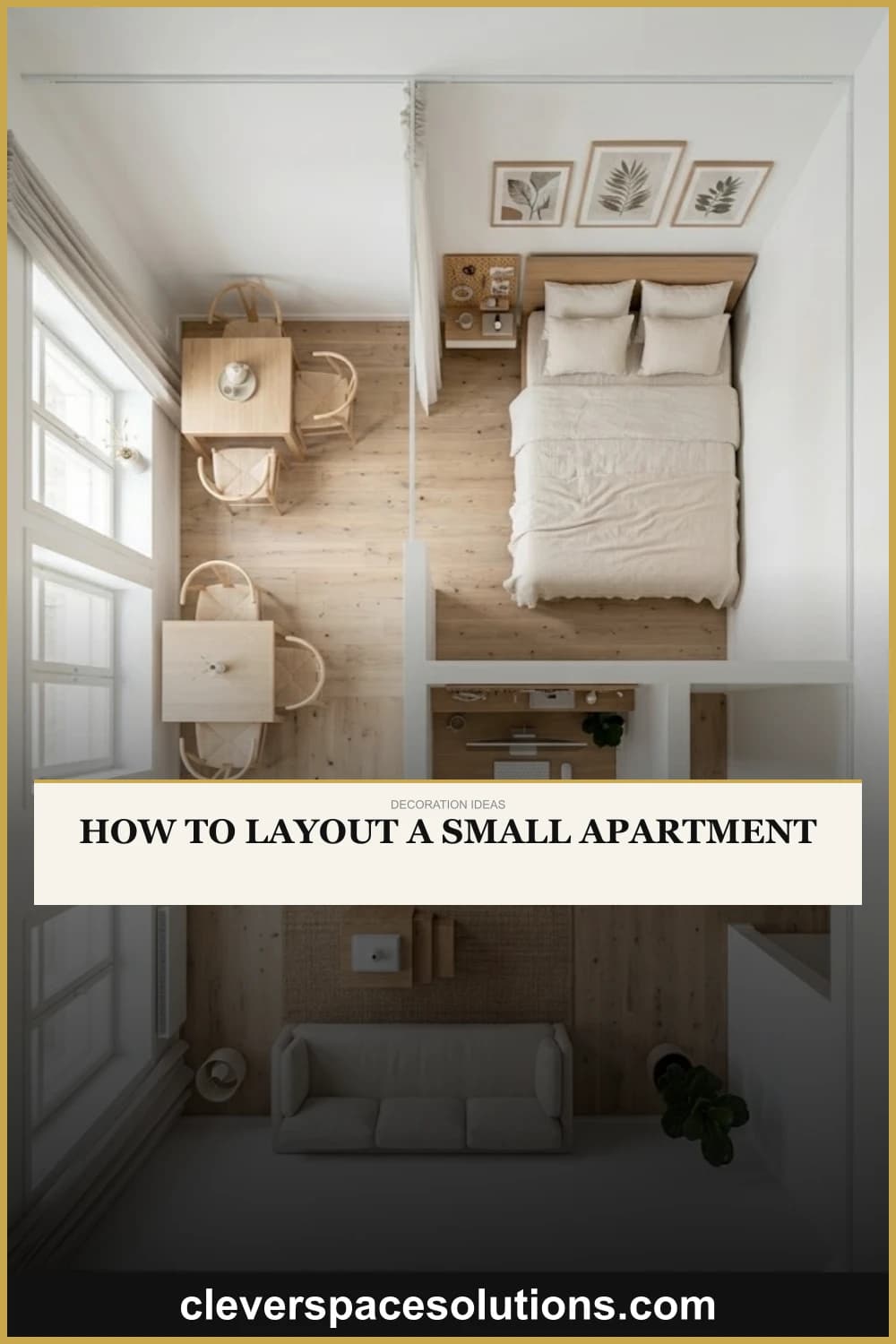
How to Layout a Small Apartment?
25 min read

3 Flawless Layouts and 5 Real-Life Studio Solutions
21 min read

How Do You Decorate a One-Bedroom Apartment?
18 min read
Tags

Written by Joesp H.
Interior Design & Small Space Living Specialist
Former marketing manager turned full-time home optimizer. After living in 7 homes ranging from 450 to 2,000 sq ft, I started CleverSpaceSolutions to help people create organized, functional spaces on real budgets.
Other Articles
30 Renter-Friendly Wall Decor Ideas for Small Apartments (No Holes, No Damage)
Discover 30 renter-friendly wall decor ideas that need zero holes. Command strips, peel-and-stick wallpaper, leaning art, and more. Protect your deposit.
Small Balcony Privacy Ideas: How to Block Out Neighbors and Build a Private Outdoor Retreat
25 renter-friendly small balcony privacy ideas: bamboo screens, plant walls, outdoor curtains, pergolas. Block neighbors, dampen noise, stay HOA-compliant.
Kitchen Backsplash Ideas for Small Kitchens: Budget-Friendly Designs That Pop
12 budget-friendly backsplash ideas for small kitchens, from 0 painted walls to 80 subway tile. Real costs, DIY timelines, and renter-friendly options with sourced data.