Space-Saving Storage Furniture for Small Apartments: Ottomans, Cabinets & Hidden Solutions
Space-saving storage furniture for small apartments: storage ottomans, beds, lift-top tables, and cabinets, plus 2026 price ranges and three budget setups.
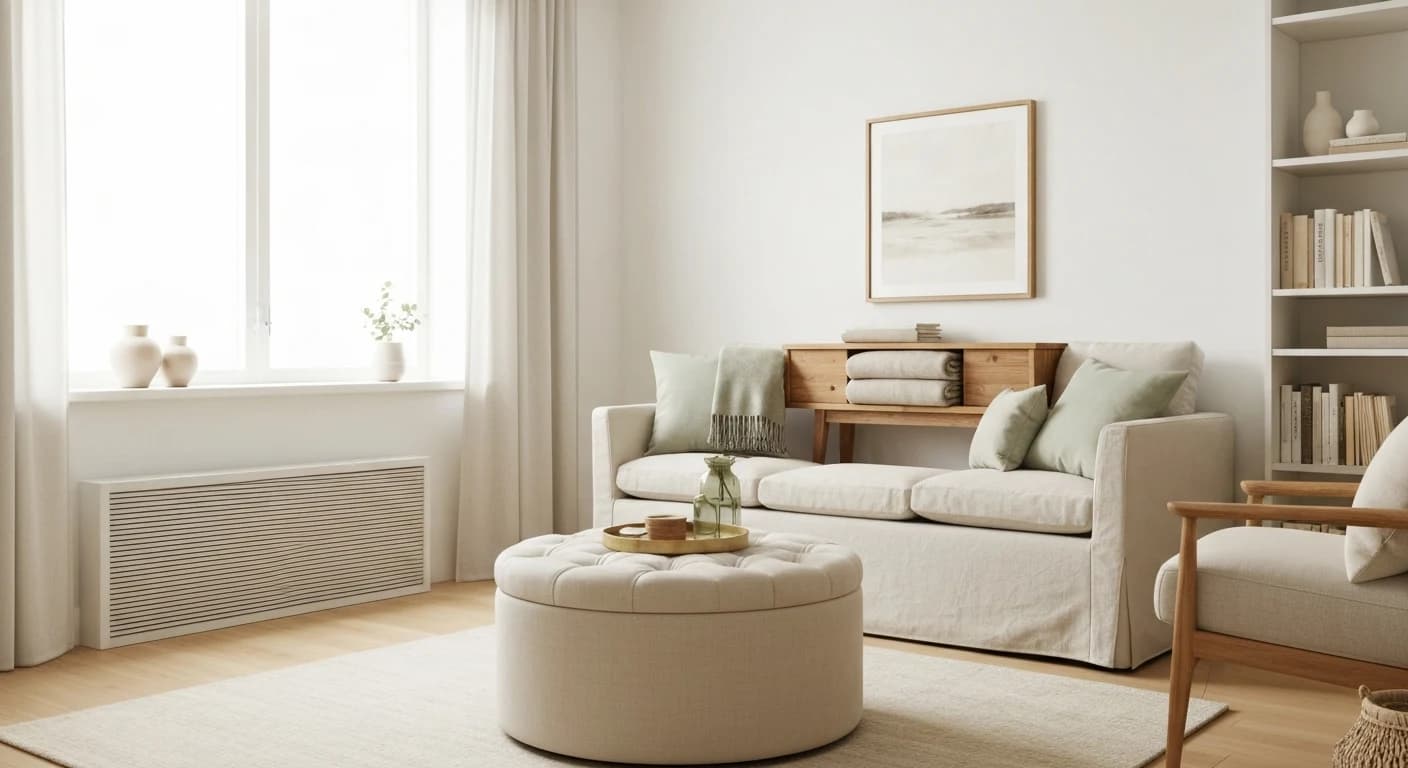
TL;DR: The average US studio apartment is 457 square feet and the average one-bedroom 735 (RentCafe, 2025), and furniture is the single most common item Americans pay to store off-site (StorageCafe, 2025). The fix is buying furniture that stores: a storage ottoman holds 2 to 4 cubic feet under a seat, a lift-up storage bed recovers 25 to 30 cubic feet of dead under-bed volume, and a console cabinet turns the back of a sofa into a sideboard. This guide covers a 5-minute buying audit, seven categories of storage furniture with real 2026 price ranges, how to convert a den or dead corner into a storage zone, and three complete setups at $200, $600, and $1,200.
The first apartment I furnished on my own was a 480 square foot one-bedroom with a single bedroom closet, no coat closet, no linen closet, and no pantry. I bought a coffee table, a bed frame, and a TV stand the way most people do, by picking what looked right, and six months later I was keeping winter coats in a suitcase shoved under that bed because the frame had four open legs and held nothing. The week I swapped the open frame for a storage bed with two drawers, the suitcase, a plastic bin, and a stack of folded blankets all disappeared into furniture I already needed for sleeping. That is the whole idea behind storage furniture: in a small apartment, every large object you own should be holding something.
Small apartments are not getting much bigger. RentCafe's 2025 analysis of Yardi Matrix data put the average US studio at 457 square feet and the average one-bedroom at 735, with built-in storage among the first things value-engineered out of floor plans that tight. My full room-by-room playbook for those footprints lives in the studio apartment decorating guide; this article does one job, which is choosing furniture that gives back the storage the architecture left out.
I have furnished four small apartments over twelve years and helped two friends do the same. The pattern holds every time: the people who run out of space usually own furniture that does only one thing. Below is the buying framework, seven categories of double-duty furniture with current price ranges, the den and dead-corner conversions most guides skip, and three complete setups by budget.
Why Small-Apartment Furniture Has to Pull Double Duty
Apartment closets, pantries, and utility rooms shrank as builders absorbed rising land and construction costs, and the floor plan paid for it. RentCafe found the average US studio apartment reached 457 square feet in 2025, up a slim 13 feet from 2023, while the average one-bedroom sits at 735 and the national average across all unit types is 908. Inside those footprints, built-in storage is the first thing cut: one bedroom closet, often no entry closet, rarely a linen or utility closet.
The US Census Bureau's Q1 2026 Housing Vacancy Survey counted roughly 46.4 million renter-occupied housing units out of 133.7 million total US households, with the homeownership rate at 65.3%. Close to one in three American households rents, and a renter cannot add a closet, frame in a pantry, or build a storage nook. The furniture has to carry the load the architecture does not.
The clearest evidence that it currently does not carry that load is the self-storage bill. StorageCafe's National Self Storage Survey, fielded from December 2024 to February 2025 across 2,824 US respondents, found that 33% of Americans rent a self-storage unit, that renters use storage more than homeowners (34% versus 30%), and that furniture is the single most commonly stored item, named by 27% of users. One-bedroom apartment residents are the heaviest users of all at 44%. When 44% of one-bedroom renters pay a monthly bill to keep belongings in a unit across town, the in-home storage gap is real, measurable, and expensive. Storage furniture is the move that closes it without the monthly bill.
The size ladder above is the reason a studio cannot be furnished like a house. A studio resident has 457 square feet for sleeping, cooking, working, and living, and every piece of furniture sits on floor space that could be doing something else. Each piece has to earn its footprint twice: once for its obvious job, once for storage.
The 5-Minute Audit: Measure, Sort, and Judge Before You Buy
Most storage furniture regret traces back to a decision made at the store or in the checkout cart: the piece is too deep for the doorway, the lift mechanism is flimsy, or the advertised storage volume turns out half-real once the lid hardware and the bed slats are accounted for. A 5-minute audit before you spend anything prevents the returns and the regret.
- Sort what you own by frequency. Three piles: daily (used most days), seasonal (used a few times a year, like winter bedding or holiday decor), and archive (kept but rarely touched, like documents and sentimental boxes). Daily items need furniture with fast access, an open shelf or a soft-close drawer. Seasonal and archive items go in slow-access storage: under-bed drawers, ottoman interiors, the top of a wardrobe.
- Measure the doorway, the path, and the spot. Write down the width of your apartment door, any interior doorway the piece must clear, and the exact footprint of the spot it will live in. A storage piece that will not fit through the door is the most expensive mistake in this category.
- Plan for usable volume, not advertised volume. A storage ottoman listed at 4 cubic feet loses space to the lid frame and the upholstery thickness; a drawer bed loses room to the slats and the drawer walls. Count on roughly 70 to 80% of any advertised storage figure being genuinely usable, and never let a thin margin on that number decide the purchase.
- Judge the mechanism. Lift-top tables and lift-up beds run on either a plain hinge or a gas piston. Gas pistons hold the lid open by themselves and lower it slowly, which matters every day you use the piece; a bare hinge means holding the weight with one hand while you reach in. Spend up for the piston on anything you will open daily.
- Check weight two ways. Note the seat or top rating (how much the piece holds as furniture, often 250 to 300 pounds for an ottoman) and think through the storage load. Soft goods like bedding and clothing are effectively weightless here; books, tools, and canned goods are not, and a drawer rated for linens will struggle under a load of hardcovers.
The audit is worth the 5 minutes because disorganization carries a measurable cost. The often-cited Pixie Lost and Found Survey, conducted in 2017 and still the standard benchmark, found the average American spends 2.5 days a year looking for misplaced items, and that lost-item replacement runs US households a collective $2.7 billion annually. More recent data agrees the problem is widespread: the 2025 StorageCafe survey found 42% of Americans feel cluttered at home frequently or always, with another 28% feeling it occasionally. Storage furniture chosen by frequency, and measured before buying, is what turns that 70% down.
Some pieces fold, convert, or transform rather than hold storage inside, and for those my best multifunctional furniture for small apartments guide is the companion to this one. The focus here stays on furniture with a hollow you fill.
Storage Ottomans: The Lowest-Risk Place to Start
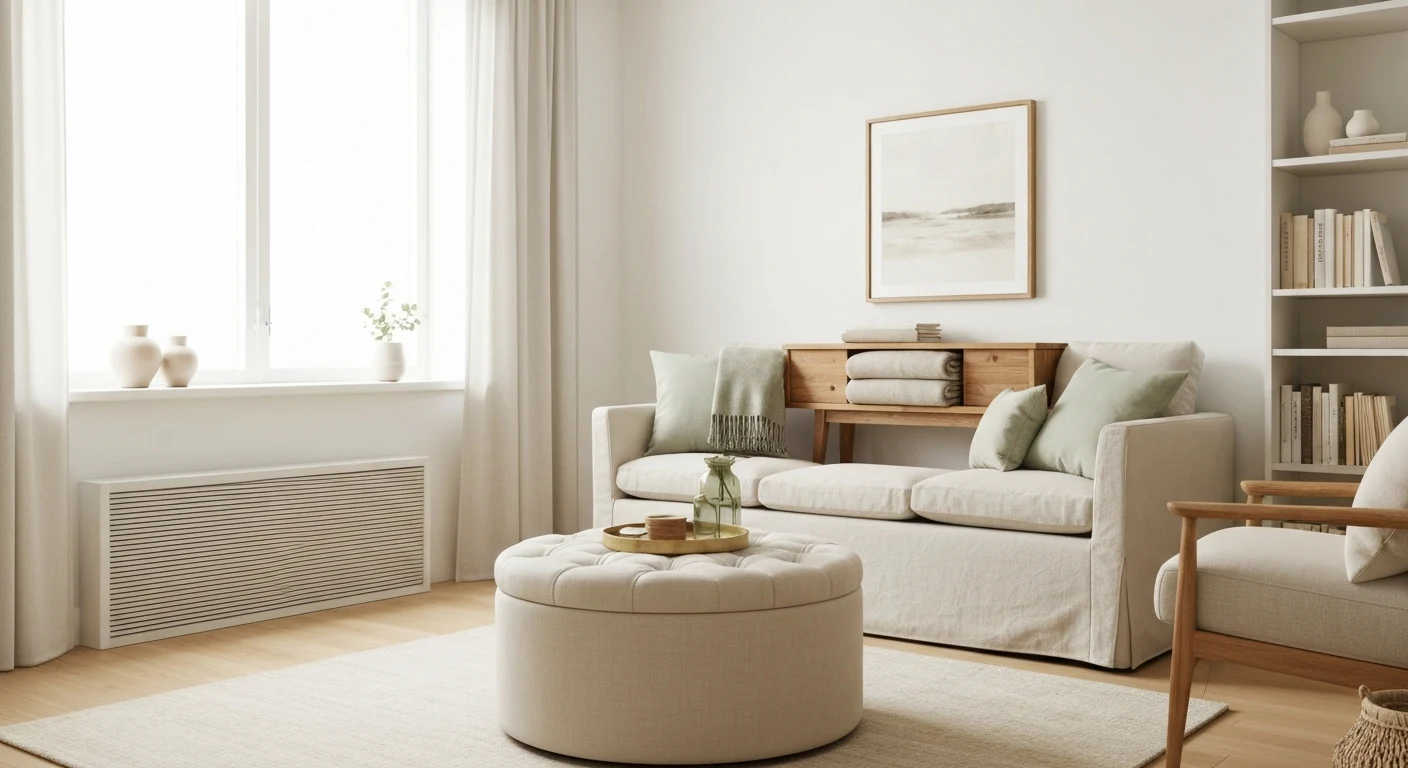
If you buy one piece of storage furniture this month, make it a storage ottoman. It is the lowest-risk entry in the whole category: inexpensive, light enough to reposition on a whim, useful in any room, and forgiving if you get the size slightly wrong. A storage ottoman is a padded box. The lid works as a seat or a footrest, and the hollow interior holds 2 to 4 cubic feet depending on size, enough for a winter duvet, or two throw blankets with a spare sheet set, or a season of a child's toys.
The ottoman category overall is large and growing. DataHorizon Research valued the global ottomans market at $10.75 billion in 2023, with a forecast to $18.26 billion by 2033. Storage versions are the fastest-moving part of that shelf in small-space retail, because one purchase answers three needs at once.
- Seating. A storage ottoman gives you a spare seat for guests without a chair taking up floor space year-round. Most rate to 250 to 300 pounds as a seat, set by the lid and frame rather than the contents.
- Surface. Add a flat tray on top and an ottoman becomes a coffee table that you can also put your feet on. A round storage ottoman in place of a coffee table is also safer in a tight walkway, with no hard corners at shin height.
- Storage. The interior swallows the soft, bulky things that otherwise sit out: blankets, throw pillows, board games, the extra set of sheets. Soft goods are the ideal ottoman cargo because they are light and shape-flexible.
Typical 2026 US retail ranges, based on current listings at IKEA, Wayfair, Target, and Amazon: a small fabric cube ottoman runs about $30 to $70, a standard rectangular lift-top storage ottoman $80 to $200, and a large tufted or leather storage ottoman that doubles as a coffee table $200 to $400. Start at the cube if the budget is tight; it is the cheapest seat-plus-storage piece made, and it moves to the next apartment without complaint.
Storage Beds: The Biggest Single Storage Gain You Can Buy
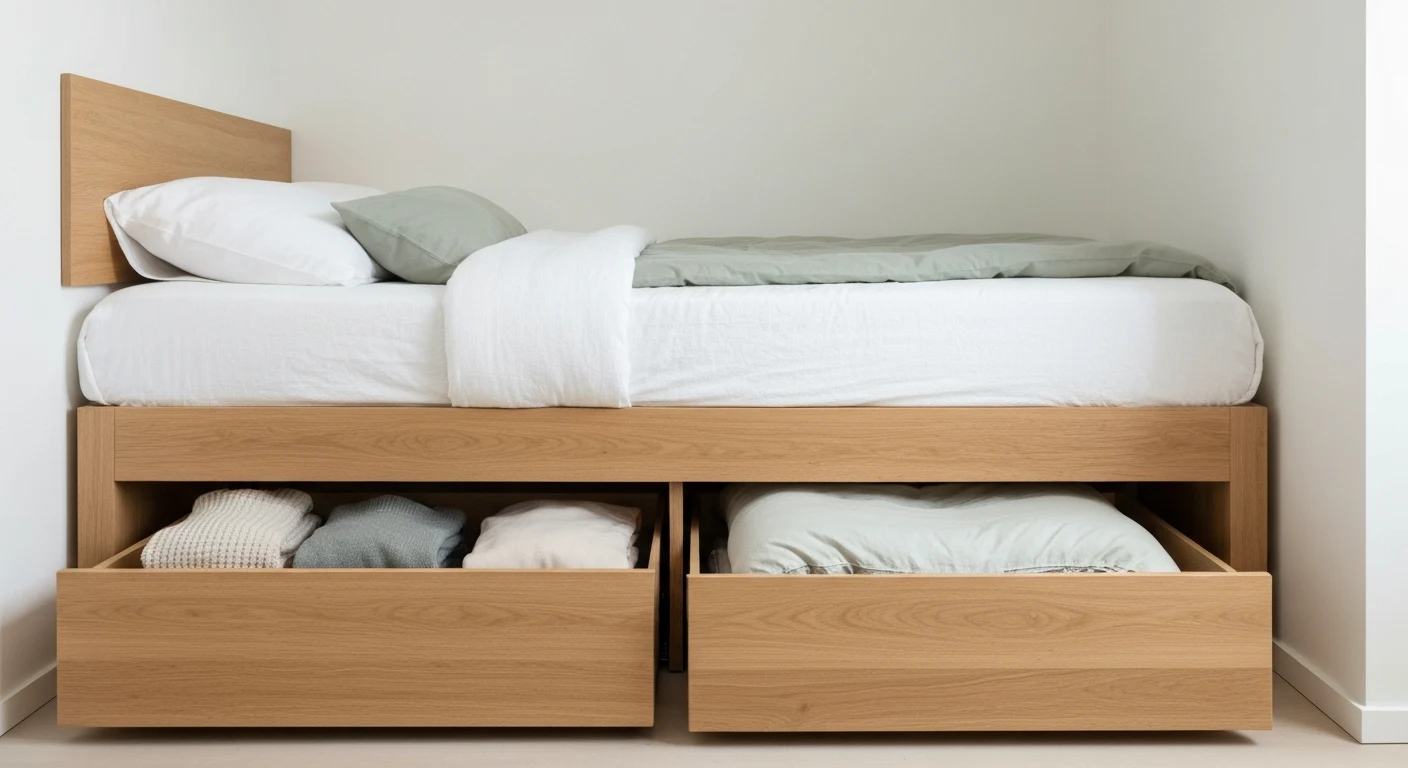
The largest untapped storage volume in any apartment is the rectangle of air under the bed. A standard queen bed covers about 33 square feet of floor, and the gap between the floor and the mattress, usually 7 to 13 inches, is dead space in an open-leg frame. A storage bed converts that rectangle into the single biggest storage gain a small apartment can offer, ranked here by how much each format recovers.
- Lift-up (ottoman) storage bed. The whole mattress platform lifts on gas pistons to reveal one open cavity underneath. A queen lift-up bed gives you 25 to 30 cubic feet of storage, roughly a small closet, and the open cavity takes awkward bulky items a drawer cannot. The trade is access: you clear the bed to open it, so this is seasonal and archive storage.
- Drawer storage bed. Two to six drawers built into the bed base. Total volume is lower than a lift-up, since drawers do not use the full footprint, landing around 4 to 8 cubic feet, but access is fast enough for daily use. Drawers suit folded clothing and shoes.
- Bed risers plus under-bed bins. The renter-budget version. Four risers lift an existing frame 3 to 8 inches higher, and flat rolling bins slide into the new clearance. It recovers less than a built-in storage bed and looks less finished, but it costs a fraction as much and works with the frame you own.
The 2025 StorageCafe survey found clothing is the number one source of household clutter, with 26% of Americans admitting they own more clothes than they have space for. A storage bed is the most direct answer to that specific problem: out-of-season clothing, folded into a lift-up cavity or two deep drawers, leaves the closet entirely and frees the rod for what you wear now.
Typical 2026 ranges: a basic queen drawer platform bed runs $250 to $500, a gas-lift ottoman storage bed $400 to $900, and a set of four bed risers with six under-bed bins about $60 to $120 as the renter starter. For the rest of the bedroom storage system around the bed, my small bedroom storage ideas guide covers the closet, the walls, and the vertical space the bed anchors.
Lift-Top Coffee Tables and Hidden Living-Room Storage
The living room is where storage furniture does its quietest work, because the pieces that store there also have to read as a finished living room. The lift-top coffee table is the centerpiece. Its top slides up and toward you on a hinged steel arm, rising 8 to 12 inches and locking level, so the table becomes a desk, a dining surface, or a laptop stand, while the cavity underneath plus any lower shelf holds 2 to 5 cubic feet.
A lift-top table earns its place three ways in a small apartment. It works as a stand-up or sit-down desk for anyone who works from home without room for a real desk. It lets you eat a proper meal on the couch with the surface at a comfortable height. And the cavity hides the daily clutter of a living room: remotes, chargers, a laptop, a throw blanket, the board games. Pinterest's Predicts 2026 report flagged curved, lower-profile furniture as a leading home trend, valued because rounded silhouettes cut visual bulk and keep walking paths clear in tight rooms. A curved-edge or round lift-top table reads lighter in a small living room than a hard-cornered one.
Other living-room storage furniture worth its footprint:
- Storage side tables. An end table with a drawer or a small cabinet holds the things that pile on a side table anyway, coasters, remotes, reading glasses, and keeps them out of sight.
- Nesting tables. Two or three tables that tuck into one footprint and pull out when guests arrive. Not storage in the hollow sense, but storage of surfaces, which a small room also runs short on.
- Storage coffee table with basket base. A coffee table with an open lower shelf sized for two or three woven baskets gives you closed-looking storage at a lower price than a full lift-top mechanism.
Typical 2026 ranges: a lift-top coffee table $120 to $350, a storage end table $50 to $150. The living room layout that makes all of this fit, the walkway widths, the sofa scale, the traffic flow, is covered in my how to furnish a small living room guide.
Storage Benches for Entryways, Bedrooms, and Windows
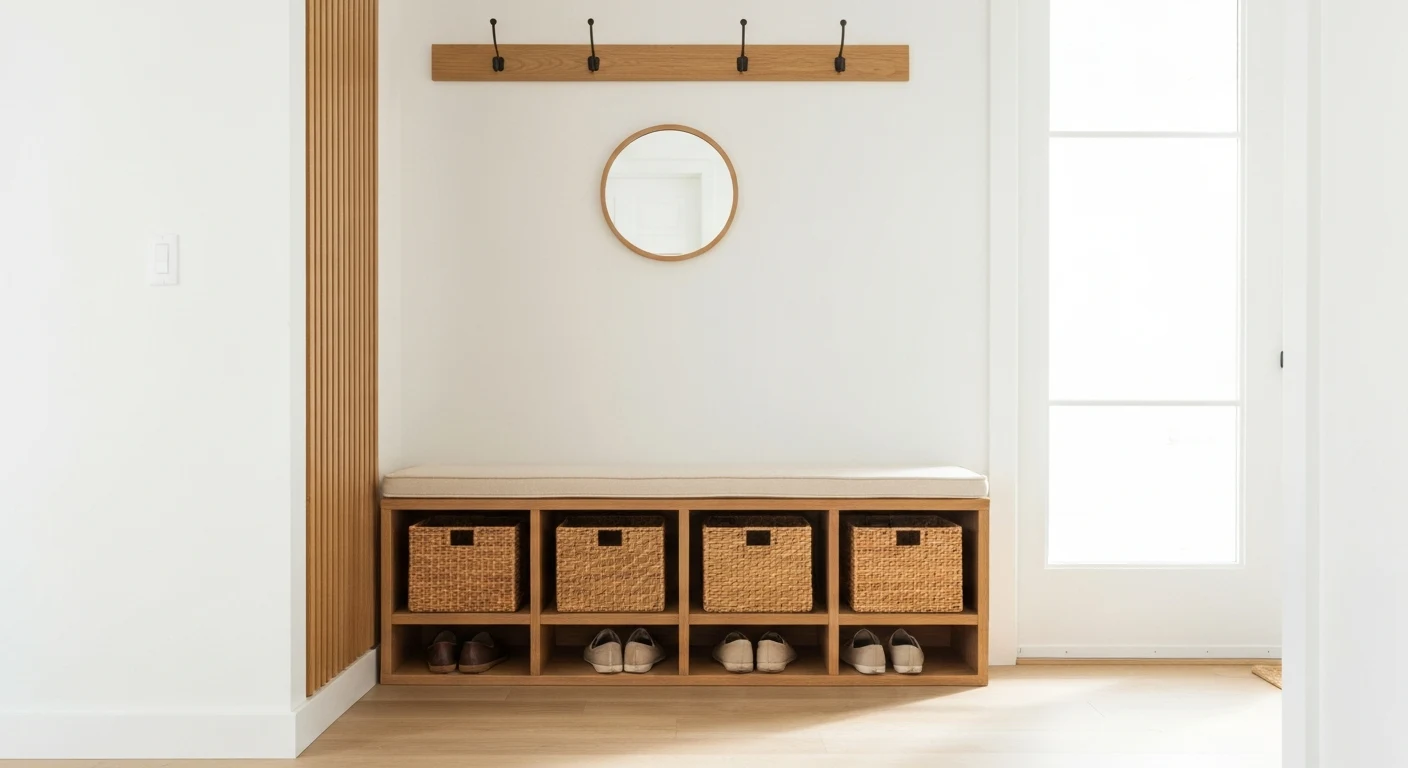
A storage bench is a low, long box with either a lift lid or open lower cubbies, and it solves a different problem depending on where you place it.
At the entryway. Most apartments I have rented had no coat closet and no clear spot to take off shoes. An entryway storage bench fixes both at once: a seat to sit on while you pull off boots, and a hollow base or lower cubbies for the shoes themselves. A bench with a lift lid hides the shoe pile completely; a bench with open lower cubbies and basket inserts keeps it sorted and visible. My guide to creating an entryway when your apartment does not have one covers the full drop-zone setup the bench anchors.
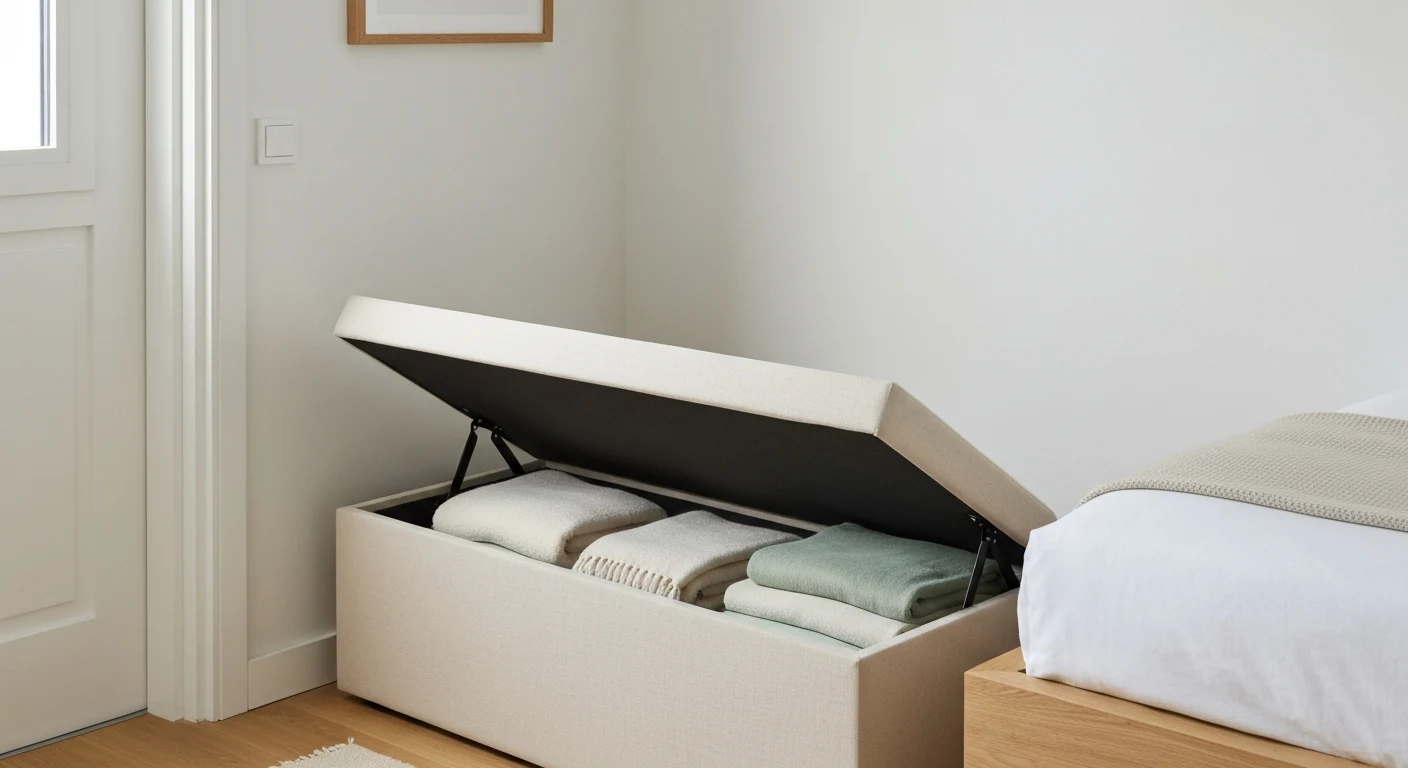
At the foot of the bed. An upholstered storage bench across the end of the bed is the natural home for the blankets and throw pillows that come off the bed every night. It also gives you a place to sit while dressing, which a small bedroom rarely has otherwise.
Under a window. A window is a stretch of wall you cannot use for tall furniture, and a low storage bench fits neatly beneath it. The bench adds a reading or coffee seat with a view, and the base stores books, linens, or games. A cushion turns it into a window seat the building never built.
Typical 2026 ranges: a small entryway storage bench $60 to $180, a longer upholstered end-of-bed storage bench $150 to $400. Buy the bench before the ottoman if your entry has no closet at all; the entryway problem is the one that greets you every time you walk in.
Small Storage Cabinets, Consoles, and Sideboards
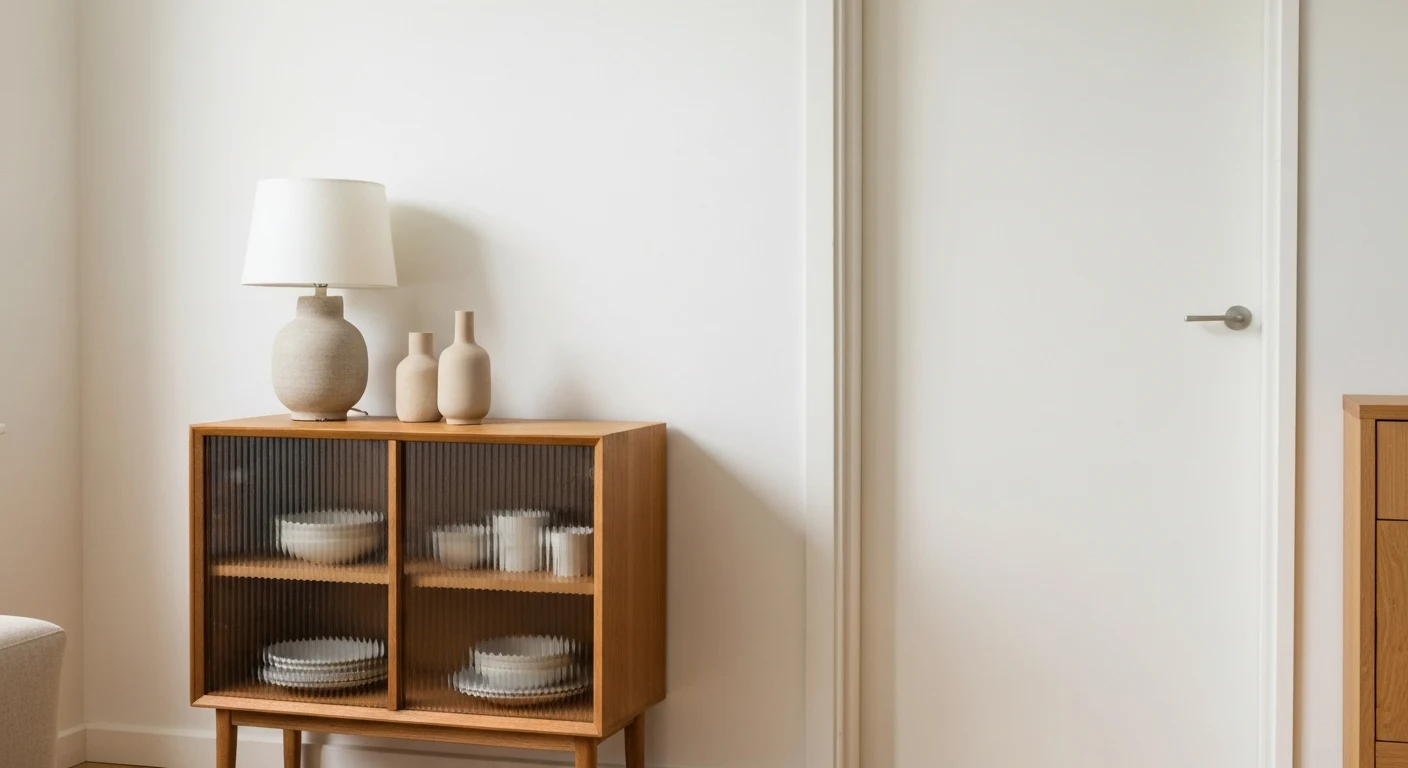
A small storage cabinet is the most flexible closed-storage piece you can own, because it hides whatever you put in it behind a door, and a closed door is what makes a small apartment read as calm rather than cluttered. The category runs from narrow accent cabinets to consoles to full sideboards, and each fits a small footprint in its own way.
- Accent cabinet. A freestanding cabinet roughly 24 to 36 inches wide with one or two doors. It slots against any spare stretch of wall and absorbs the homeless category of a small home: cleaning supplies, paperwork, craft gear, the things with no other drawer.
- Console table with cabinet or drawers. A console is shallow, usually 12 to 16 inches deep, and that is the trick. It fits where a standard cabinet cannot: behind a sofa, along a hallway, under a wall-mounted TV. A console placed behind a sofa turns the back of the couch into a sideboard, and in a studio it can split the room into a sleeping zone and a living zone without a wall.
- Sideboard or buffet. The widest of the three, 50 to 72 inches, and the highest capacity. A sideboard handles dining storage in a one-bedroom with no dining room, and it doubles as a long, low TV stand or a dresser depending on the room.
Pinterest's 2026 trend reporting also flagged fluted and ribbed glass cabinet fronts as a rising look, valued because the texture screens the contents while still feeling open and light. For a small storage cabinet that has to sit in a main living area, a fluted-glass or solid door beats open shelving: it holds the same volume and removes the visual noise. Typical 2026 ranges: a narrow accent cabinet $90 to $250, a storage console $120 to $350, a sideboard $250 to $700.
A cabinet is also one of the strongest answers to a bare corner or a stretch of wall that feels unfinished; my guide on what to put in an empty corner covers the sizing and the styling around it.
Bookcases and Vertical Storage: Build Up, Not Out
Floor space is the scarce resource in a small apartment; wall height usually is not. A bookcase or vertical shelving unit trades a small floor footprint for several feet of vertical storage, which is the best exchange rate in the room.
The honest tradeoff with open shelving is that it displays everything you put on it, so it works for items you want seen and fails for items you do not. The fix is a deliberate mix of open and closed:
- Tall narrow bookcase. A unit 24 to 32 inches wide and 6 feet or more tall holds a household's books and display objects on a footprint smaller than a single floor tile counts for.
- Cube storage unit. A grid of cubes where some hold open books or plants and others hold closed fabric or wicker bins. The closed bins are where the cables, paperwork, and label-less clutter go. A closed-back cube unit reads as a tidy wall rather than a pile.
- Ladder shelf. A leaning shelf that tapers wider at the base. Lower visual weight than a full bookcase, well suited to a studio where a heavy floor-to-ceiling unit would crowd the room.
- Over-door and over-toilet racks. Vertical storage that uses the wall space above a fixture, claiming square footage that no piece of standing furniture can reach.
Storage furniture as a category is growing faster than furniture overall, and the market reports agree on direction. GMInsights valued the global multifunctional furniture market at $15.9 billion in 2024, with a forecast to $25.4 billion by 2034. Future Market Insights put the small-space furniture market at $6.68 billion in 2025, forecast to $12.15 billion by 2035. Mordor Intelligence valued the folding furniture market at $5 billion in 2025, forecast above $7 billion by 2030. Straits Research projected demand for storage furniture specifically, the wardrobes, dressers, cabinets, and shelves, to grow at a 7.6% annual rate through 2033, ahead of the roughly 5.3% rate for the broader furniture market.
That growth follows a real demand curve. The National Association of Home Builders reported new US homes averaged 2,150 square feet in 2024, the smallest in 15 years, and that about 52% of Millennials would choose a smaller, better-built home over a larger one. Smaller homes, more renters, and the same amount of stuff is the pressure under that 7.6%. For the closet side of the vertical-storage problem, my small closet organization ideas guide covers the systems that go inside the closet itself.
Turn a Den, Alcove, or Dead Corner Into Storage
The furniture above solves storage piece by piece. The bigger move, when an apartment hands you the chance, is to convert a whole pocket of underused space into a dedicated storage zone. Three pockets show up again and again in small apartments.
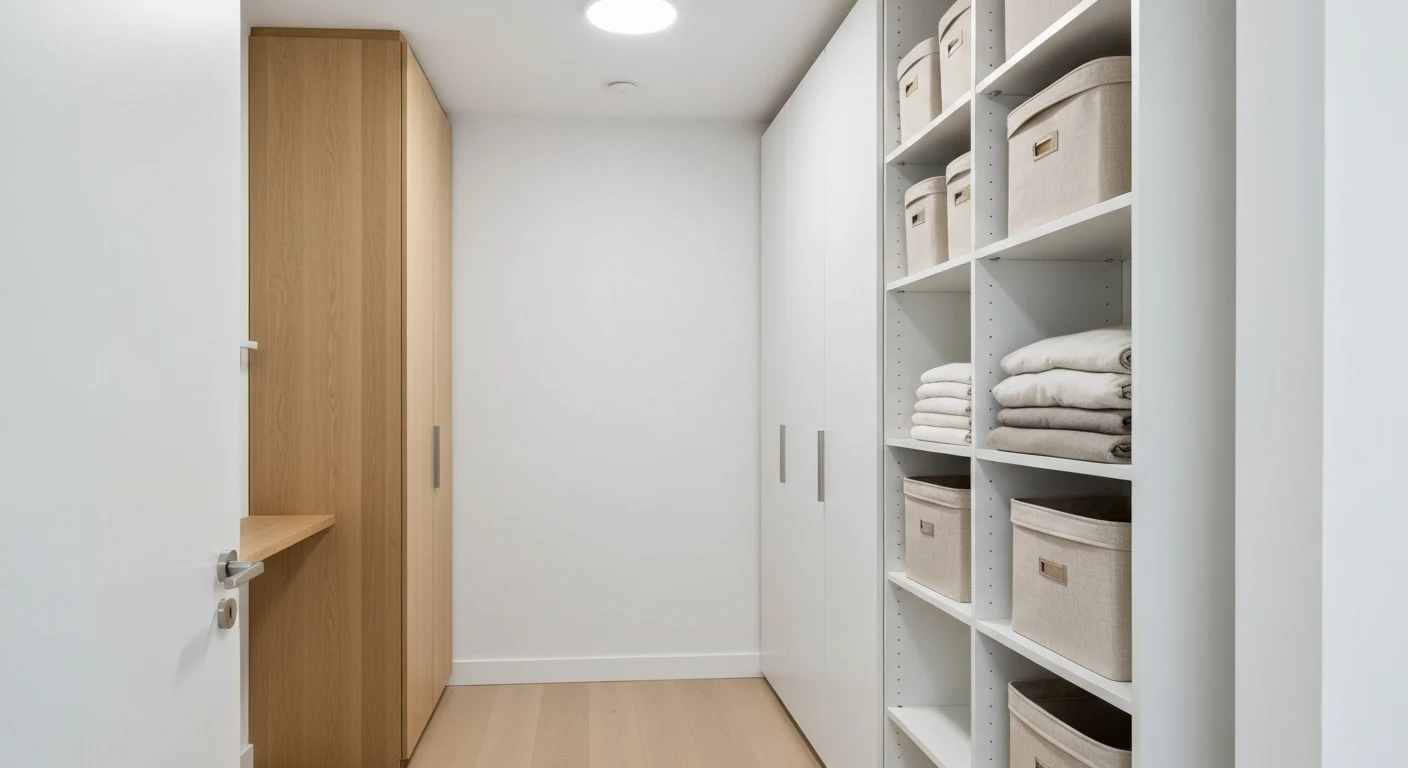
The den or bonus room. A surprising number of one-bedroom-plus-den and small two-bedroom apartments include a windowless interior room too small to be a real bedroom. Marketed as a den, office, or flex room, it is often the highest-value storage conversion in the unit. A wall of closed shelving, or a pair of tall wardrobes, turns a 6 by 8 foot den into the walk-in closet or pantry the apartment never had. If you rent, use freestanding wardrobes and shelving so the whole setup leaves with you. If you own, the payoff is on record: the National Association of Realtors 2025 Remodeling Impact Report found a closet renovation returns 83% of its cost, the second-highest cost recovery of any project in that report, and that 64% of homeowners reported a greater desire to be home after remodeling.
The alcove. A recessed nook, the kind left beside a chimney breast or where a hallway widens, can hold a built-in look using only freestanding pieces measured to fill it. A bookcase or cabinet sized to the alcove width looks deliberate, almost installed, while staying fully portable.
The dead corner. Square corners waste a triangle of floor that standard rectangular furniture cannot use well. A corner cabinet, a corner shelf unit, or an L-shaped desk with storage claims that triangle back. The corner is the smallest of the three conversions, but it is the one almost every apartment has.
StorageCafe's 2025 survey found 8% of self-storage renters keep a unit specifically because they are downsizing to a smaller home. A den or alcove conversion is the in-home alternative to that unit: the same boxes, kept at home, in a space that was previously doing nothing. For the layout logic of where these pockets sit in studio and narrow floor plans, my guide to laying out a small apartment maps them.
Three Complete Storage Furniture Setups by Budget
Below are three complete storage-furniture setups at three real budgets, drawn from current 2026 retail at IKEA, Wayfair, Target, Amazon, and Home Depot. Each can be assembled over a weekend, and none requires drilling into a wall or anything a standard lease would forbid.
Setup 1: Studio Starter ($180 to $280). One lift-top storage ottoman ($80 to $150), one closed-back cube storage unit with four fabric bins ($60 to $100), and a set of four bed risers with six under-bed bins ($40 to $80). Footprint added to the room: about 8 square feet. The ottoman covers living-room soft goods and a spare seat, the cube wall hides the homeless clutter, and the risers reclaim the dead space under the bed you already own. This is the kit I would hand any 22-year-old on move-in day.
Setup 2: One-Bedroom Comfort ($550 to $850). A gas-lift ottoman storage bed ($400 to $700) replacing an open frame, a storage console behind the sofa ($120 to $300), and an entryway storage bench ($80 to $180). The storage bed alone recovers a small closet's worth of volume, the console doubles as a room divider and a sideboard, and the bench fixes the no-coat-closet entry. This setup turns a 480 square foot one-bedroom into a place that holds what a couple actually owns.
Setup 3: Long-Stay Invest ($1,100 to $1,700). For renters staying three years or more, and for owner-occupiers: a drawer or lift-up storage bed, a sideboard ($300 to $600), a lift-top coffee table ($150 to $350), a tall bookcase or cube wall ($150 to $350), and a pair of freestanding wardrobes to convert a den or alcove ($300 to $600). Every room gets a closed-storage anchor, and the den conversion adds the closet the floor plan skipped.
The setup that pays back is the one you finish. NAR's finding that functionality and livability rank as the single most-valued remodeling outcome, named by 28% of homeowners, tracks the storage side of a home rather than the decorative side. A storage ottoman that swallows the blanket pile delivers that feeling every evening, and the storage bed delivers it every morning the closet is not overflowing.
Frequently Asked Questions
Is a storage bed worth it in a small apartment?
Yes, in almost every case where the space under your bed is currently empty or holding loose bins. A queen lift-up (ottoman) storage bed recovers 25 to 30 cubic feet, the equivalent of a small closet, while a drawer bed recovers 4 to 8 cubic feet with faster daily access. The format earns its keep most when the apartment has no second closet. The cost premium over an open frame runs roughly $150 to $400. Skip it only if you already use that under-bed space well with labeled bins on risers.
How much weight can a storage ottoman hold?
As a seat, most storage ottomans rate to 250 to 300 pounds, a limit set by the lid and the frame rather than by the contents. The interior has no weight limit that matters for soft goods like blankets, linens, and clothing. Avoid filling an ottoman with books, tools, or canned goods, because dense loads strain the hinge and make the lid heavy to lift. Check the product's stated seat rating before you use one as guest seating.
Storage ottoman or storage bench: which should I buy?
Choose an ottoman for a living room or bedroom where you want a movable seat, footrest, and surface in one, plus soft-good storage; it is roughly square and repositions easily. Choose a bench for a fixed spot along a wall: an entryway for shoes, the foot of the bed for blankets, or under a window for a seat. A bench is longer and lower, an ottoman more flexible. If you can buy only one and your entry has no closet, buy the bench.
What is the cheapest way to add storage furniture to a rental?
Bed risers with under-bed bins ($40 to $80) and a closed-back cube unit with fabric bins ($60 to $100) are the two cheapest high-return moves. Together they cost under $180, need no drilling, and stay fully portable. A fabric cube ottoman ($30 to $70) is the cheapest single seat-plus-storage piece made. All three travel to your next apartment, which is the real test for any rental purchase.
Do lift-top coffee tables feel sturdy enough to use?
The better ones do, and sturdiness comes down to the lift hardware. A double-arm steel hinge mechanism holds the raised top level and stable enough for a laptop or a plated meal, while cheap single hinges wobble under any real weight. Look for a stated top weight capacity (20 to 40 pounds is typical) and scan reviews for the word "wobble." Expect to spend $150 or more for a mechanism that feels solid in daily use.
How do I turn a small den into a storage room?
Measure the den, then line one or two walls with freestanding shelving or wardrobes, so the setup leaves with you if you rent. Use closed wardrobes for clothing and bulky items, and open shelving with labeled bins for everything else. Keep a clear walkway of 24 to 30 inches. For owners, a built-in closet system is worth the spend: the NAR 2025 Remodeling Impact Report found closet renovations recover 83% of their cost. Add a plug-in light if the den has no window.
Storage furniture comes down to one principle: in a small apartment, every large object should hold something. Audit what you own by frequency and measure before you buy; start with a storage ottoman; convert the dead volume under the bed with a storage bed; hide the rest behind console, cabinet, and sideboard doors; build vertical with bookcases; and convert a den, alcove, or dead corner if the apartment hands you one. Get those moves right and a 480 square foot one-bedroom holds what it needs to without a self-storage bill. For the storage problem one room over, my small kitchen storage ideas guide applies the same logic to a kitchen the builder under-equipped, and the studio apartment decorating guide ties the furniture choices here back to the layout of the whole unit.
Tags

Written by Joesp H.
Interior Design & Small Space Living Specialist
Former marketing manager turned full-time home optimizer. After living in 7 homes ranging from 450 to 2,000 sq ft, I started CleverSpaceSolutions to help people create organized, functional spaces on real budgets.
Other Articles
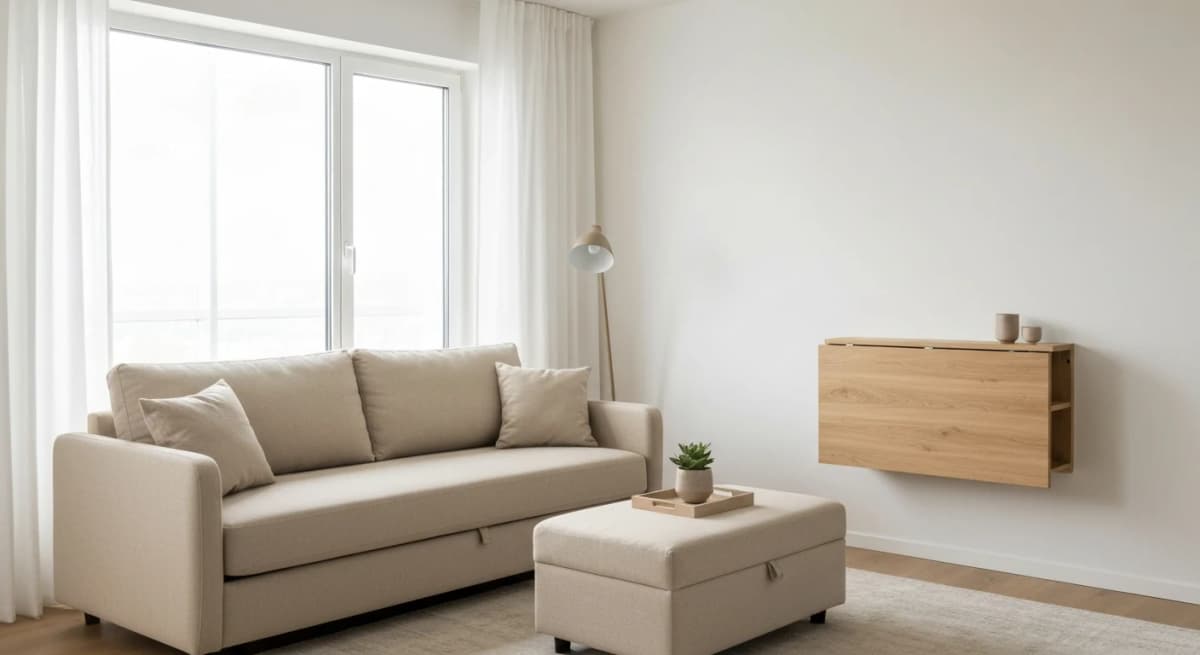
The Best Multifunctional Furniture for Small Apartments in 2026
Discover the best multifunctional furniture for small apartments in 2026. Sleeper sofas, murphy beds, storage ottomans, convertible desks, and modular shelving tested in real apartments.
Biophilic Design for Small Apartments: How to Create a Living Green Corner
Turn your small apartment into a calming green sanctuary. Practical biophilic design tips, plant picks by light level, renter-friendly mounting, and budget breakdowns from $10 to $1,200.
30 Renter-Friendly Wall Decor Ideas for Small Apartments (No Holes, No Damage)
Discover 30 renter-friendly wall decor ideas that need zero holes. Command strips, peel-and-stick wallpaper, leaning art, and more. Protect your deposit.